Watch Guide · Published · Updated September 2026
Rolex Nicknames: Pepsi, Starbucks, Kermit and the Rest
A Rolex nickname is a short name for a bezel color or a dial color. The bezel is the ring around the watch face. It is never an official Rolex name. Rolex sells the Pepsi, the Starbucks, and every watch below under a reference number. A reference number is the code Rolex gives each watch. Dealers and collectors made up the nicknames instead. A nickname is quicker to say than a six-digit reference number.
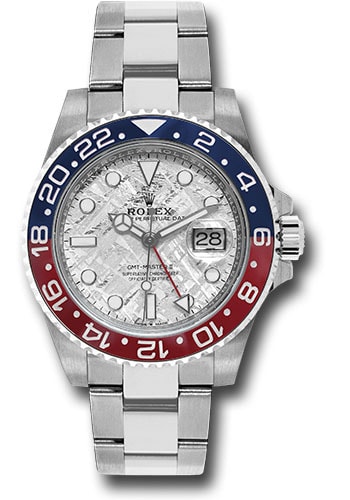
Pepsi
Pepsi is the name for a red-and-blue bezel. Rolex has used it on the GMT-Master II, and before that the GMT-Master, since 1954. Red and blue once had a job. Red showed daytime hours. Blue showed nighttime hours. A pilot read both against a 24-hour hand to track a second time zone. The two colors also look like the soda brand’s logo. That is where the nickname came from.
Two old references wear the Pepsi bezel most often.
- 1675 (1959–1980) — an acrylic crystal, with no date magnifier on early dials
- 16700 and 16710 (1988–2007) — a sapphire crystal
Both used a bezel made of colored aluminum. Aluminum fades unevenly in sunlight. Collectors look for these faded “ghost” Pepsi bezels on purpose.
Rolex brought the colorway back in 2014. That version used Cerachrom, Rolex’s hard ceramic bezel material, on a white-gold case. In 2018, Rolex made it easier to find again on the steel 126710BLRO. That watch is still in production today, on a Jubilee bracelet, a five-link metal band. See Rolex’s own GMT-Master II page for the current lineup. One more Pepsi wore the same red-and-blue insert. That watch is the 16713, a two-tone watch made of steel and gold, worn through the 1990s. Collectors sometimes call a faded 16713 a “Root Beer” instead, once its bezel turns brown. A nickname describes how a bezel looks today, not a fixed factory spec. The look can change as the aluminum ages.

Batman and Batgirl
Batman is a black-and-blue GMT bezel. Rolex put it on the 116710BLNR in 2013. That was Rolex’s first two-color Cerachrom bezel ever made. The current version is the 126710BLNR. The name comes from Batman’s black-and-blue costume — nothing more to it than that.
Batgirl wears the same black-and-blue bezel. It sits on a smaller GMT-Master II, made of steel and white gold, on a Jubilee bracelet. Some dials add diamond hour markers. Batgirl is not its own reference family — it is more a size choice. Collectors needed a second name because “Batman” already meant the full-size steel watch.
Both watches run on Rolex’s Caliber 3285 movement, the engine inside a watch. This one moves the local hour hand on its own. That is what makes a GMT-Master II a true dual-time watch, not just a 24-hour hint. Rolex never made a special anniversary run of either watch. Both have stayed in normal production since they launched. That keeps supply steadier than some other watches on this page.
Root Beer
Root Beer covers brown-and-black or all-brown GMT bezels. Rolex has used them on several two-tone and Everose gold references. The color looks like the drink, not like a fruit or a gem. That is how it got its name.
An old two-tone watch wore a brown bezel first. That watch is the 16753, made in the late 1970s and 1980s. Collectors already called it Root Beer decades before the newer version came out.
The current Root Beer is the 126711CHNR. Rolex made it in 2018. It mixes Everose gold, Rolex’s own pink-gold metal, with Oystersteel, Rolex’s own steel. The bezel is black-and-brown ceramic. The dial is chocolate brown. This watch mixes gold with steel instead of using gold alone. That makes it one of the more affordable two-tone GMT-Master IIs. It still costs five figures, but less than an all-gold version.
Rolex’s own catalog never says “Root Beer.” It lists the watch as “Oystersteel and Everose gold” instead. That is the pattern behind almost every nickname here. The official name tells you the materials. The nickname tells you which watch people mean, fast.
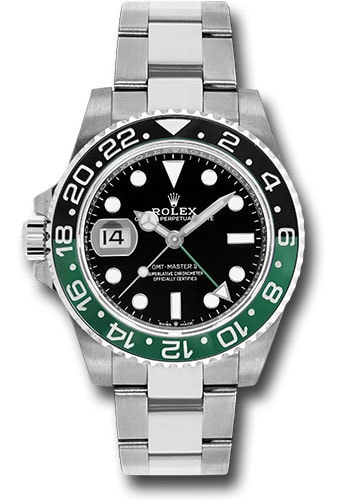
Sprite
Sprite is the newest soda-named bezel in the GMT-Master II family. It is the 126720VTNR, a black-and-green ceramic bezel from 2022. The green half looks like the soda logo, the same way Pepsi’s red and blue does. That is how it earned its name.
The 126720VTNR is different in one big way. Its crown sits on the left side of the case instead of the right. The crown is the knob used to set the watch. Rolex built it for wearing on the right wrist. The day-and-night hand and the date window are flipped to match. Collectors call this layout “Destro.” Destro is Italian for “right.” Some collectors use Destro alongside Sprite for this same watch.
Soda names have become such a habit for GMT-Master bezels that watch writers joke about it. Fratello Watches has floated NuGrape and Fanta as joke names for colors Rolex has not made yet. Sprite is the one name on this page that Rolex fans did not have to invent.
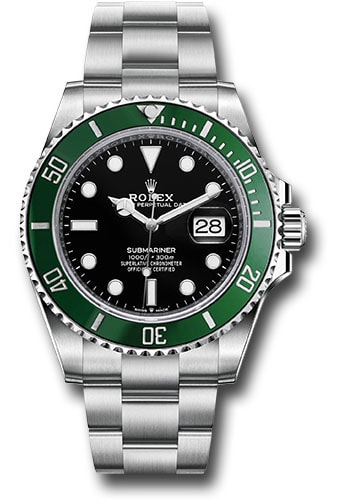
Starbucks
Starbucks names the current green-bezel Submariner: the 126610LV. Rolex released it in 2020. It has a black dial under a green Cerachrom bezel. The green is close to the coffee chain’s own logo color. Collectors made the connection right away.
Starbucks replaced an older green Submariner called the Kermit. It moved to a larger 41mm case and Rolex’s Caliber 3235 movement. Its green leans a little more olive than the Kermit’s brighter grass green. See Fratello’s history of Rolex’s green-bezel Submariners for the full story.
Kermit
The 16610LV was Rolex’s first-ever green-bezel Submariner. Rolex made it in 2003, for the model’s 50th birthday. It paired a black dial with a bright green aluminum bezel that matched Kermit the Frog. That bold color is why the nickname stuck.
Rolex made the 16610LV for only seven years. It stopped in 2010 and replaced it with the Hulk. Original watches with matching green patina are very rare today. Patina is the color change a bezel gets with age. This watch started the whole “green Submariner” story. That story runs through the Hulk and into the Starbucks.
The 16610LV shares its case with a plain black-bezel Submariner from the same years. It shares the movement too. The bezel color is the only real difference. That is why buyers should check a used Kermit’s bezel closely. A swapped or mismatched bezel is the first thing to look for.
Hulk
The Hulk is the 116610LV, from 2010. It is the only Submariner with both a green dial and a green Cerachrom bezel. Every other green Submariner on this page pairs its bezel with a black dial instead. The all-green look, plus a thicker case and lugs, earned it the Hulk name.
Rolex made the Hulk for a full decade. It stopped in 2020, when the Starbucks took over. That is the longest run of any green Submariner so far. More Hulks exist on the pre-owned market today than Kermits or Starbucks.
The Hulk also brought Chromalight to the green Submariner line. Chromalight is Rolex’s glow-in-the-dark material for hands and markers. It glows blue, while older Submariners glow green instead. That blue glow is a fast way to spot a Hulk in a dark room.
Smurf and Bluesy
Smurf is the all-blue Submariner Date, the 116619LB. Rolex released it in 2010 in solid 18k white gold. It has a blue dial and a matching blue Cerachrom bezel. The cartoon nickname followed the same idea as the Hulk’s name: one bold color.
Bluesy is the informal name for a two-tone version, most often the 116613LB. It mixes steel with yellow gold on the bezel edge and the bracelet. Smurf uses solid white gold instead. The two names sort by metal, not by the shade of blue.
Both watches are Submariner Date models, not the no-date Submariner. Both use ceramic Cerachrom bezels instead of aluminum. Ceramic resists fading and scratching better than aluminum does. That is one reason why. Blue Submariner bezels from this era keep their color more evenly than an older Pepsi or Kermit.
Coke, Polar, Tiffany dial, and Panda
A few more nicknames come up often. Here they are, in one place.
- Coke — a red-and-black GMT bezel, on watches like the 16710. Rolex sold it next to the Pepsi on the same case through the late 1980s and 1990s.
- Polar — any Rolex sport watch with a white dial instead of a black one. Most often this means an Explorer II. The name comes from the model’s old polar-expedition marketing.
- Tiffany dial — a vintage Rolex, usually a Datejust or Day-Date, signed “Tiffany & Co.” below the Rolex crown. Rolex made these for the retailer decades ago. Back then, Tiffany was a partner, not a competitor owned by LVMH.
- Panda — any chronograph with light sub-dials on a dark main dial. Most people mean a white Daytona with black sub-dials. The word works for other chronograph brands too.
A dark-sub-dial, light-main-dial watch sometimes gets its own nickname too. That split is not the same at every dealer. It is worth checking the exact layout before you trust a listing’s name. The same goes for Polar and Tiffany-dial watches. Both terms describe how a dial looks, not one single reference number. Two watches can share a nickname and still be different models.
How nicknames affect price
A nickname adds nothing to a watch’s engineering. It does not make a watch rarer either. Scarcity and hype move pre-owned prices, not the name.
A short-lived reference, like the Kermit, often costs more than one Rolex still makes, like the Starbucks. Supply stopped growing years ago. Demand kept climbing. A trending nickname can also push a watch’s price higher. It can go above an equally rare watch with no catchy name. That happens no matter either watch’s condition.
None of that changes what you should check before buying. These four things matter either way:
- the papers
- the original box
- service history
- an original bezel or dial
Our guide to buying a pre-owned luxury watch covers exactly what to check.
Nicknames are not standardized either. Two dealers can both say “Root Beer” about slightly different watches. If a listing leads with a nickname instead of a reference number, check the case back yourself. The case back carries the watch’s own engraved reference number. Your warranty card, your service history, and any future resale will all match against that number. None of them will match the nickname.
What to remember
A nickname names a bezel or a dial. It is never the watch’s real name. Rolex only uses a reference number, like 126610LV or 16610LV. Nicknames come from dealers and collectors, not from Rolex. Some, like Sprite, describe an official Rolex color. Others, like Root Beer, describe a color that only shows up as an aluminum bezel fades. A nickname does not add engineering or rarity to a watch. Scarcity and hype set the price, not the name. Before you buy, check the reference number on the case back. Then check papers, the original box, service history, and an original bezel or dial. Our guide to buying a pre-owned luxury watch covers the rest.
Frequently Asked Questions
Related guides & collections
Recognize a reference number now?
Shop Current Rolex GMT-Master II and Submariner
Every Rolex we sell is ordered in once you call or message us and pay by wire transfer, and it ships to you, or you can collect it at our Snellville showroom. Browse what's currently available, or call with a specific reference in mind.
Prefer to talk? Call (704) 684-7530