Repair Guide · Published · Updated September 2026
Which Rings Can Be Resized, and Which Can't
Gold, platinum and sterling silver resize the way most people expect: a jeweler cuts the band, adjusts it, and solders it closed. Tungsten, titanium and ceramic don’t resize at all — they can’t be cut or soldered without cracking, so a size change means a replacement, not a repair. Full eternity bands and tension settings sit in the awkward middle: some can be sized with the right method, plenty can’t, and only a jeweler holding the actual ring can tell you which.
One rule cuts across every metal here: a change of more than about four sizes moves a ring out of standard-resize territory, and every estimate assumes whole sizes, since that’s as precise as anyone can get before the ring is on the bench. The sections below go metal by metal and setting by setting — for the mechanics of how a resize is actually done, see how ring resizing works.
Yellow, white and rose gold — resized routinely
All three colors of gold are the most straightforward metal in the shop to resize. Sizing down means cutting a small section out of the band and soldering the two ends back together — quick, low-risk work. Sizing up means either stretching the band for a small change or cutting it and soldering in a matching piece of new metal for a larger one. Either direction, gold takes the heat and the join well, and the repaired section is nearly invisible once polished.
White gold carries one wrinkle worth knowing before you go in. A resize is quoted for the metalwork alone — cutting, adjusting and soldering the band — with the bright white rhodium finish that follows priced as its own separate line. That finish wears with ordinary use whether or not the ring is ever resized, so pairing a replate with a resize saves a second trip rather than adding a hidden cost to the first one. What rhodium plating actually does covers how often it needs refreshing and why white gold needs it at all.
Who this applies to: plain bands, most set rings, and engraved or textured shanks in yellow, white or rose gold. A stone-set or heavily engraved shank takes longer at the bench, since the pattern or the stones near the cut have to be protected, but it’s still routine work rather than a special case.
Platinum — the same routine, at a slower pace
Platinum rings resize the same way gold rings do: cut, adjust, solder closed. What changes is the equipment and the time. Platinum needs a much hotter torch than gold does, and the metal is denser, so it holds and moves heat differently at the bench. A jeweler set up to work gold every day but not platinum specifically will either turn the job away or do it badly, which is the real reason platinum resizing has a reputation for being harder than it actually is.
Done by someone equipped for it, platinum resizing is dependable work in either direction, up or down, on plain bands and most set rings alike. The trade-off is time on the bench, not risk to the ring.
Sterling silver — easy, with one caution
Sterling silver is soft and forgiving, which makes it the quickest of the routine metals to resize in either direction. The one thing worth knowing: silver work-hardens as it’s shaped, so a band that’s thin to begin with, or one that’s already been sized more than once, can come out of the process more fragile than it went in if the bench work isn’t handled carefully. None of that rules silver out — it just means a jeweler should look at the actual band, not size it blind.
Tungsten, titanium and ceramic — none of these bend
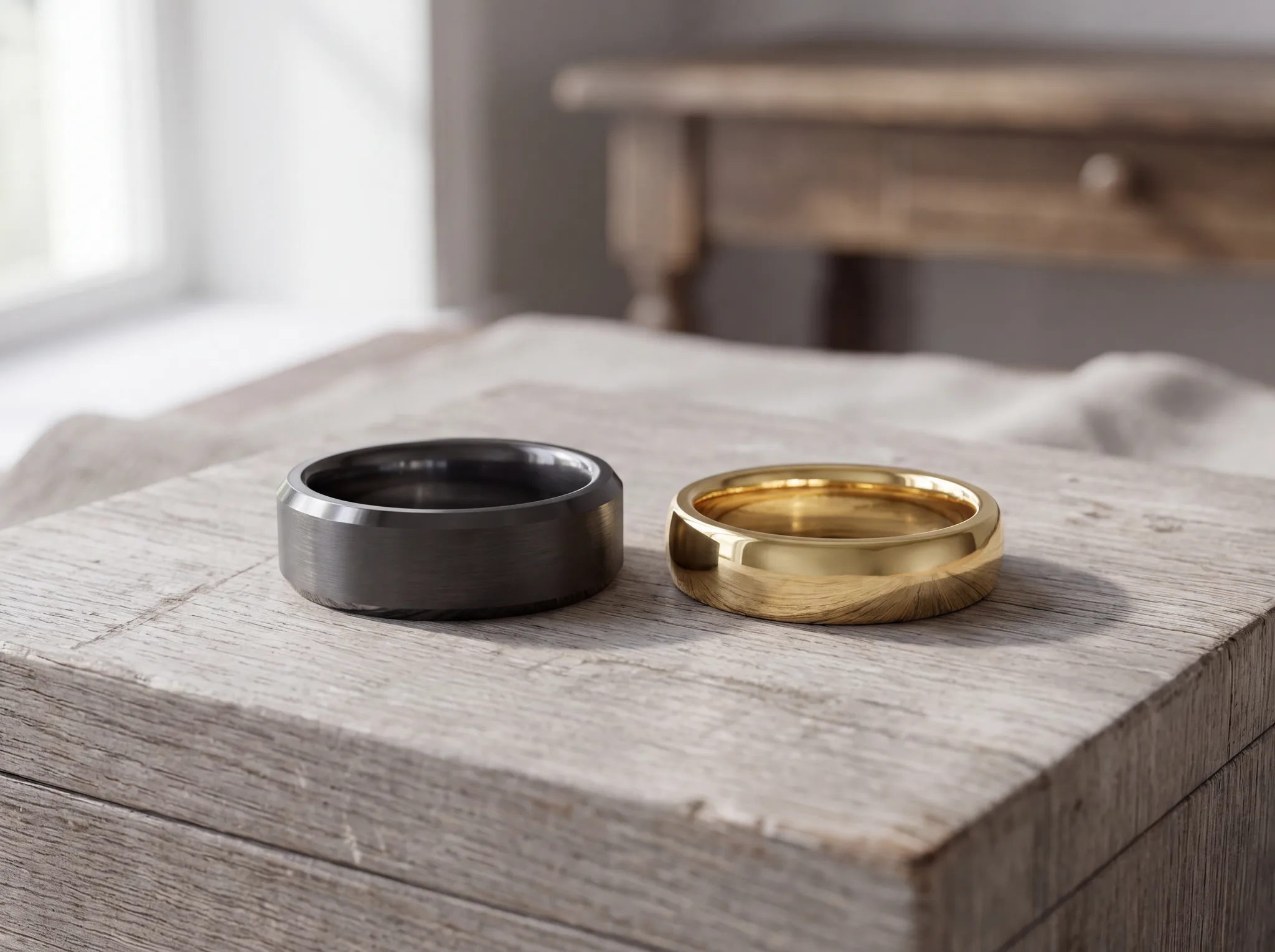
Gold, platinum and silver all resize because they’re workable at bench temperatures — they cut, bend and rejoin. Tungsten carbide, titanium and ceramic are different materials entirely. They’re prized for scratch resistance and hardness, and the same properties that make them durable also make them unworkable at a standard jeweler’s bench: a torch hot enough to solder gold will crack tungsten or ceramic rather than join it, and titanium’s melting point sits well above what that torch reaches at all.
What this means in practice:
- a tungsten or ceramic ring that no longer fits has to be replaced, not resized
- a small number of specialist shops with different equipment can do limited work on some titanium bands, but it’s the exception, not something to plan on
- none of this is reversible after the fact — there’s no fallback resize once the ring is bought
The trade-off: if hardness and scratch resistance matter more to you than the ability to size a band later, these metals still make sense — just choose the size carefully up front, since it’s the only chance you get.
Full eternity bands — no plain metal left to cut
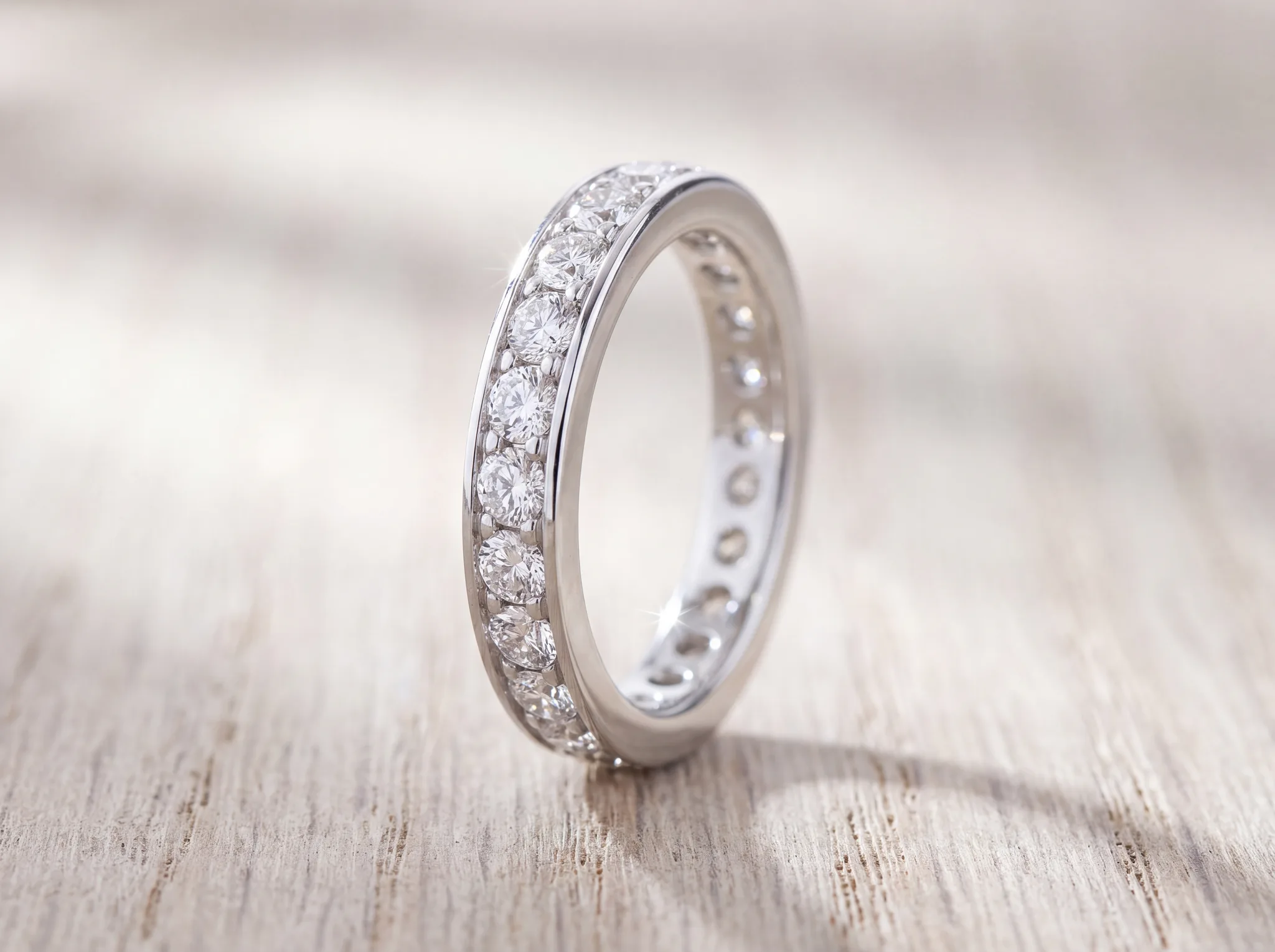
A standard resize depends on having one unset stretch of band to cut and rejoin, usually at the bottom of the shank, opposite the center stone. A true full eternity band — stones set all the way around, with no gap — doesn’t have that stretch, so cutting it conventionally risks loosening or losing a stone right at the join.
That doesn’t rule resizing out entirely. Depending on the setting, a jeweler may be able to add small sizing beads inside the band, fit a discreet spring insert, or in some cases still cut and rejoin carefully around the stones — each with its own limits on how many sizes it can realistically move. A remake is sometimes the honest recommendation instead, particularly for a bigger size change. Which option applies is a question for whoever has the ring in hand, since it comes down to exactly how the stones are set, not just that it’s an eternity band.
Tension settings and other one-piece designs — no seam to cut
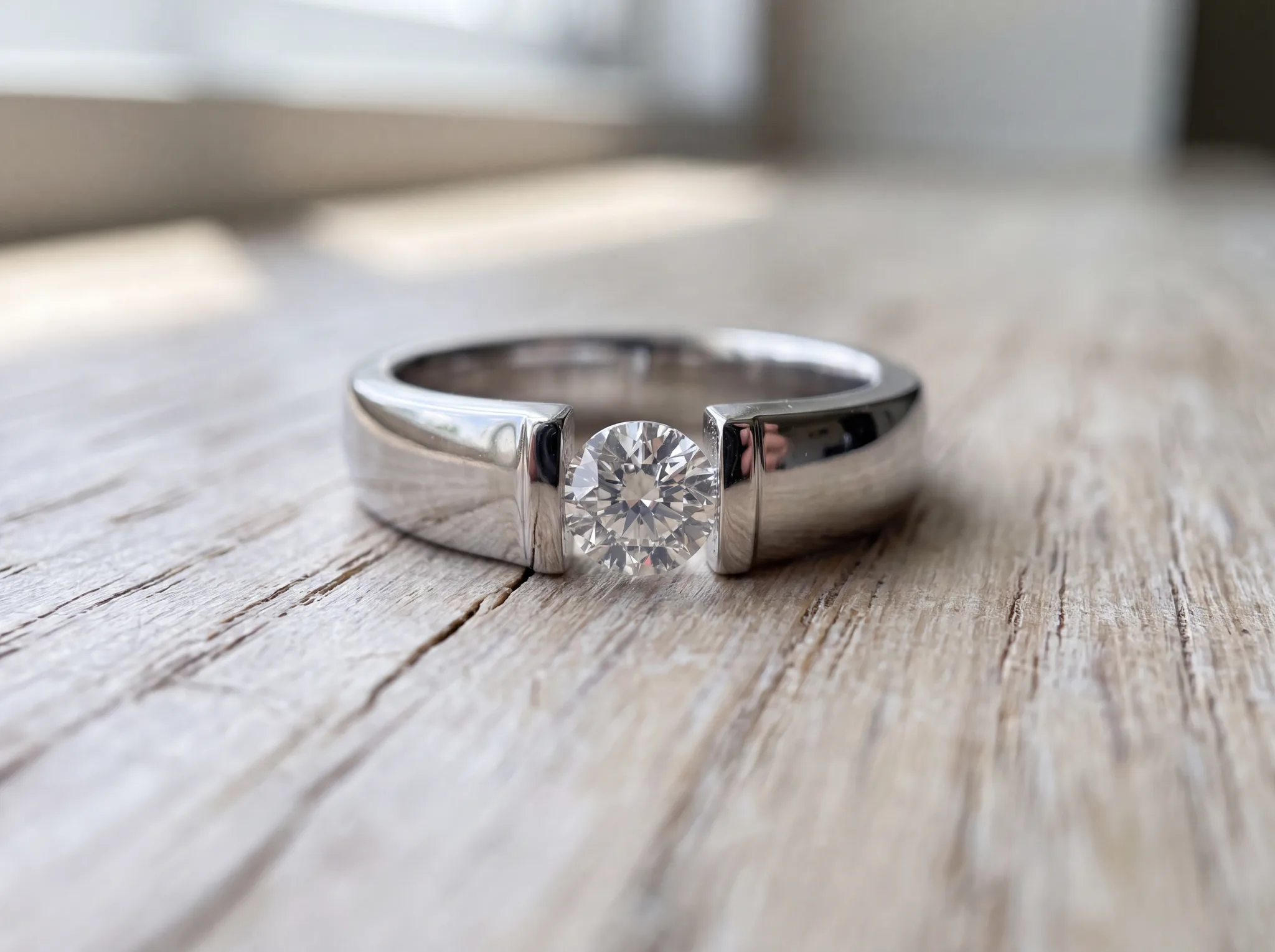
A tension setting holds its center stone with nothing but the spring pressure of the band itself pressing in on both sides — no prongs, no basket. That pressure is calibrated precisely to the band’s exact dimensions across its whole circumference. Cutting the band to resize it, the ordinary first step for every other style, releases that pressure and can drop the stone.
For that reason, a genuine tension setting almost never resizes through the standard process. Some can be handled by a jeweler who specializes in that specific setting style, but for most rings the realistic path is a remake or a replacement in the correct size. The same logic applies to other one-piece designs built without a conventional seam — a resize depends on having somewhere safe to cut, and a one-piece band doesn’t offer one.
Price your resize
If yours is one of the metals above that resizes, get a range in about a minute. Pricing a different repair? All seven are on the repair cost estimator.
What is the ring made of?
How many sizes is too many
As a rule of thumb, a change of up to about four sizes in either direction is a standard job on a resizable metal. Past that point, the amount of metal being removed or added starts to change the band’s proportions and its strength at the join, and the work shifts from a routine resize into something a jeweler needs to look at directly. Instead of a number, a jump that size returns an invitation to book an in-person look or call the shop, because the right approach — and whether the band can take it at all — depends on the specific ring.
Sizing is also always quoted in whole sizes. Half sizes exist on paper, but the bench work rounds to the nearest whole size regardless, so there’s no finer measurement to ask for before the ring is actually on hand.
Does resizing weaken a ring
A single resize, done properly, is routine and safe. That said, it isn’t nothing. The solder join is a real seam in the metal, and metal that’s been cut, bent and rejoined work-hardens slightly in that spot — it becomes a little more brittle than metal that’s never been touched. One resize on a healthy band is not something to worry about. A band that’s been sized several times over the years, on the other hand, is more likely to eventually need a repair near an old join than one sized only once, simply because each pass adds a little more hardening to the same small stretch of metal.
None of this is a reason to avoid resizing a ring that needs it — an ill-fitting ring gets more wear and more accidental damage than a resized one ever does. It’s just the honest answer to what the process itself does to the metal.
If yours can’t be resized
A ring that can’t be sized the ordinary way still has options short of doing nothing:
- a ring guard or spacer, which brings a loose ring down in fit without touching the band itself
- a remake, which keeps the stones and rebuilds the setting around them in a new band
- a trade-in or replacement, most realistic for tungsten, titanium and ceramic bands
The fastest way to know which of these applies to your ring, and what it would actually involve, is to bring it in. Metal, setting style and how the piece was originally made all matter to the answer, and none of that is fully visible from a description alone.
Frequently Asked Questions
Related guides & collections
- Jewelry repair in AtlantaAll in-house services and free estimates.
- How ring resizing actually worksWhat happens at the bench when a band is cut and rejoined.
- Ring resizing cost in AtlantaWhat drives the price of a resize.
- Ring resizing in AtlantaPrice your resize online in about a minute, free exact estimate in store.
- Engagement ring metals — platinum vs. white goldWhich metals move easily at the bench, and which don't.
Free estimate, no obligation
Bring It In and We'll Tell You Straight
Whatever your ring is made of, the fastest way to know for certain is to bring it to our Snellville workshop near Atlanta. We'll tell you honestly whether it resizes, and what the alternative looks like if it doesn't.
Prefer to talk? Call (704) 684-7530