Repair Guide · Published · Updated September 2026
Why White Gold Turns Yellow
White gold is yellow gold alloyed pale, then plated with rhodium for its bright white finish — and what wears away over the years is that plating, not the ring itself. The metal underneath is intact the whole time; only the thin surface layer thins out.
That makes it normal maintenance rather than a fault. A replate at a jeweler near Atlanta restores the original color completely, and most owners of a white gold ring or chain go through the cycle more than once over a lifetime of wear.
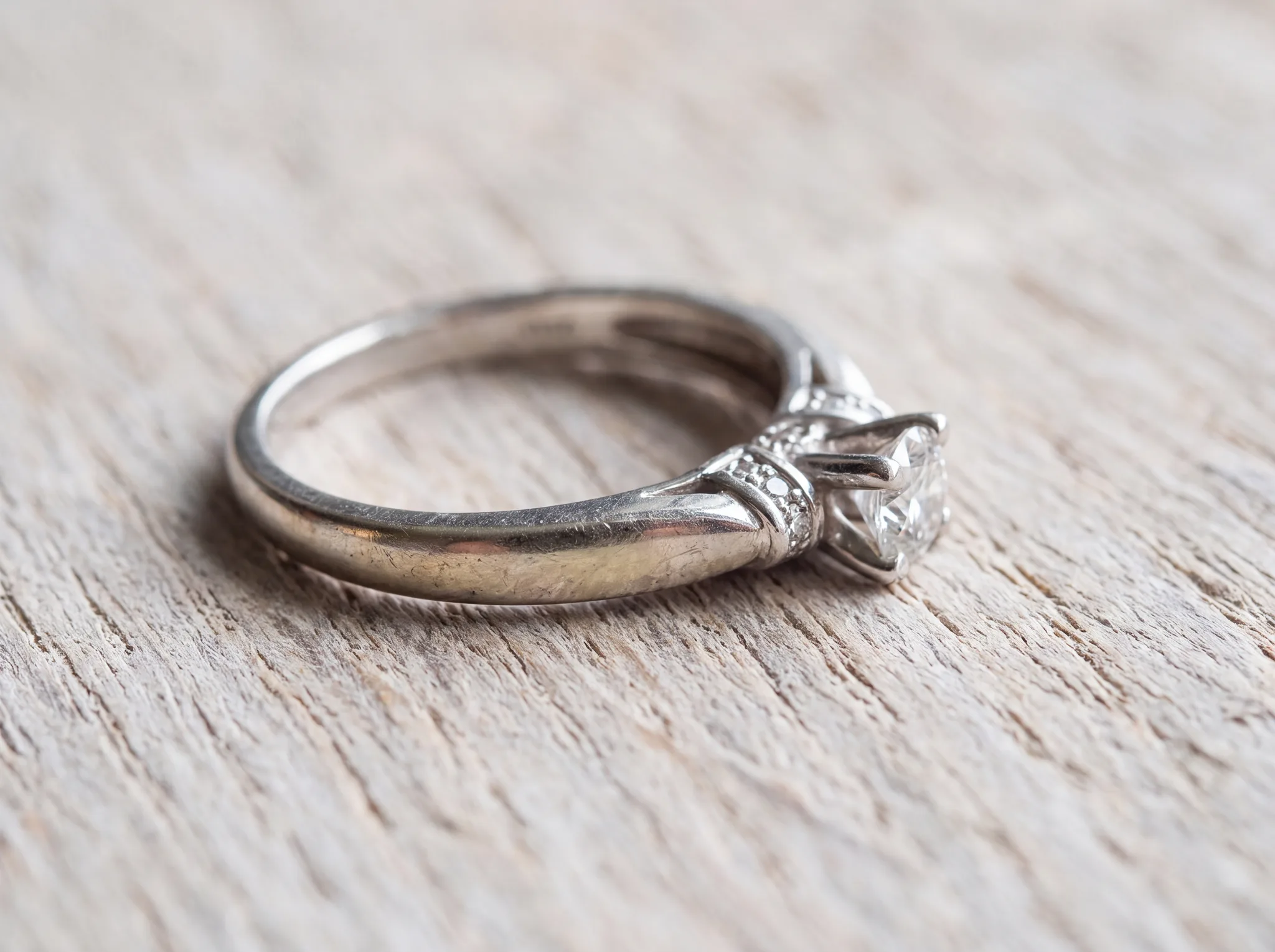
What rhodium plating actually is
Rhodium is a hard, bright white metal from the platinum group, deposited over a finished piece in a layer only a few microns thick. The piece is cleaned, then suspended in a rhodium solution with a current running through it, which builds an even coating across every exposed surface. That coating is what gives white gold its mirror-bright, ice-white look.
It is used because white gold is not actually white on its own. The alloy metals mixed into yellow gold — palladium or nickel, with silver and zinc — take most of the yellow out, but what is left is a pale, faintly warm grey, closer to light champagne than to silver. Rhodium finishes the job the alloy started. That is also why nothing labeled white gold is sold unplated: without the coating, a piece would never read as the bright white buyers expect.
The same layer goes on rings, chains, earrings and bracelets alike — the process does not change with the shape of the piece, only with how much surface area there is to cover. What does change is how quickly each type shows wear, since that comes down to how often the piece is handled, not how it was plated in the first place.
Why it wears off where it does
The plating wears fastest wherever a piece makes the most contact — for a ring, that is the shank and the shoulders. Every time a hand grips something, washes, or brushes against fabric, those surfaces take a small amount of friction. Rhodium is hard, but a layer only microns deep does not have much material to give up before the alloy underneath begins to show.
Soap, hand cream, gym equipment and everyday grip all add up over months and years. This is friction, not damage — nothing about the metal is weakened or compromised. A ring worn constantly on a working hand will show it soonest; earrings, pendants and bracelets that spend most of their time barely touching anything wear far more slowly, sometimes for years before a difference is visible.
Wear also shows up unevenly rather than as an overall dulling. A ring often reveals the underlying alloy first at the back of the shank, where it slides against a second ring or a steering wheel, and along the shoulders where a hand naturally grips. A bracelet wears fastest where the clasp rubs a wrist or a desk edge; a chain rarely wears at all unless it sits directly against skin or clothing for years on end. None of that pattern means a piece was mistreated — it is simply where each shape meets the world most.
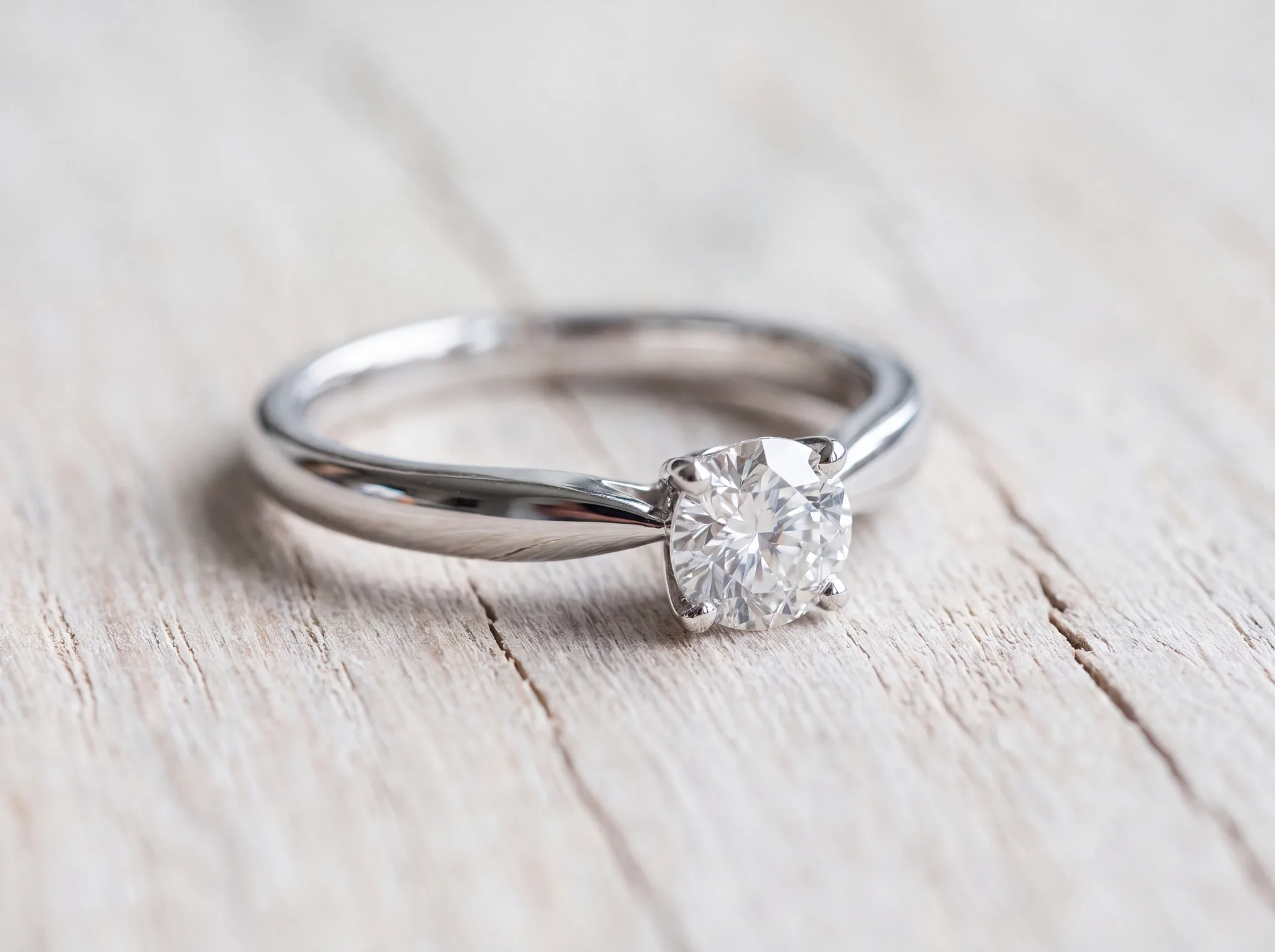
What replating looks like
Replating is a three-step bench job: clean, polish, then plate. The piece is cleaned to remove oils and residue, then polished to smooth out the surface scratches and dullness that built up while the old plating was wearing away. Polishing before plating matters — a fresh rhodium layer follows the surface underneath it exactly, so any scratch left unpolished would still show through the new coating.
Once the piece is clean and polished, it goes back through the same electroplating process used the first time, building a new, even layer of rhodium over the whole surface. For some settings — particularly channel-set or pavé work, where stones sit close together — a jeweler may need to remove stones first so the plating solution can reach every surface evenly, then reset them afterward. A plain band rarely needs that extra step.
The whole job stays in the workshop rather than being sent out to a separate plating shop, which is part of why turnaround is measured in days rather than weeks. A plain band with no stones to work around is the quickest version of the job; settings that need stones removed and reset take a little longer, since that step is done by hand.
How often
There is no fixed interval — wear pattern decides it, not the calendar. A ring worn every day, through hand-washing, workouts and daily grip, commonly needs attention within a year or two of its last plating. A ring saved for occasions, or a pendant and earrings that see comparatively little friction, can go considerably longer — sometimes several years — before any warmth becomes visible.
Rather than plating on a schedule, watch the piece itself. The tell is a faint warmth creeping in at the shank or the high points of a setting, while the rest of the piece is still bright. That is the moment to bring it in, whether that is eight months in or four years in. Does white gold need to be replated at all is really a question of whether you mind that warmth showing — cosmetically it is optional, but most people replate once it becomes noticeable.
Occupation and habits move the timeline more than most people expect. Manual work, frequent hand-washing, or a job that involves gloves and grip tends to pull the interval shorter; a desk job with a ring that mostly stays still pushes it out. Two identical rings bought the same week can end up years apart on their first replate, simply because of how differently they were worn.
What your replating will cost
Priced off today’s gold and silver. No email and no phone number to see it.
What is the piece made of?
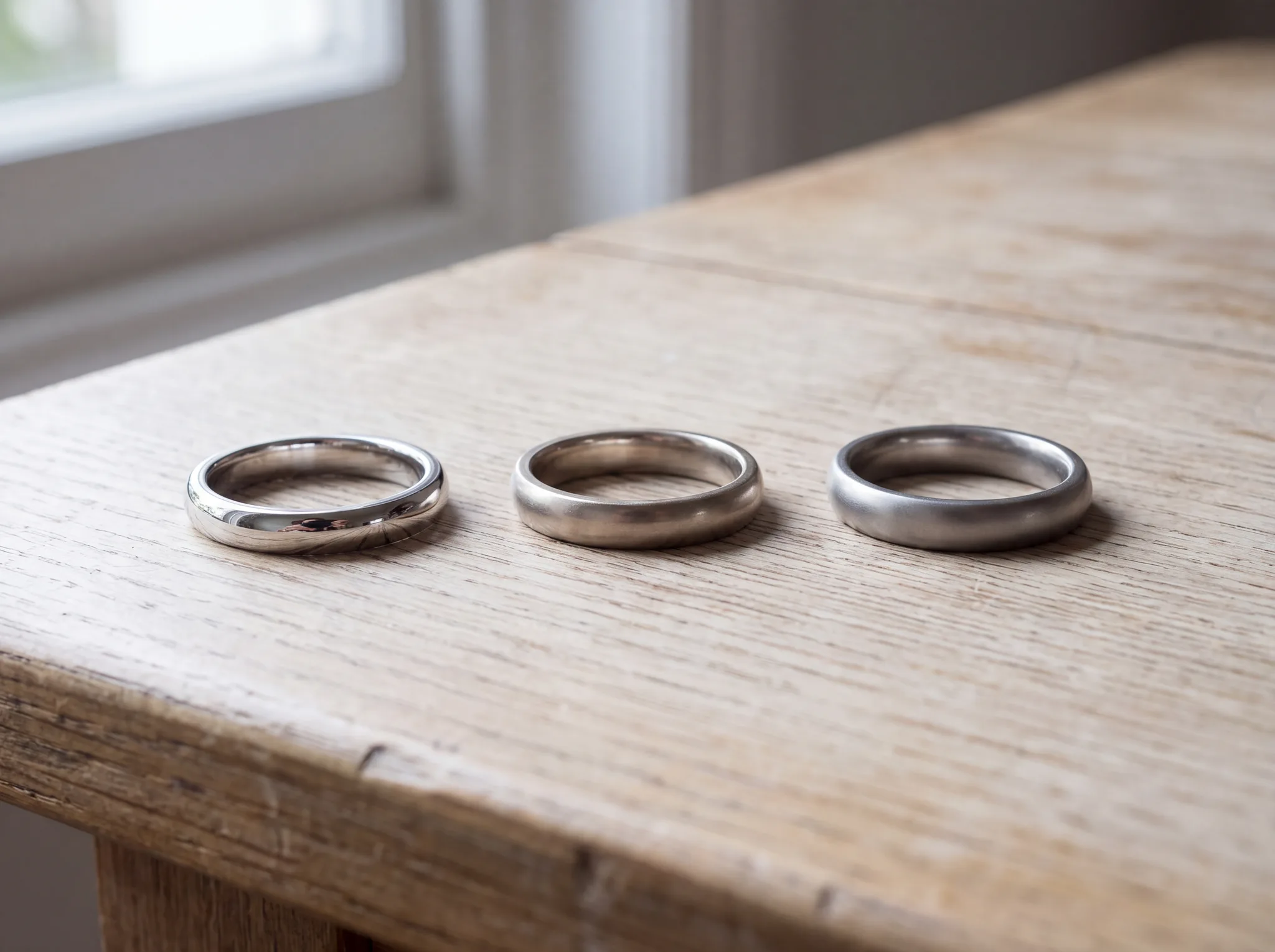
White gold against platinum and silver
The plating cycle is what sets white gold apart from the other two white metals. Platinum is naturally white all the way through and is never plated, so it never needs replating — it simply costs more up front. Silver is a different element entirely, and what dulls it is tarnish, a chemical reaction with the air, not surface wear; polishing silver removes that tarnish rather than restoring a coating.
White gold sits between the two: it buys a look close to platinum’s for less, in exchange for the occasional replate. For the full breakdown of what white gold is made of and how its value compares to platinum and yellow gold, see our guide to what white gold is.
Seen from a repair bench rather than a showroom case, the trade-off is really about when the cost lands. Platinum asks for more up front and very little afterward; white gold costs less to start and spreads a small maintenance cost across the years you wear it. Neither is the wrong choice — it depends on whether you would rather pay once or a little at a time.
Looking after it between platings
Warm water, a drop of mild dish soap and a soft brush handle most everyday grime. Rinse thoroughly and dry with a soft cloth rather than letting a piece air-dry. That routine is how to clean white gold safely at home, and it keeps a piece looking bright between visits without touching the plating itself.
What shortens the plating’s life is more about what to avoid. Chlorine from pools and hot tubs attacks the alloy over time, and household bleach and harsh cleaning products do the same. Take rings off for the gym, gardening and dishwashing — most plating wear is abrasion, and abrasion is largely avoidable. Store pieces separately rather than loose together in a box, so a harder stone or setting cannot scratch a softer plated surface. For cleaning guidance across every material we work with — diamonds, pearls and colored stones included — see our full guide to how to clean jewelry.
None of this routine care will bring back color that has already worn through — it only slows how fast the piece gets there. Once the warmth is visible, cleaning at home has done all it can, and the only way back to bright white is an actual replate.
Getting a piece replated
Bring the piece to our Snellville workshop near Atlanta and we will look at it in person before any work begins. If a white gold ring also needs resizing at the same time, that is worth knowing up front: a resize is quoted separately from the plating, with the rhodium charge shown as its own line beside the sizing range, so you can see exactly what each part of the job costs before committing. Our guide to whether your ring can be resized covers which bands take a resize easily and which need a different approach.
For a piece that needs more than a replate — a full polish, a repair, or several finishes handled together — the repair cost estimator prices all seven repairs we offer in one place. And for jewelry polishing in Atlanta, the same visit that brings back the shine is the right time to have the rhodium refreshed too, since both start with the same clean-and-polish step.
Your piece stays fully insured in our care from the moment you drop it off, and it never leaves our workshop for a separate plating shop. Most replating jobs are ready within days, and we will tell you honestly before we start if a piece needs anything beyond a straightforward replate.
Frequently Asked Questions
Related guides & collections
- Jewelry repair in AtlantaAll in-house services and free estimates.
- Can my ring be resized?Which bands resize easily and which need a different approach.
- How to clean jewelry at homeSafe cleaning for gold, silver, diamonds and pearls.
- Jewelry polishing in AtlantaGet a price range online, then an exact quote in the workshop.
- White gold jewelryNecklaces, rings, bracelets and pendants in white gold.
Free estimate, no obligation
Bring the Warmth Back to White
Drop your piece at our Snellville workshop near Atlanta for a free look, or price a replate online first. Call (704) 684-7530 or book ahead.
Prefer to talk? Call (704) 684-7530