Repair Guide · Published · Updated September 2026
Cleaning Jewelry Without Ruining It
You can clean jewelry at home, and for most pieces the method is warm water with a drop of mild washing-up liquid, a soft toothbrush worked gently around the setting, a thorough rinse and a complete dry. What you are removing is almost never damage. It is a film of hand cream and skin oil holding onto dust, and soap lifts it.
The harm comes from the shortcuts. Toothpaste scratches every metal it touches. A silver dip strips the deliberate darkening out of an oxidised design. A brush on gold plating takes the plating off. An ultrasonic cleaner will crack an emerald and lift the layers of a pearl. This guide goes material by material.
The method that works for almost everything
Fill a bowl with warm water — comfortable on the wrist, not hot — and add one drop of mild washing-up liquid. Let the piece soak for five or ten minutes. The water does most of the work before you touch it.
Then work a soft toothbrush into the places your fingers cannot reach. On a ring that means the underside of the setting and the gallery beneath the stone, which is where the film actually sits. Use almost no pressure: you are lifting a film, not sanding a surface.
Rinse under warm running water with the plug in the basin, then dry the piece completely and leave it out for an hour before it goes away. Water left in a setting dulls it again within days and starts tarnish on silver.
Silver and tarnish
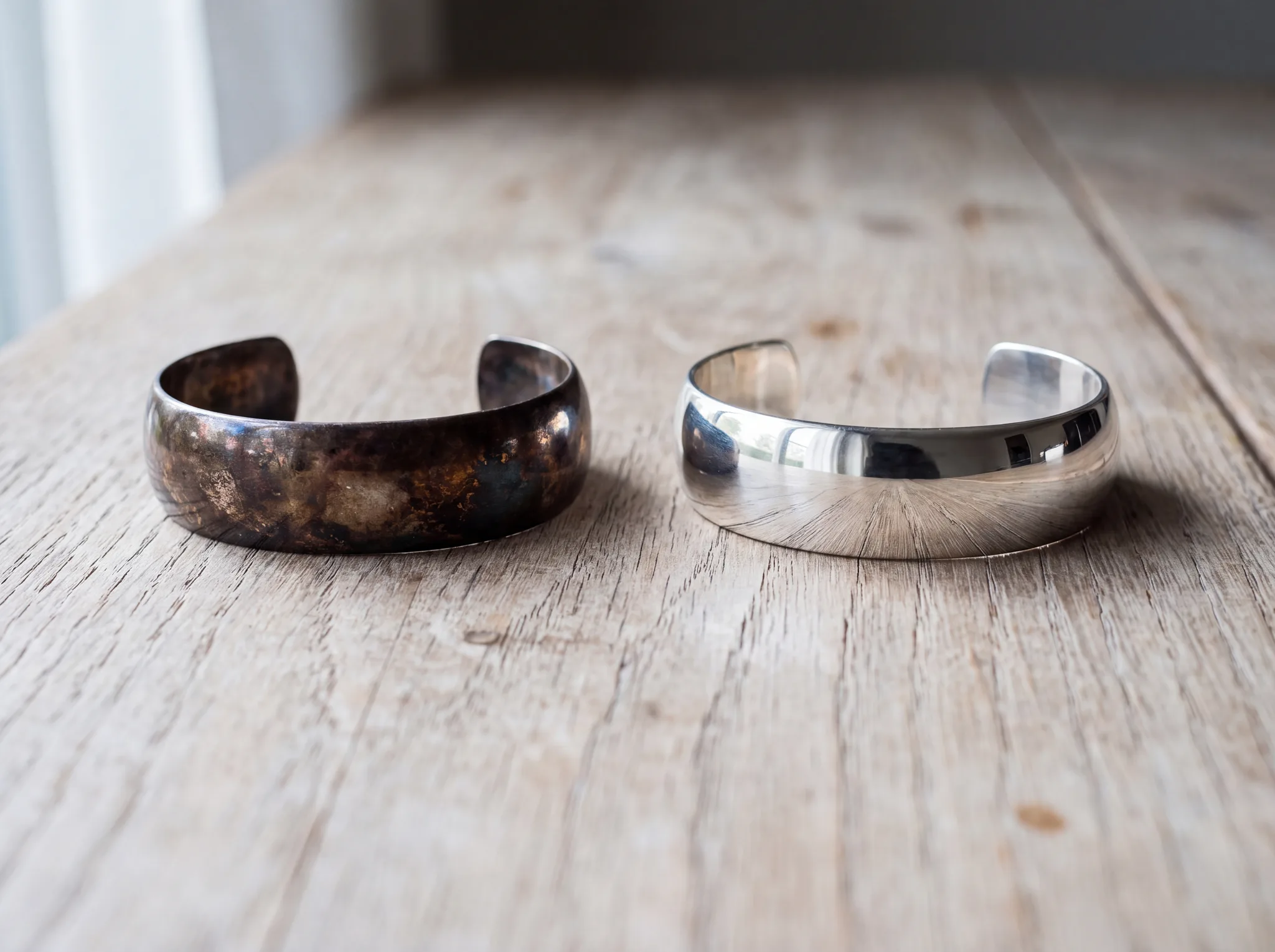
Tarnish is not dirt and it will not wash off. It is silver sulphide, a thin layer that forms where the surface meets sulphur compounds in the air, in wool and in rubber bands. Soap and water take grime off tarnished silver and leave the tarnish behind.
A silver polishing cloth is the right tool. It carries a very mild abrasive and a tarnish inhibitor, and you control where it goes, so you can brighten the raised surfaces of a piece and leave the recesses alone.
A liquid dip is the one to be careful with. It dissolves tarnish everywhere at once, and a great deal of silver jewelry is darkened deliberately in its recesses to give the design depth. Marcasite, engraved work and almost anything antique depend on that contrast, and nothing at home puts it back.
Foil and baking soda does work, which is exactly the problem. Aluminium foil, hot water and bicarbonate of soda pull the sulphur off the silver, fast and indiscriminately. Use it only on a plain, unset piece of solid silver, and never on anything oxidised, antique or stone-set.
Gold, solid and plated
Solid gold is the easiest metal in the box. It does not tarnish and does not corrode, so cleaning gold jewelry at home is the warm water and mild soap routine above. Yellow, white and rose behave the same way in the bowl.
White gold has one extra consideration, which is the rhodium coating that gives it its bright cool white. A wash never harms it, but white gold reading warm at the edges has worn through its coating rather than got dirty.
Gold plated jewelry needs the opposite of all of that. The gold is a couple of microns over brass, silver or steel — a coating, not a metal you can work. Do not brush it, do not put it in an ultrasonic, and never use polish or a polishing cloth on it, because each of those takes off part of the layer and the base metal shows through once it is gone. A soft dry cloth after wearing is the whole routine.
Chains are their own case, because grime works into the links and a broken one is a different problem from a dirty one. Our guide to cleaning a gold chain covers both.
Diamonds and coloured stones
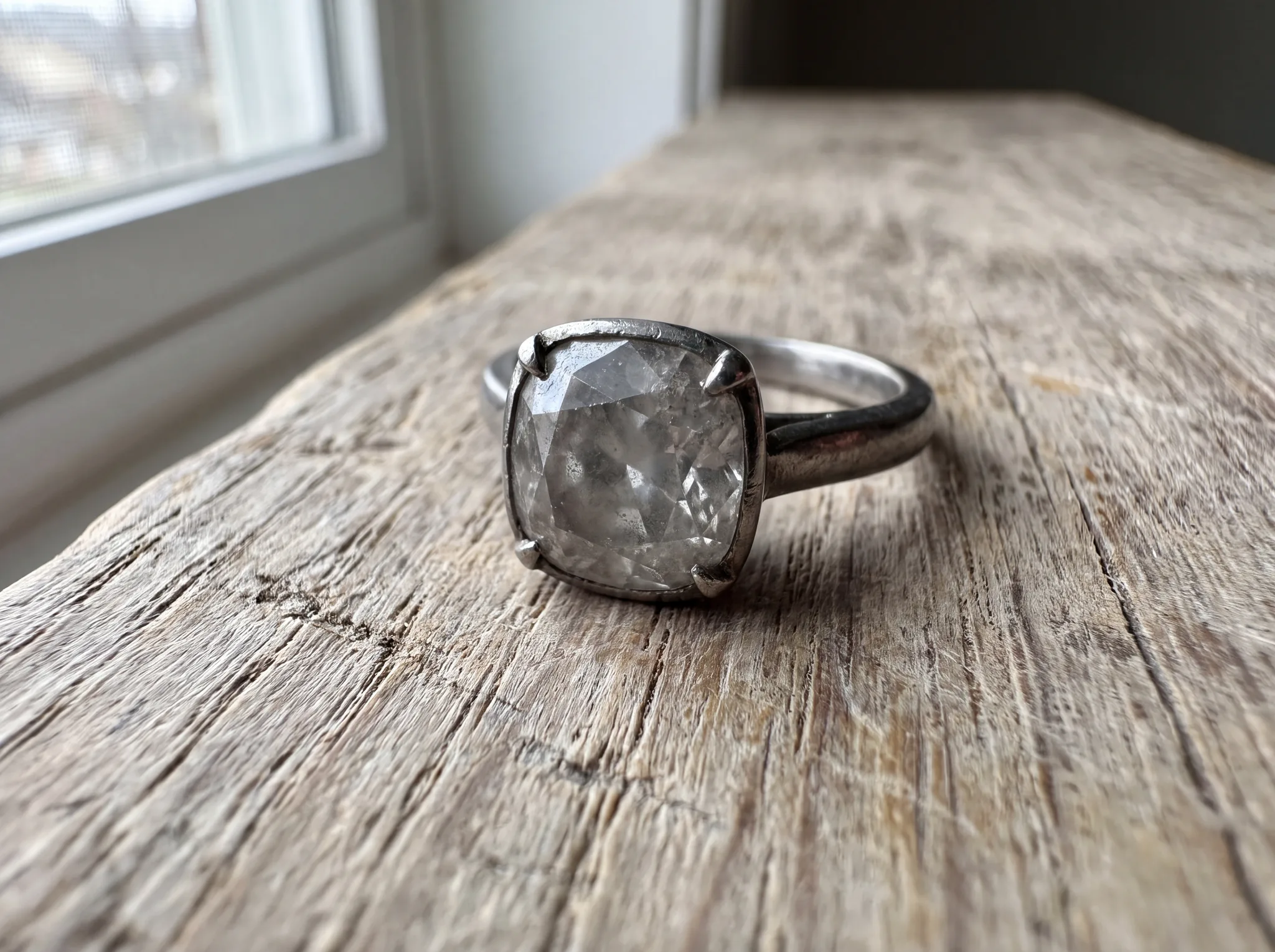
A diamond goes dull from underneath. Its brilliance depends on light entering the top and bouncing off the pavilion facets at the back, and those facets are the part of the ring pressed against your finger all day. Hand cream and skin oil collect there, the reflection stops, and the stone reads grey while the top still looks clean. So brush the underside of the setting rather than the table of the stone. If a stone shifts under the brush or a prong snags on the cloth, stop and have the setting checked.
Coloured stones change the rules, and they change per stone. Sapphire, ruby, garnet, amethyst, citrine, topaz and aquamarine are hard and stable and take the same warm soapy water. The fragile and porous ones stay out of a soak, away from hot water and away from any sudden change of temperature.
- Emerald — almost every emerald is fracture-filled with oil or resin. Soaking, heat and solvents draw the filling out and its fissures reappear as white lines.
- Opal — contains water, is soft, and cracks if it dries out or is shocked with a temperature change. Doublets and triplets are glued together.
- Turquoise — porous, and usually stabilised or dyed. Water, soap and oil soak in and change the colour permanently.
- Tanzanite — has perfect cleavage and is brittle, so it splits from a knock or a sharp temperature change.
- Anything treated or heavily included, fracture-filled diamond included. The treatment is the weak point, not the mineral.
Each of those takes a barely damp cloth, and so does any stone you cannot identify.
Pearls and other organics
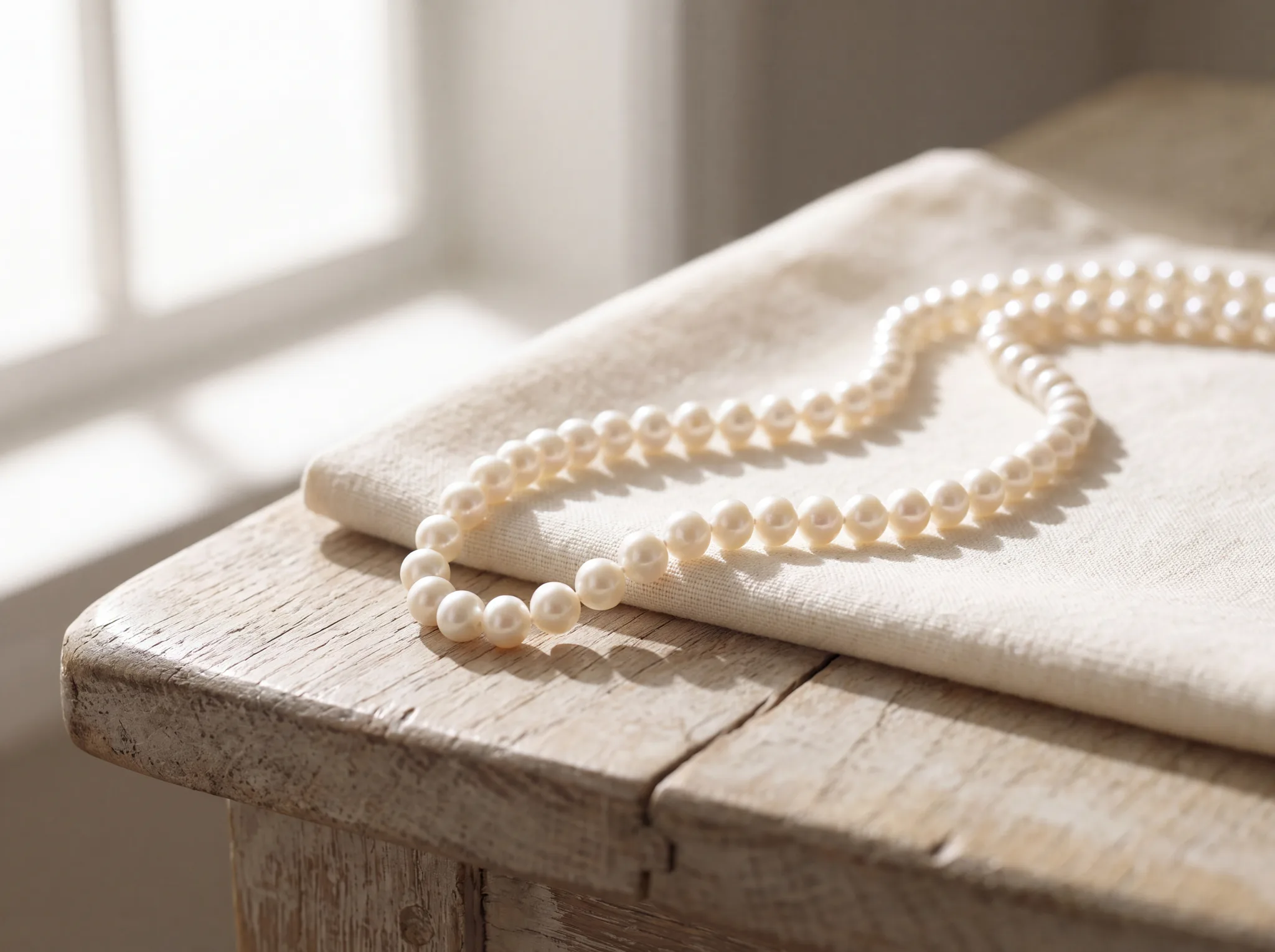
Pearls, coral, amber, jet and ivory are organic, and none of them behaves like a mineral. A pearl is layer upon layer of nacre built around a nucleus, soft enough to mark with a fingernail and reactive enough to be etched by perfume, hairspray or perspiration left on it overnight.
The whole routine is one habit. Wipe each pearl with a soft damp cloth when you take the strand off, and let it dry flat before it goes away. That removes the day’s skin acids before they work on the nacre.
Never soak a strand and never put one near an ultrasonic or a steamer. Cavitation dulls the nacre and can open its layers, and both water and heat attack the silk underneath, which stretches, discolours and eventually rots. Silk stretches with normal wear anyway, so a strand worn often needs pearl restringing every couple of years, knotted between each pearl so a break costs one pearl instead of all of them.
Ultrasonics and steamers
An ultrasonic cleaner drives high-frequency sound through a liquid, collapsing microscopic bubbles against whatever is in the tank. That cavitation reaches where no brush can and strips compacted grime out of a pavé gallery in minutes, and a steamer follows it with a jet of hot vapour. On a sound gold or platinum piece set with diamonds or sapphires, the pair are unbeatable.
Cavitation is a mechanical force, though, and it does not distinguish grime from a weak point. Anything loose gets looser, anything glued comes apart, and any fissure is worked on thousands of times a second. These stay out of the tank.
- Emerald, opal, pearl, turquoise, tanzanite, coral and amber — fragile, porous or organic, and damaged by the vibration, the heat or both.
- Any fracture-filled or heavily included stone, clarity-enhanced diamond included.
- Anything loose — a rattling stone or a worn prong comes out in the tank.
- Glued settings, costume and plated pieces, where adhesive fails and plating lifts.
- Antique and estate pieces, whose old solder joints and closed-back settings predate the technology.
A bench uses both machines constantly. The difference is not the equipment: a jeweler identifies the stones and tests every prong before deciding whether the piece goes in the tank.
Price a clean and finish
Priced off today’s metal market. No email and no phone number to see it.
What is the piece made of?
Storing it so it stays clean
Most of what a wash removes could have been kept off the piece. How you store jewelry decides how often you need to clean it. Keep pieces apart, keep them somewhere soft, and keep them dry.
Apart matters because hardness is relative. A diamond scratches everything including another diamond, and a pile of rings in one dish grinds itself dull over a year. Individual pouches or fabric-lined compartments solve that outright.
Dry matters most for silver, because moisture accelerates the sulphide reaction. An airtight bag with an anti-tarnish strip keeps silver bright for months, and silver should stay away from wool, rubber bands and cardboard. Organics want the opposite: pearls, amber and coral dry out if they are sealed in plastic, so give them a pouch that breathes and keep them out of direct light.
When home cleaning is not enough
There is a point where a wash stops helping. A ring that comes out of the bowl still looking flat is not dirty any more: years of contact have covered it in fine scratches that scatter light instead of reflecting it, and bringing it back means cutting the surface down and re-polishing it. A setting packed with grime is the other case — once the film has hardened under a pavé field a soft brush cannot reach it and a stiff one damages the setting.
White gold that has gone warm belongs here too, because nothing is on the surface to remove. The rhodium has worn through and you are seeing the alloy underneath, so it needs re-plating rather than cleaning, and our guide to replating white gold walks through how the finish is renewed. Anything that has stopped responding to a wash is worth having its prongs and clasp checked too.
Professional cleaning and finishing
What a bench does differs in kind from what you can do at a sink. The piece is examined under magnification, the stones and any treatments are identified, the prongs and clasp are tested, and only then is a method chosen. The finish is then worked back with compounds of decreasing coarseness until the surface reflects cleanly again. A polish takes a very small amount of metal each time, which is why it is not a thing to do often.
That is the work behind jewelry polishing in Atlanta, and we do all of it in our own Snellville workshop rather than sending pieces out. An annual clean and check is the most useful habit you can build around a ring worn every day, because the inspection that comes with it finds a thinning prong while it is still a small repair.
Frequently Asked Questions
Related guides & collections
- Jewelry repair in AtlantaEvery service we run in house, with free estimates before any work.
- Jewelry polishing in AtlantaA bench polish for the dullness a wash at home will not lift.
- Why white gold turns yellowWhat the rhodium plating does and how often it needs renewing.
- Broken chains and failed claspsWhere chains actually break and what's worth fixing.
- Jewelry by metalGold, white gold, rose gold and silver across the collection.
Free estimate, no obligation
Let a Bench Take It From Here
Bring the piece to our Snellville workshop near Atlanta and we will clean it, check the settings under magnification and tell you honestly what it needs. Call (704) 684-7530 or book ahead.
Prefer to talk? Call (704) 684-7530