Repair Guide · Published · Updated September 2026
Broken Chains and Failed Clasps
A broken necklace or bracelet almost always fails at one of two points — the jump ring nearest the clasp, or the clasp itself — and fixing either one is routine bench work for a jeweler, not a reason to replace the piece.
A single snapped link, a bent jump ring, or a clasp that no longer catches is almost always worth repairing. A chain that has already broken in several places, or one that has worn visibly thin at multiple links, has usually reached the point where a new chain makes more sense than another repair.
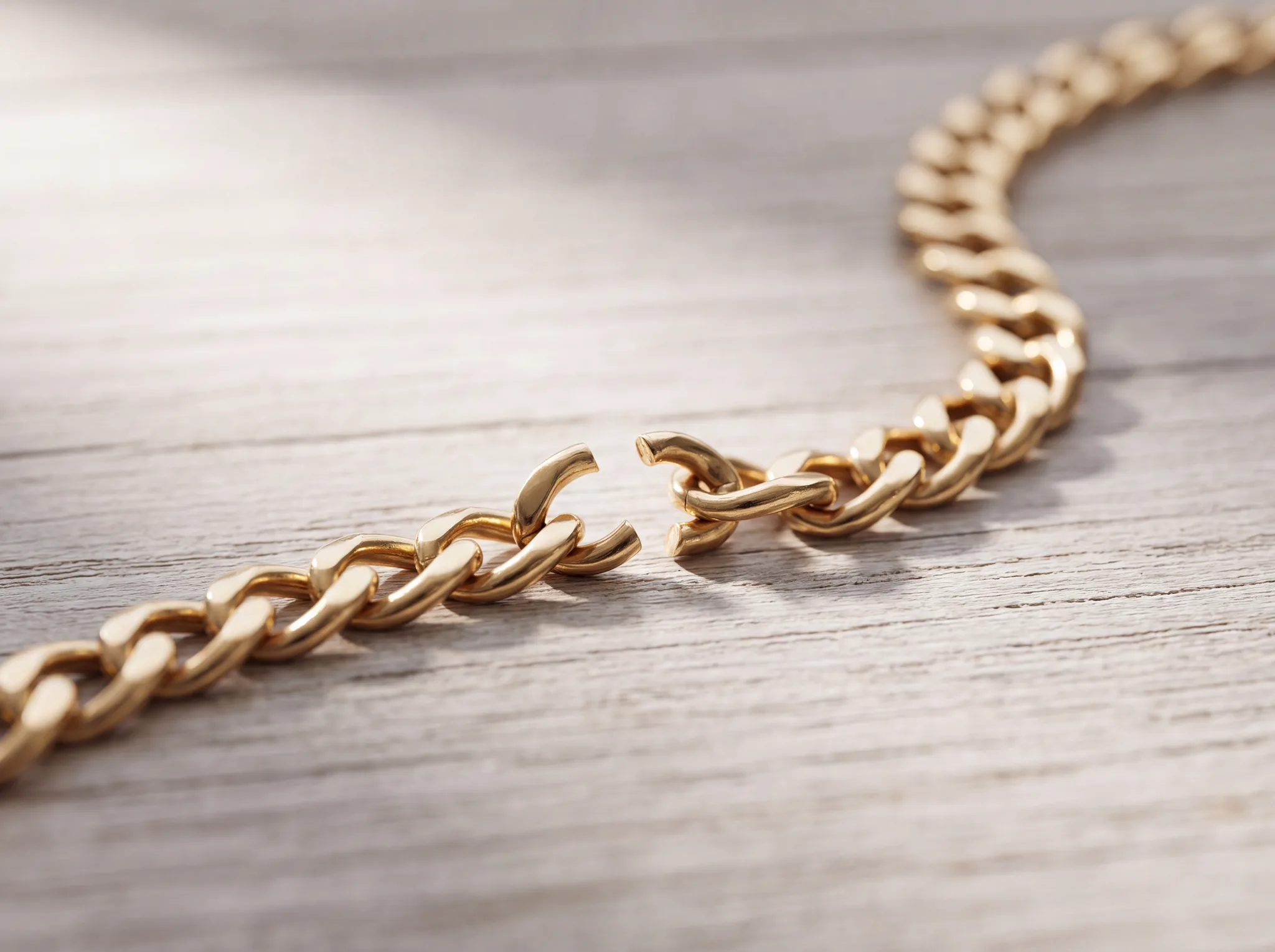
Where chains actually break
Fixing a broken necklace chain starts with finding the actual point of failure, and it’s almost always one of three spots. The most common is the jump ring right next to the clasp — the small connector ring that takes the pull every time you put the chain on or take it off. The link beside it is a close second, since it absorbs the same repeated tugging. On a pendant chain, the third spot is the bail, where the pendant hangs and shifts with every movement.
None of this means the chain was poorly made. A well-made chain still flexes thousands of times a year, and metal fatigues at its weakest point long before the rest of the chain shows any wear. A snag on a sweater or a zipper, or simply years of being taken on and off, is usually enough to open a link that has already been quietly weakening.
Thinner chain styles feel this wear the fastest. A fine rope or cable chain has less metal at each link than a curb or Cuban chain of the same length, so the same everyday stress reaches its breaking point sooner. That’s not a reason to avoid a delicate chain — it just means a jump ring repair shows up a little more often over the years.
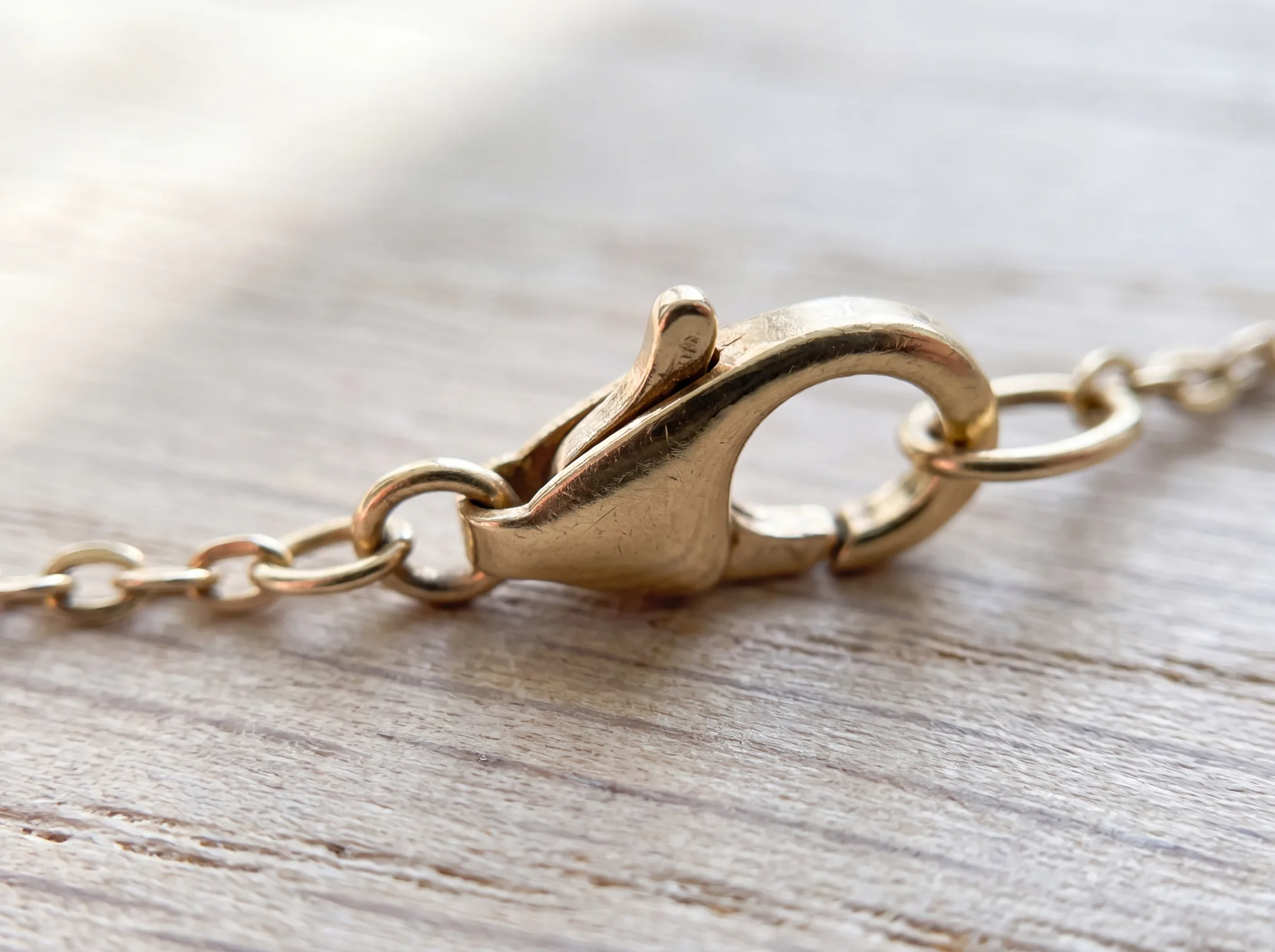
Clasps that no longer hold
A clasp that won’t stay closed is a different problem from a broken link, and it’s just as common. Lobster clasps rely on a tiny internal spring that loses tension with years of use, until the lever no longer snaps shut with any real force. Spring ring clasps fail the same way, just with a different mechanism. Box clasps wear at the tongue, the small tab that locks into the catch, until it no longer holds under normal movement.
In most cases a worn clasp is replaced rather than repaired. Soldering the mechanism back together doesn’t restore the spring’s tension, so the clasp would just open again under the same stress that caused the first failure. A new clasp of the same style and metal is soldered on in its place, and the rest of the chain is untouched.
Bracelet clasps wear faster than necklace clasps for the same reason a hinge wears faster on a door you use constantly: a bracelet clasp opens and closes every time you put it on, while a necklace clasp on a chain you rarely remove barely gets touched. If you take a bracelet on and off daily, expect its clasp to be the first thing that needs attention.
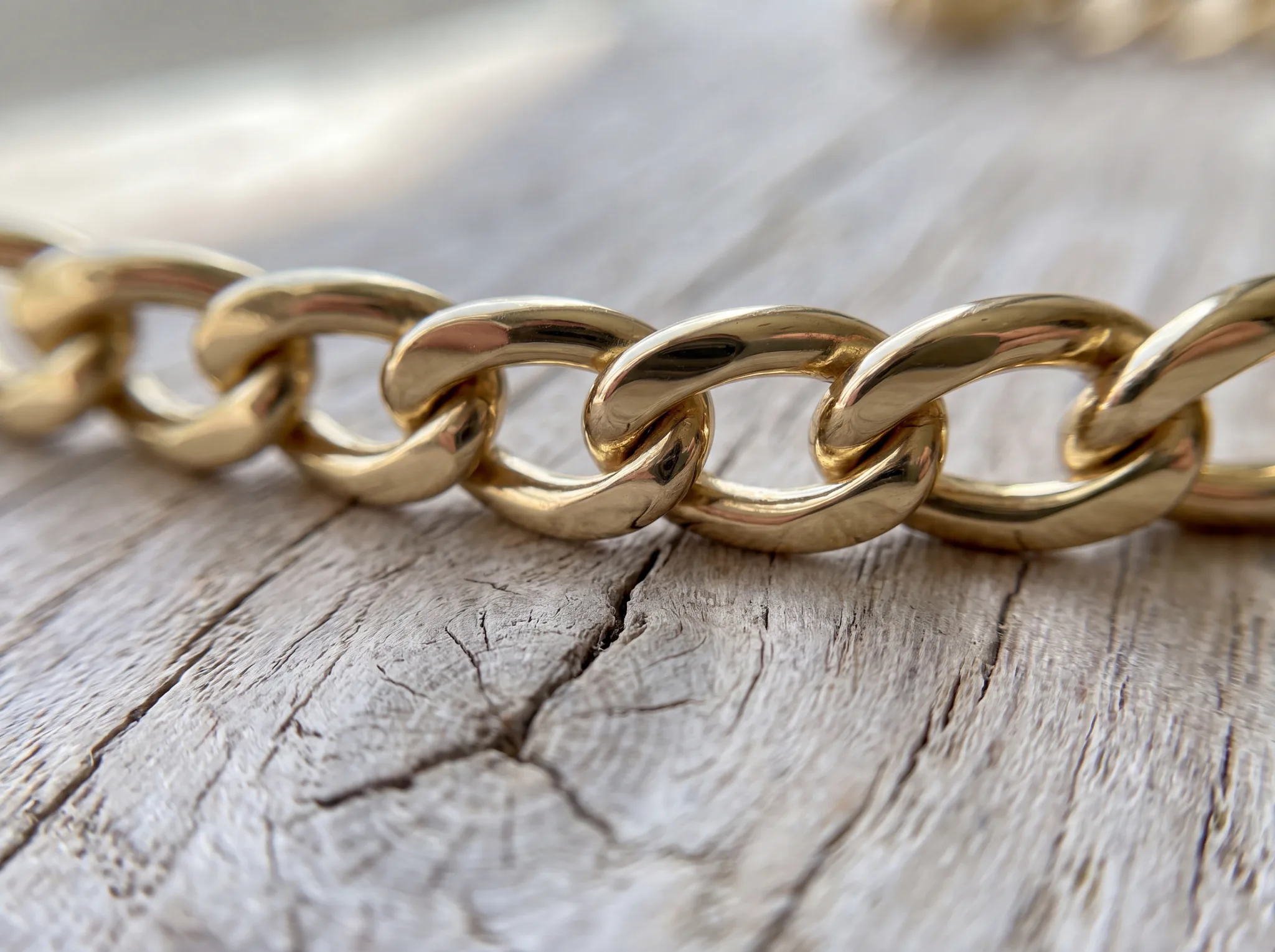
What a soldered repair looks like
Soldering means heating the two broken ends until they fuse, without adding or removing any of the chain’s own metal. A laser does this by heating a pinpoint area for a fraction of a second, so the links on either side of the repair never discolor and the finish stays even. A torch repair works on the same principle over a wider area, which is fine on a sturdy chain but needs a steadier hand on anything thin, since the heat has further to travel before it stops spreading.
Whether hollow or solid changes the approach. Hollow chains — herringbone, rope, and some Cuban styles — have thin walls that can scorch or even collapse under too much heat, so a laser is almost always the right call. A solid chain has more metal to work with and tolerates either method, which is part of why solid repairs are usually the quicker of the two.
Color match matters as much as the join itself. Yellow, white, and rose gold each take a slightly different solder, and using the wrong one leaves a faint line at the repair even after polishing. A jeweler matches the solder to the karat and color of your specific chain, which is part of why a repair on a mixed-metal or two-tone piece takes a bit more care to come out invisible.
What your chain repair will cost
Priced off today’s gold and silver. No email and no phone number to see it. Pricing a different piece? All seven repairs are on the repair cost estimator.
What is the chain made of?
When a chain is not worth repairing
Not every broken chain is worth fixing, and a straightforward jeweler will tell you so before doing any work. A few signs point the other way:
- It has broken in three or more places. A chain that keeps failing in different spots is telling you the metal itself is fatigued, not just unlucky at one link.
- The links are worn visibly thin. Metal that has rubbed thin against skin and clothing for years has less material to hold the next repair, so a new break nearby is only a matter of time.
- The base metal shows through the plating. On a plated chain, a replate covers the color again but doesn’t add back the missing thickness where it’s worn through, so the same spot tends to show again before long.
In any of these cases, a repair is usually a short-term fix rather than a lasting one, and we’ll say so plainly rather than solder a chain that’s likely to come back. A chain that needs the same kind of attention every few months isn’t unlucky — it’s telling you the metal itself has reached the end of what a repair can fix, and a new chain will hold up better than one more solder joint.
Keeping a chain clean
The simplest way to clean a gold chain at home is also the safest one: warm water, a drop of mild dish soap, and a few minutes of soaking to loosen everyday buildup from lotion, perfume, and skin oils. A soft brush works loose anything caught in the links, and a thorough rinse followed by drying completely before storage keeps water from sitting in the joins.
What looks like tarnish on a gold chain is usually the other metals in the alloy reacting with air and skin, not the gold itself — solid gold doesn’t rust or corrode. Lower-karat gold has more of those alloy metals in the mix, so a 10k chain tends to dull faster than an 18k or 22k piece of the same design. Plated chains are the one exception worth handling carefully: scrubbing or anything abrasive wears through the plating layer faster than ordinary wear would. For the full method across metals, gemstones, and pearls, see our guide to cleaning jewelry at home.
Chlorine is the one thing worth actively avoiding. Pool and hot tub water reacts with the alloy in gold jewelry far more aggressively than everyday tarnish does, and can pit or discolor a chain in a single swim. Sterling silver has the opposite problem: it needs cleaning more often, since it tarnishes visibly within weeks of regular wear even when it’s simply sitting in a drawer.
Bringing a chain in
There’s no appointment needed for a first look. A jeweler examines the break at the bench, tells you honestly what it needs and roughly how long it will take, and gives a free estimate before any work starts.
Most broken chains are back on your neck within a day or two, and a straightforward link or clasp repair often happens the same day you drop it off. Bring the chain in as it is — there’s no need to untangle a knotted chain or separate a pendant first, since both are handled at the bench. Every repair gets a free, honest look before any work begins, and if the chain genuinely isn’t worth fixing, we’ll tell you that instead of soldering it back together anyway. Start with chain repair in Atlanta to price your repair or book a drop-off.
Frequently Asked Questions
Related guides & collections
- Jewelry repair in AtlantaAll in-house services and free estimates.
- Chain repair in AtlantaSnapped links and worn clasps, often same day.
- How long jewelry repairs takeTypical turnaround for chain, ring, and clasp work.
- How to clean jewelry at homeSafe cleaning for gold, silver, diamonds and pearls.
- Shop gold chainsCuban, rope, figaro, and box chains in 10k and 14k.
Free estimate, no obligation
Bring Your Chain to the Bench
Drop your chain at our Snellville workshop near Atlanta for a free, exact estimate — most breaks and clasp repairs are ready in days, many the same day. Call (704) 684-7530 or book ahead.
Prefer to talk? Call (704) 684-7530