Metal Guide · Published · Updated August 2026
What Is White Gold?
White gold is real gold — the same yellow metal that comes out of the ground — melted with white metals such as palladium, nickel, silver and zinc, then usually plated with rhodium for its bright, cool finish. Nothing about it is imitation. A 14K white gold ring holds exactly as much pure gold as a 14K yellow gold ring; only the alloy around that gold, and the thin plating over it, are different.
That one fact answers most of what people want to know about it — why it is valuable, why it needs occasional attention, and why the color you see on the shelf is not quite the color of the metal underneath.
What is white gold?
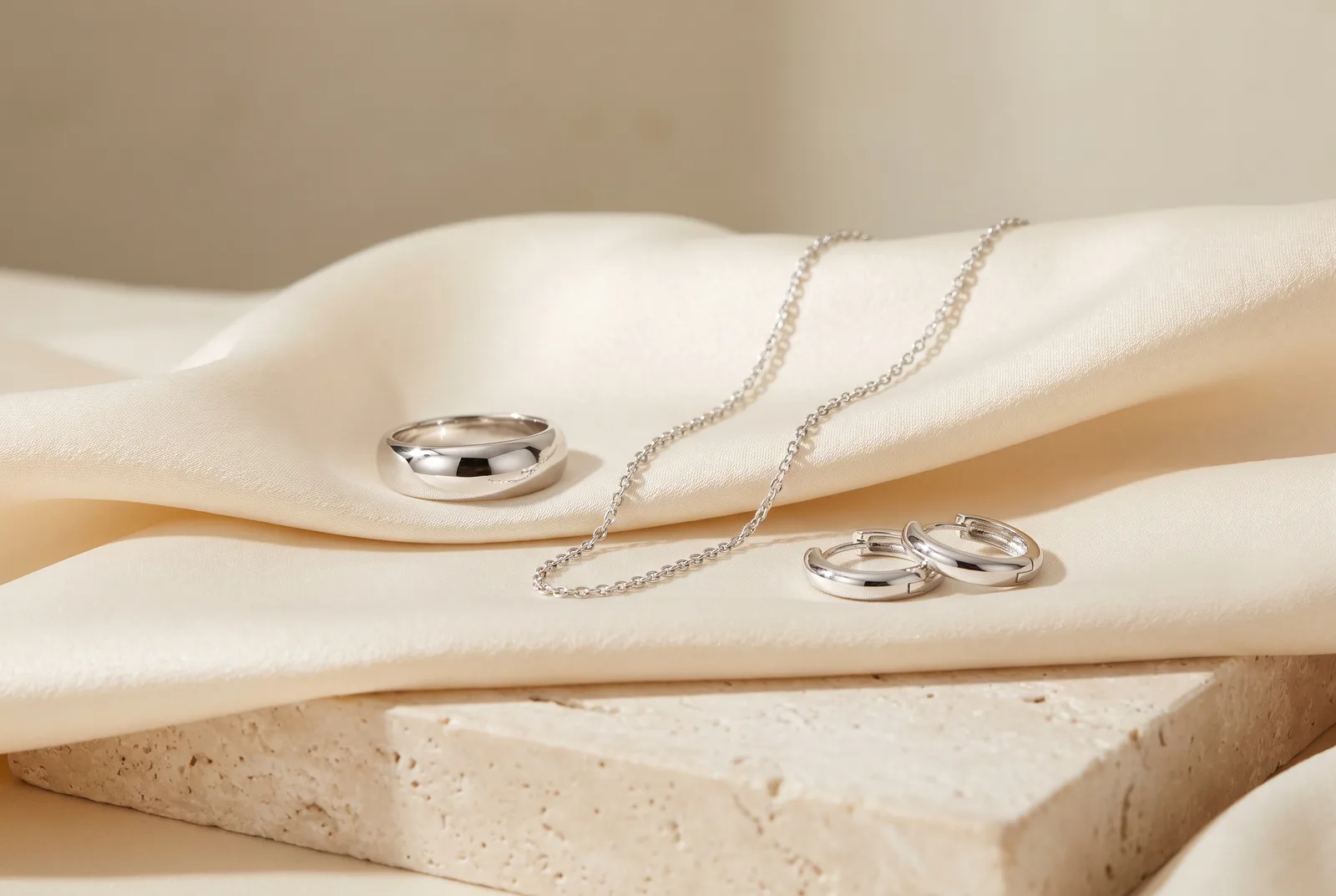
White gold is an alloy: pure gold combined with one or more white metals, finished in most cases with a rhodium plating. It exists because pure gold is both too soft to wear daily and stubbornly yellow. Alloying fixes the first problem and, with the right metals, most of the second — the U.S. Geological Survey notes that white gold was originally developed to imitate platinum, a naturally white metal that was scarce and expensive.
Think of a finished piece as three things stacked:
- Gold. The karat — 10K, 14K or 18K — states exactly how much pure gold is in it, and it is the same statement on a white piece as on a yellow one.
- The white alloy. Palladium, nickel, silver and zinc, in varying proportions, doing two jobs at once: hardening the metal and taking the yellow out of it.
- The rhodium plating. A microns-thin surface layer that supplies the bright mirror white. It is a finish, not part of the alloy, and it is the only one of the three that wears.
Everything else on this page follows from that stack. For the pieces themselves — necklaces, rings, pendants, bracelets and earrings — see our white gold jewelry collection.

What is white gold made of?
Gold, plus white alloy metals, plus rhodium on the surface — and the karat tells you the ratio of the first to the second. Karat is a fraction out of 24, so the arithmetic is fixed and the same everywhere:
- 18K white gold — 75% pure gold, 25% alloy. More gold, a warmer underlying color, a softer metal.
- 14K white gold — 58.3% pure gold, 41.7% alloy. The US fine-jewelry standard, and harder than 18K.
- 10K white gold — 41.7% pure gold. The hardest and palest of the three, and the least expensive.
- 24K — 99.9% pure gold, and therefore always yellow. There is no such thing as 24K white gold; making gold white requires alloying it with something else.
Two alloy systems dominate, and which one a piece uses matters more than most people expect. Nickel white gold is harder, whiter on its own and cheaper to make — the USGS describes a typical formulation as roughly 75% gold with about 25% nickel and zinc — but nickel is one of the most common contact allergens there is, and a nickel-sensitive wearer can react to it once the plating wears through. Palladium white gold substitutes a platinum-family metal: costlier, slightly softer, a touch greyer in tone, and far kinder to sensitive skin. If you have ever reacted to a watch back or a belt buckle, this is the distinction to ask about before you buy.
What makes it white is really two things. The alloy takes the yellow most of the way out, and the rhodium plating finishes the job. Left unplated, white gold is not the silver-white of a magazine photograph — it is a pale, faintly warm gray, nearer to light champagne. That is normal, and it is why almost every white gold piece sold anywhere is plated.
Karat also shapes what a design can do. Letter and name pieces — our white gold initial necklaces, for instance — are usually made in 14K precisely because the extra alloy holds a fine outline and a thin bail without bending.
Is white gold real gold?
Yes. White gold is real gold, and at the same karat it contains exactly as much pure gold as yellow gold. 14K is 58.3% gold whether the piece is white, yellow or rose; 18K is 75% in all three. The karat stamp is a statement about gold content and nothing else — it says nothing about color, because color is not what it measures.
The confusion is understandable, because two separate things are doing the work. The alloy metals change the color of the gold itself, and the rhodium plating changes the color of the surface. Neither one removes gold from the piece. A hallmark of 14K or 585, 18K or 750, means the same gold content on a white ring as on a yellow chain.
It is worth saying what white gold is not. It is not silver, which is a different element entirely and tarnishes in a way gold does not. It is not platinum, though it is made to resemble it. And it is not gold-plated base metal — in a plated piece the gold is the thin surface layer, whereas in white gold the gold is the body of the piece and the plating is rhodium.
How is white gold made?
In two stages: the metal is alloyed, then the finished piece is electroplated. Neither stage is exotic, and both have been done essentially the same way for a century.
1. Alloying. Pure gold is melted and combined with measured quantities of white metals — palladium or nickel, with silver and zinc — in the ratio the karat requires. The molten alloy is cast into ingots or grain, then worked into sheet, wire or castings from which the piece is made.
The color of the metal is decided here, at the crucible, and it is a property of the whole body of the piece rather than of its surface.
2. Rhodium electroplating. The finished, polished piece is cleaned, then suspended in a rhodium solution with an electric current running through it. The current deposits an even layer of rhodium — a hard, bright white metal from the platinum group — over every exposed surface, measured in microns rather than millimetres.
This is why a new white gold piece looks whiter than the alloy it is made from, and, as the GIA notes in its guide to choosing between the white metals, why occasional re-plating is part of owning one.
One consequence worth carrying forward: because the plating is a surface and the alloy is a body, wear reveals rather than destroys. A worn white gold ring is not damaged — it is showing you the metal it was always made of.
Is white gold valuable?
Yes, and its value tracks karat and weight — not color. The intrinsic worth of any gold piece is the pure gold in it: the karat fraction multiplied by the weight, valued at the day’s gold price. A 14K white gold band and a 14K yellow gold band of the same weight hold the same amount of gold and are worth the same as metal. The rhodium plating adds nothing to that figure; there is too little of it to matter.
Three things follow, and they are the ones that usually surprise people:
- 18K is worth more than 14K, all else equal — not because it looks better, but because it is 75% gold against 58.3%.
- Weight matters as much as karat. A heavy 14K piece can carry more gold than a delicate 18K one, which is why two rings with the same stamp can be valued very differently.
- Resale sits below retail, for every metal. A retail price covers design, fabrication, setting, stones and the work of the bench, none of which a melt-value buyer pays for. That gap is not particular to white gold.
The one place color does move a number is the second-hand market for finished jewelry, where fashion has some say in what a piece fetches. As raw metal, though, gold is gold — and a jeweler valuing your piece will weigh it and read its karat, not look at it.

White gold vs. yellow gold vs. platinum
The short version: yellow gold never needs re-plating, platinum never needs re-plating and costs the most, and white gold buys the platinum look for less in exchange for a maintenance cycle. All three are durable enough for daily wear; they differ in what they ask of you afterwards.
- White gold. Cool and bright, which makes a diamond read whiter and cleaner than a warm setting does. Its color is partly a surface, so it is the only one of the three with a plating cycle.
- Yellow gold. Its color lives in the alloy, so there is nothing to renew — it is the lowest-maintenance of the three and the traditional choice for warm-toned stones. See yellow gold jewelry.
- Platinum. Naturally white the whole way through, never plated, and noticeably denser — the same design simply weighs more in the hand. It costs the most up front and asks for nothing but the occasional polish. See platinum jewelry.
Held side by side in good light, a rhodium-plated white gold piece and a platinum one are very close to the same color; weight is the more reliable tell. The GIA makes a related point in its comparison of white gold and silver, which is worth reading if you are trying to tell the white metals apart at a glance.
If the question is specifically about a ring you will wear every day for decades, the trade-offs shift — weight, prong security and the plating cycle all count for more. Our guide to white gold for engagement rings works through that comparison in ring terms.
Caring for white gold
White gold needs two things: ordinary cleaning, and re-plating when the rhodium eventually wears through. How often the second is needed depends entirely on wear — commonly somewhere between one and three years for a ring worn daily, and far longer for earrings or a pendant, which spend their lives barely touching anything.
Re-plating. The first sign is a faint warmth creeping in, usually on the underside of a ring band where it meets the hand, or along the high points of a setting. It is cosmetic, not structural — the gold underneath is intact.
A jeweler cleans and polishes the piece and deposits a fresh rhodium layer; it is routine bench work. Rings on a working hand come round soonest; a chain almost never does.
Everyday cleaning. Warm water, a drop of mild dish soap and a soft toothbrush lifts most of what dulls a piece, which is skin oil and hand cream rather than tarnish — gold does not tarnish. Rinse, then dry with a soft cloth. Avoid abrasive polishes and the cloths sold for silver: they are designed to remove a surface layer, which is exactly what you do not want on a plated metal.
What shortens the plating’s life. Chlorine is the main one — pools and hot tubs attack the alloy metals over time — along with household bleach and cleaning products. Take rings off for the gym, gardening and washing up; most plating wear is abrasion, and abrasion is avoidable. Store pieces separately rather than loose in a box together, so harder stones cannot scratch softer metal.
If your piece contains nickel and you notice irritation once the plating thins, that is worth acting on rather than living with: re-plating restores the barrier, and a palladium-alloyed replacement removes the cause.
Frequently Asked Questions
Related guides & collections
The color is easier to judge in person
Compare the Metals Side by Side
Photographs flatten the difference between white gold, platinum and yellow gold. We keep metal samples in every metal and karat, so you can hold all three under the same light — and see our own custom work — at our Snellville showroom near Atlanta.
Prefer to talk? Call (704) 684-7530