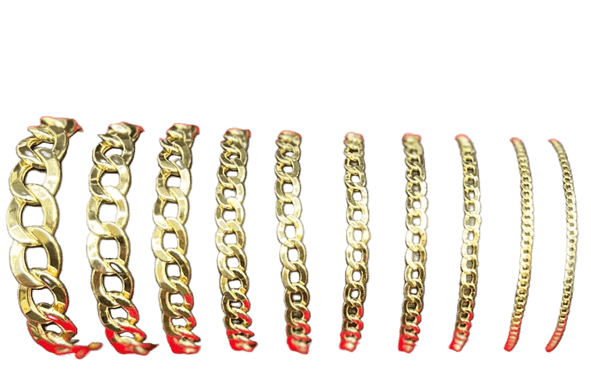
14K Gold on the Wrist
A bracelet takes more daily impact than any other piece of jewelry — it knocks against desks, doorframes, and steering wheels dozens of times a day. That’s why 14K gold is the standard choice for bracelets: at 58.3% pure gold alloyed with stronger base metals, 14K holds its shape and resists the dents and wear that softer, higher-karat gold picks up faster. The alloy also carries clasp strength — the box clasps, lobster clasps, and hinge mechanisms holding a bracelet closed take constant flexing, and 14K’s added hardness keeps those mechanisms from fatiguing prematurely.
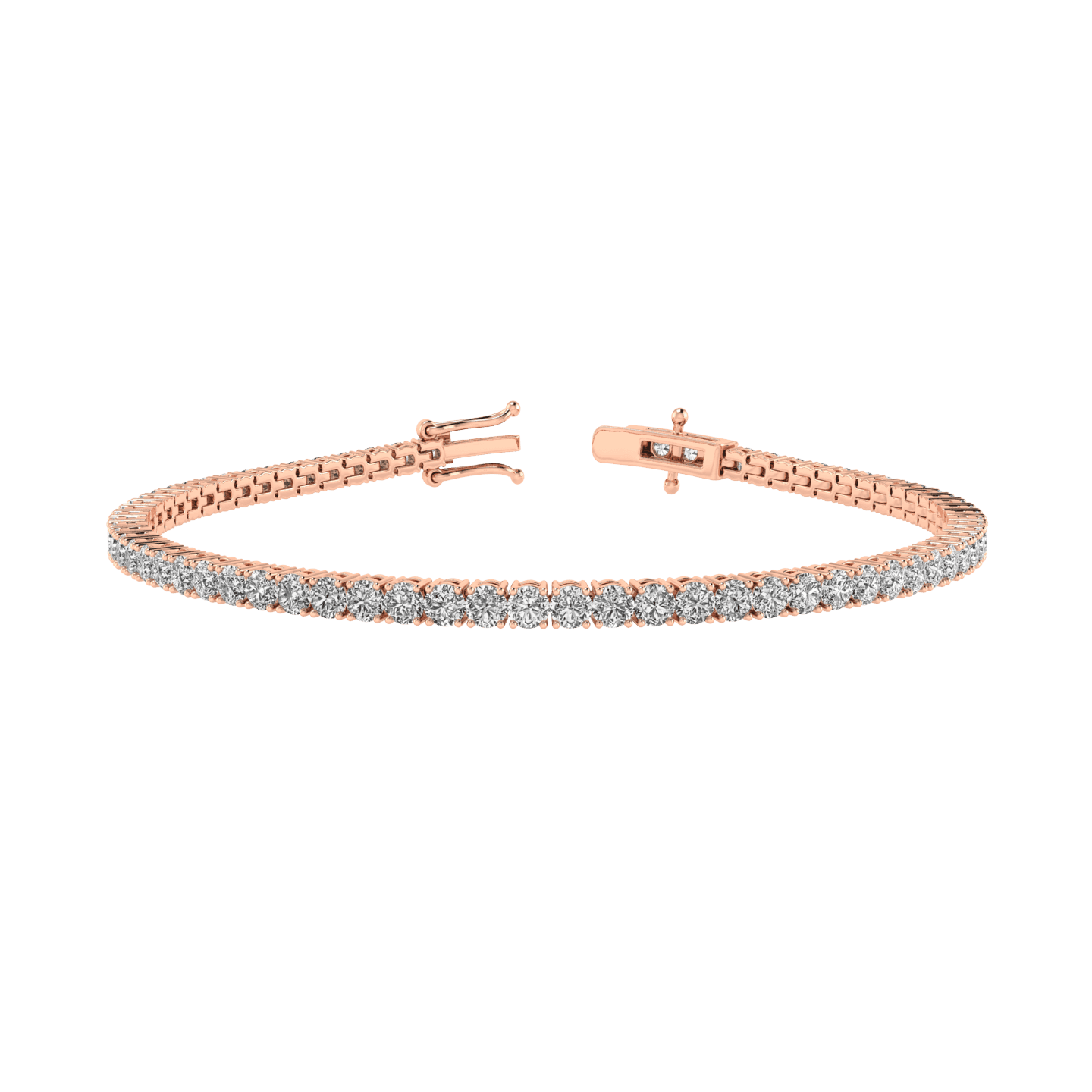
Gauge — the thickness of the metal itself — matters just as much as karat. A thin, delicate 14K gold tennis bracelet with narrow prongs moves differently on the wrist than a heavier one, and matching gauge to how often a piece is worn is part of what keeps clasps and links from thinning over years of use. 14K comes in yellow, white, and rose gold at the same karat and durability — see yellow vs. white vs. rose gold for how the three colors compare.
Across the Styles — Tennis, Bangle, Cuff & Chain in 14K
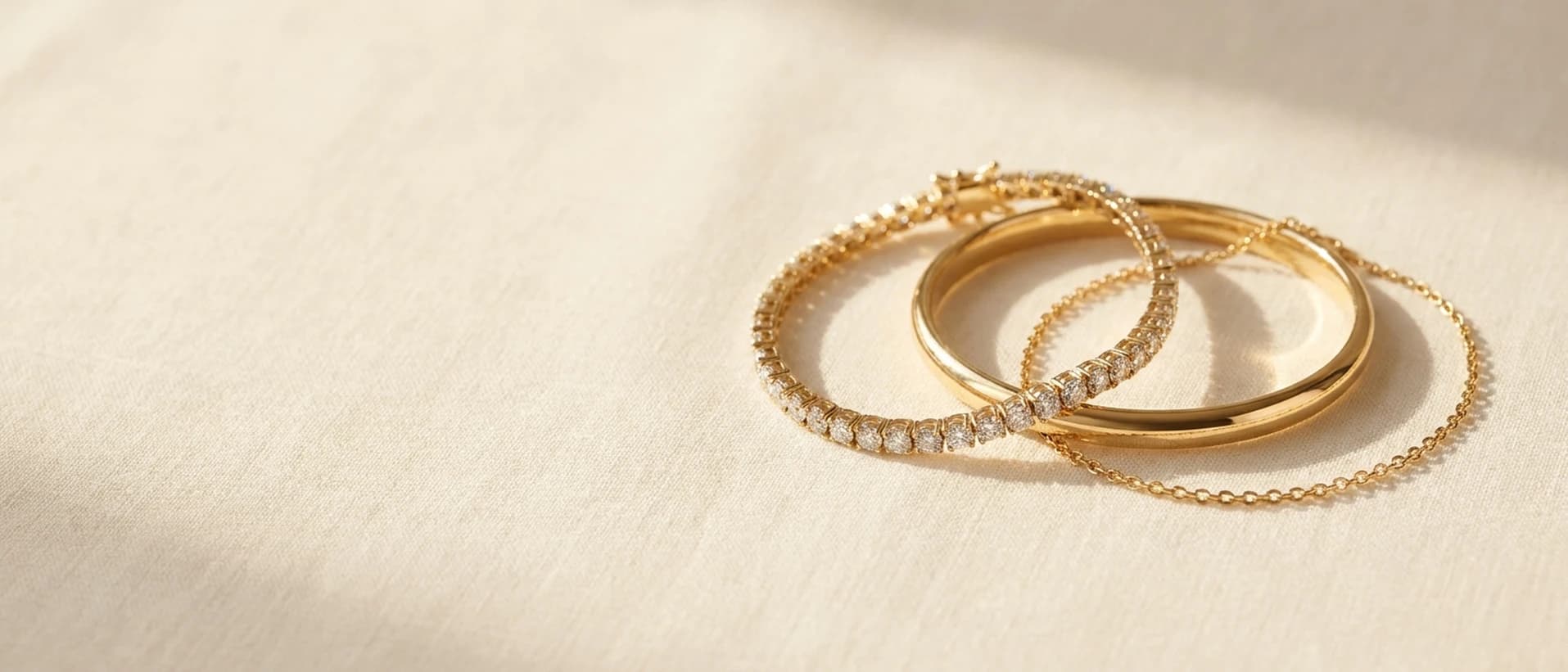
14K gold runs across every bracelet style in the full bracelet collection. Tennis bracelets set a continuous line of diamonds into a 14K setting, built for everyday wear because the metal holding the prongs is strong enough to keep stones secure through years of contact. Bangles are closed or hinged circles that slide onto the wrist — 14K gold bangles stack cleanly with each other in yellow, white, rose, or two-tone.
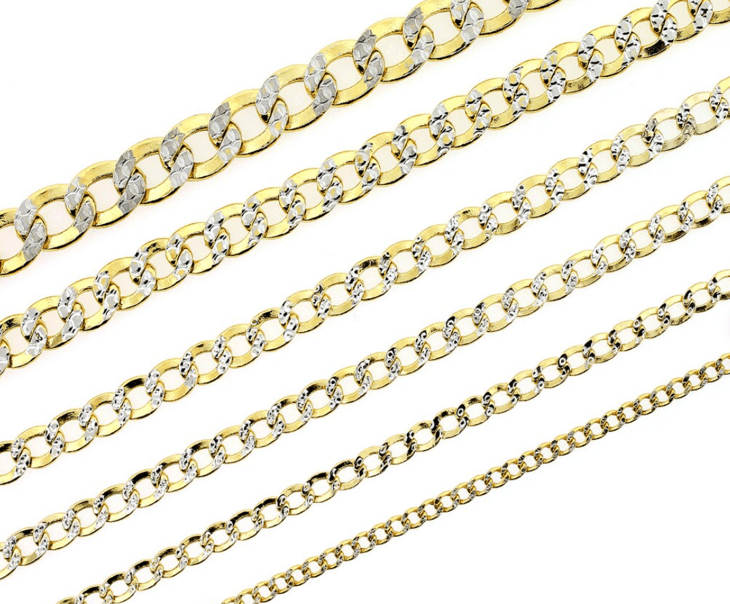
Cuffs are the open, C-shaped style that reads as sculpted metalwork rather than chain, and chain-link bracelets range from fine cable chains to bold curb links — all available in 14K gold. Whichever style you’re drawn to, the 14K underneath is the same durable alloy; the difference is entirely in how the metal is shaped.