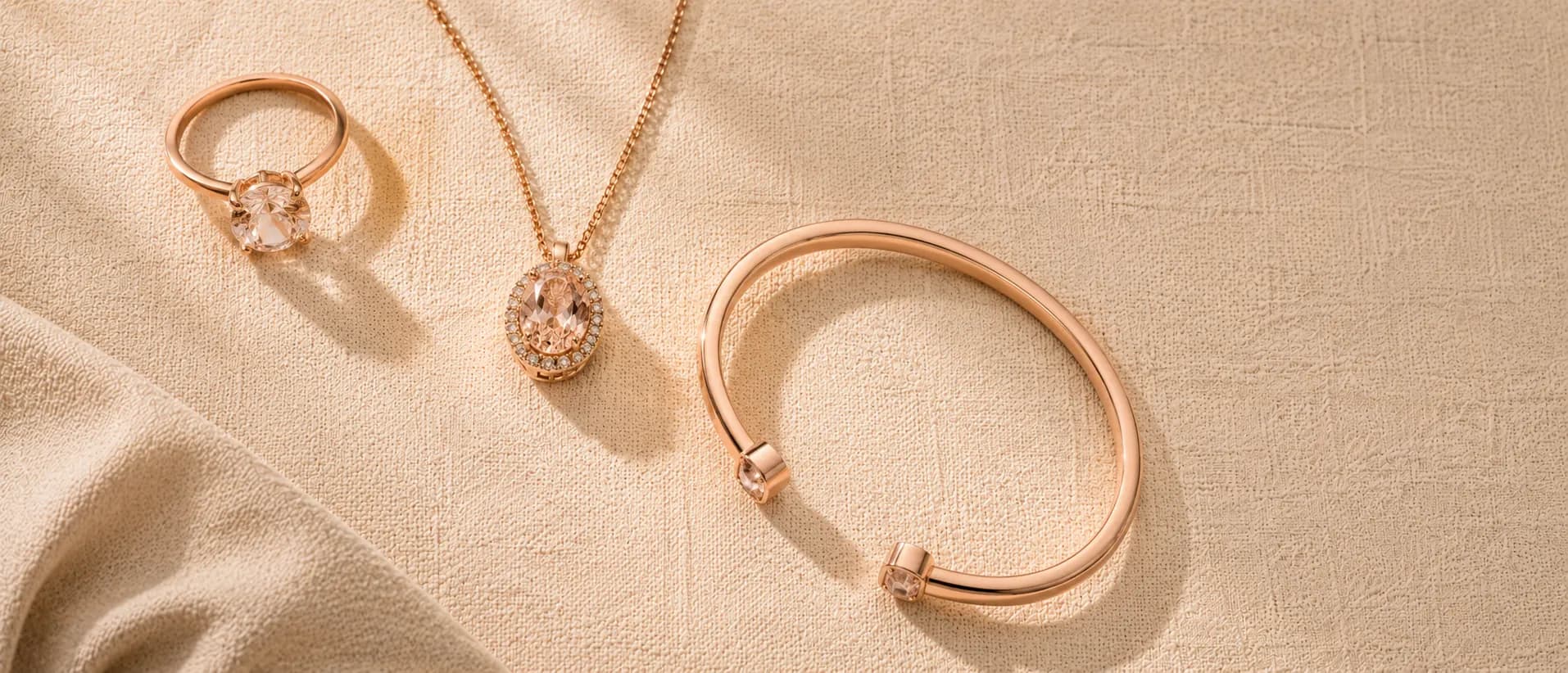
Why Rose Gold Is Pink, and Why 14K Is the Pinkest

Rose gold is gold mixed with copper. Copper is a red metal, and its color shows through.
There is no pink coating. The color is in the alloy itself, so it never fades.
The more copper, the deeper the pink. So here is the surprise. A lower karat is pinker.
14K rose gold is 58.3% gold, with the balance copper and silver. That leaves room for copper, so it reads deeply pink.
18K rose gold is 75% gold. There is less copper to drive the color, so it reads paler, closer to peach.
10K rose gold is 41.7% gold. It is the deepest pink and the most affordable.
Custom karat — we can source any karat on request.
Rose gold is also called pink gold or red gold. The color came out of 19th-century Russia and peaked again in the 1920s Art Deco years. Mainstream demand has held steady since the 2010s revival.
It sits between warm and cool. That is why it suits so many skin tones.
Yellow gold is its closest neighbour. See all three colors together.
Rose Gold Necklaces, Bracelets and Rings

Rose gold reads romantic, vintage and modern at once. That is a rare mix in a metal.
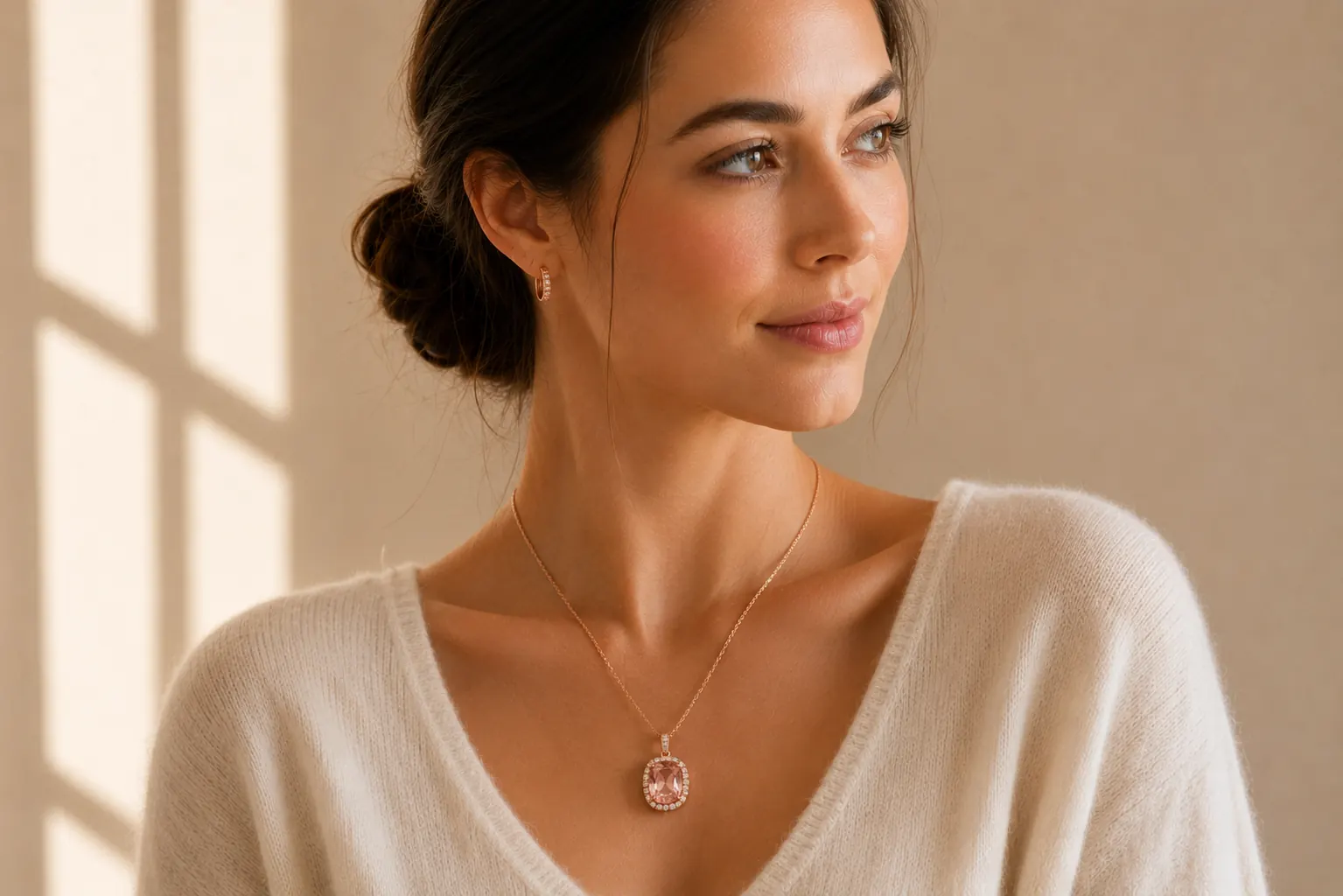
Rose gold necklaces work as a single pendant or in a layered stack.
Rose gold bracelets cover bangles and tennis styles. The warm pink shows well against the wrist.
Rose gold rings stack beautifully, alone or mixed with yellow.
A rose gold jewelry set matches a necklace to a pair of earrings.
Warm-toned gemstones are the natural match. Morganite, pink sapphire, ruby and peach garnet all sit happily in rose gold.
Pearls and smoky quartz work too. So do diamonds, which pick up a little warmth from the metal. How to choose a stone helps here.
Rose gold never needs re-plating. A polish brings the bright pink back if it dulls.
Over many years the copper can darken a little in the crevices. That is an aged look, not damage.
Planning a wedding? Rose gold wedding bands match an engagement ring in the same tone, and our ring metal guide covers everyday wear.
Related Collections
All Metals
Compare every metal — yellow, white, and rose gold, platinum, and silver.
Yellow Gold
14K and 18K necklaces, chains, rings, pendants, and bracelets in warm yellow gold.
White Gold
14K and 18K necklaces, rings, pendants, earrings, and bracelets with the platinum look at lower cost.
Platinum
PT950 platinum rings, pendants, earrings, and bracelets in the heirloom-grade precious metal.
All Style
The full Style catalogue at ATL Luxury Jewelry.
Custom Design
Build a custom piece in rose gold or any metal of your choice.
Frequently Asked Questions
Visit Our Atlanta Showroom
See Rose Gold Pieces in Person
We are in Snellville, roughly 25 miles east of downtown Atlanta, and we work with clients from across the metro — Lawrenceville, Stone Mountain, Lilburn, Grayson, Loganville and greater Atlanta.
We keep samples in every metal and karat, so you can hold rose gold against your hand next to the alternatives before you commit, and design your piece with us at the same sitting. Open seven days a week.
Visit the showroom · 1905 Scenic Hwy N Ste 230, Snellville, GA 30078
Monday – Saturday: 11:00 AM – 7:00 PM · Sunday: 12:00 PM – 6:00 PM