Engagement Guide · Published · Updated August 2026
Engagement Ring Styles: The Seven Settings, Compared
Ring style describes how the center stone is held and what sits around it — not the shape of the stone itself. You will also see it called the setting; this guide says ring style throughout. You can see all seven among our Atlanta engagement rings.
Seven are in regular circulation: solitaire, halo, three-stone, two-stone, vintage and Art Deco, bezel-set, and pavé with hidden halo. Any of them can hold any diamond shape, so the two decisions are separate.
This guide covers all seven — for each one you get a photograph of the ring, what it is and what it does to the center stone, who it suits, the honest trade-off, and what the average price is in our collection. To learn about the stone rather than the style, head over to our shape guide.

The same stone, two very different rings
Two rings can hold an identical stone and look nothing alike. The ring style decides:
- how much metal is visible
- how high the stone sits off the finger
- how much light reaches it from the side
- whether anything sits next to it competing for attention
That is why it is worth settling the style first: once you know the silhouette, the stone decision narrows on its own.
Below, each of the seven in the order most people meet them. None of them is the right answer; they solve different problems.

Solitaire — one stone, nothing competing with it
Average price of a solitaire ring in our collection: $1,422
It is the most-purchased style in the US and the one most people picture when they hear “engagement ring”. Because nothing surrounds the stone, light reaches it from every angle and the whole budget sits in one place.
Who it suits:
- anyone who wants the stone to be the entire statement
- anyone who expects to wear the ring for decades — it is the least likely style to look dated
The trade-off: there is nothing to distract from an off-cut or a visibly included stone, so cut quality carries the ring. Raised prongs also sit proud of the finger and should be checked by a jeweler periodically. See solitaire engagement rings for what we currently have.
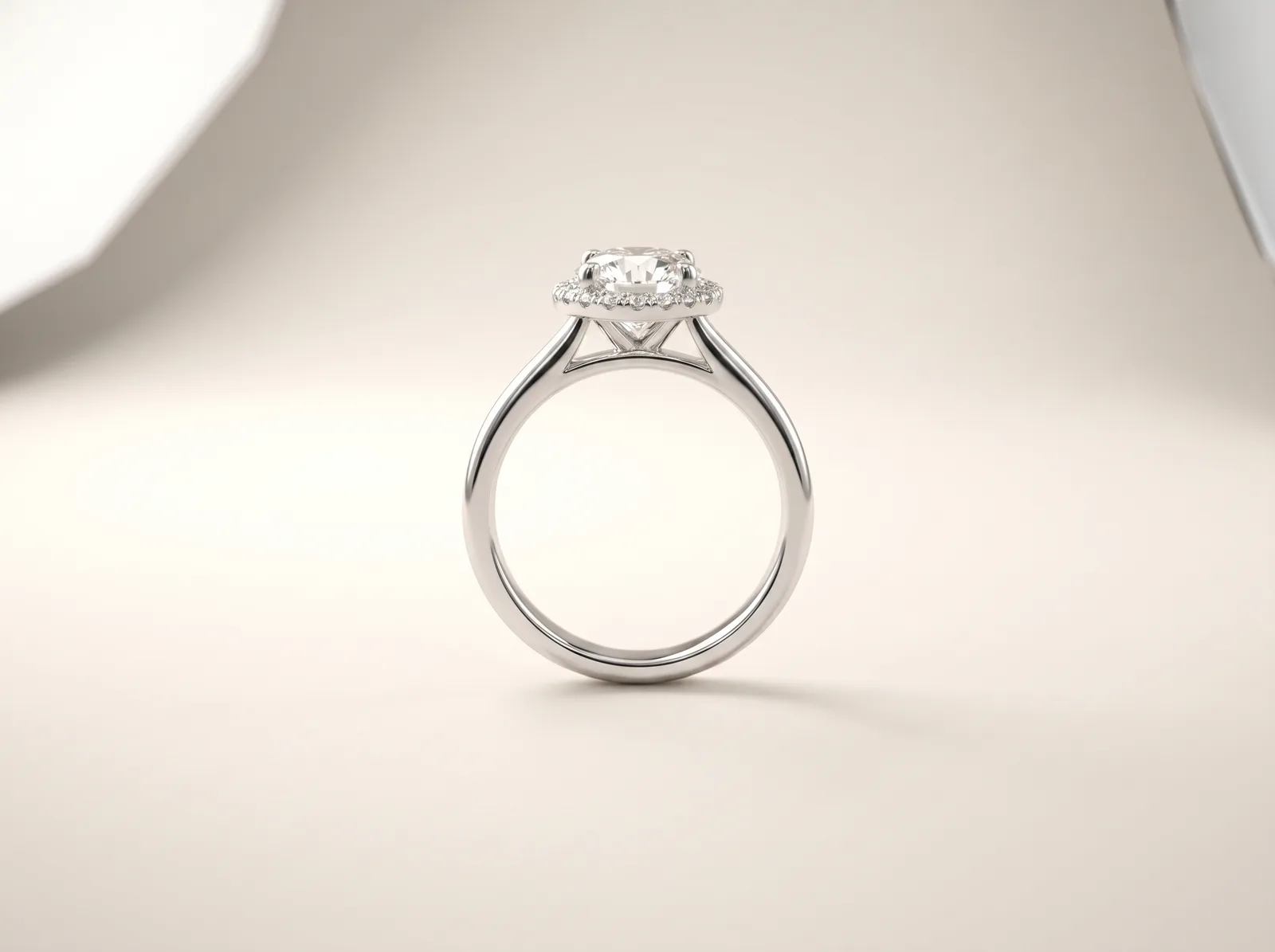
Halo — apparent size, at a discount
Average price of a halo ring in our collection: $1,659
At conversational distance the eye reads the halo and the center as one object, so the stone appears larger than its carat weight — commonly cited at roughly 20–30% — for far less than the same jump in center carat would cost.
Three versions are common:
- Single halo — one row of accents around the center stone.
- Hidden halo — tucked beneath the crown, invisible from above.
- Double halo — two concentric rings.
Who it suits:
- anyone who cares more about how large the ring looks on the hand than about the carat weight printed on the grading report
- anyone stretching a fixed budget
The trade-off: the join between center and halo is a fine seam that traps lotion and soap, so it needs cleaning more often than a solitaire to keep its sparkle. Replacing or upgrading the center stone later is constrained too — the new stone has to match the halo it sits in. Browse halo engagement rings.

Three-stone — width across the finger
Average price of a three-stone ring in our collection: $1,875
The style is often read as past, present and future. Practically, the side stones extend the design sideways, so the ring covers more of the finger than a solitaire of the same center weight and reads larger without a halo’s seam.
Who it suits:
- longer fingers
- anyone who likes symmetry and a little architecture rather than a single point of focus
The trade-off: three stones means three sets of facets to keep clean and three stones that must be matched for color and cut — a mismatch is obvious. It is also a wider design, which can stop a straight wedding band sitting flush. Three stone engagement rings shows the range.

Two-stone (toi-et-moi) — deliberately asymmetric
Average price of a two-stone ring in our collection: $1,717
The French tradition (“you and me”) is old, but the style has come back into demand recently and reads as distinctly modern.
Who it suits:
- anyone who does not want the ring everyone else has
- couples who like that the design is literally about two people rather than one stone
The trade-off: it is the least conventional of the seven, which is the point, but it also sits wide and at an angle, so pairing it with a wedding band usually means a contoured or open band rather than a straight one. Plan the two together. See two stone engagement rings.
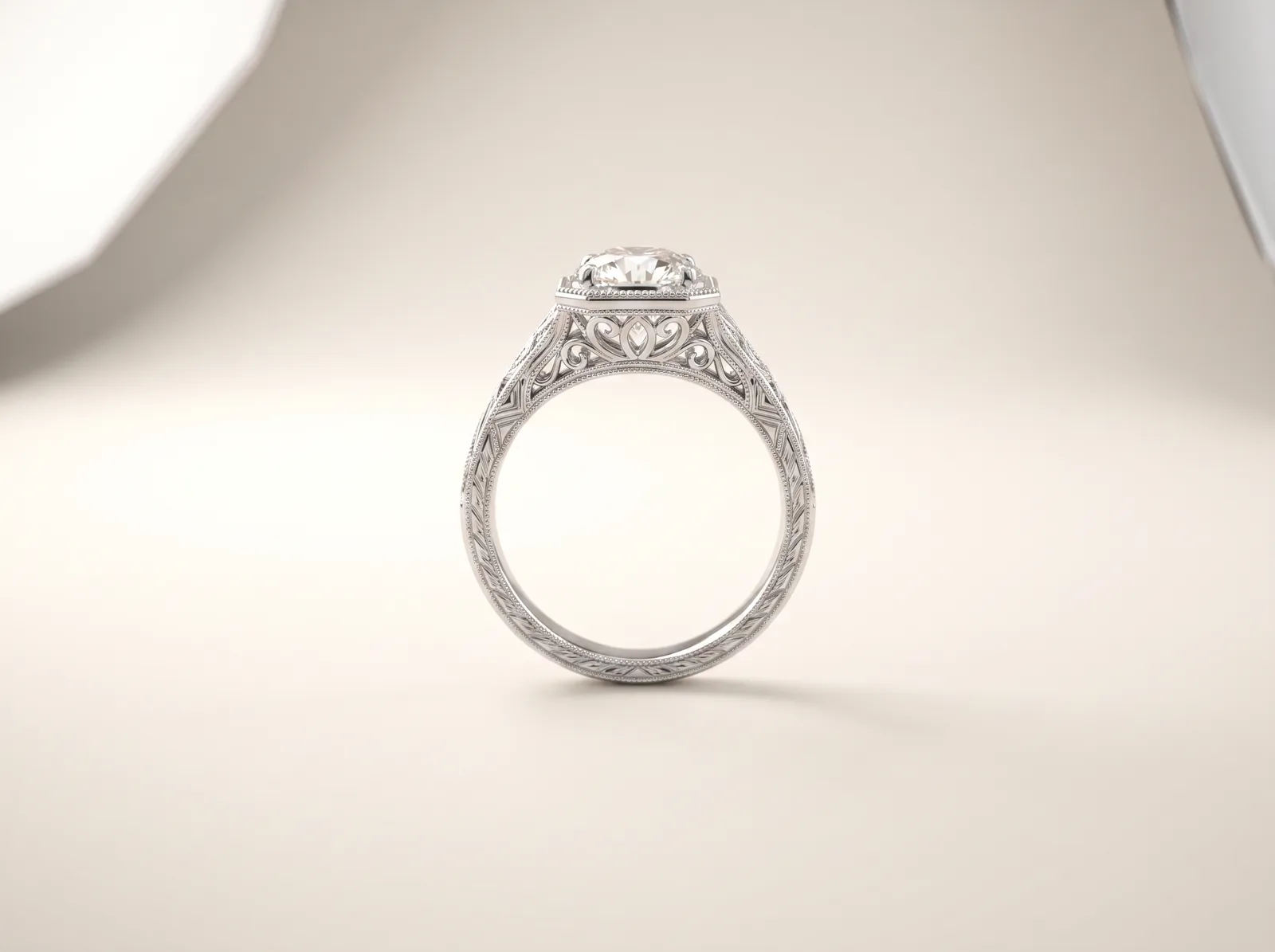
Vintage and Art Deco — detail in the metal, not the carat
The interest here lives in the metalwork rather than in center-stone size, which is why these rings often carry a modest center and still look substantial. The vocabulary comes straight from Art Deco, which took hold in Europe in the 1920s and became a major American style through the 1930s.
Who it suits:
- anyone drawn to period design
- anyone who would rather spend on character than on carat
The trade-off: fine detail collects debris and softens over years of wear, so expect more frequent cleaning and, eventually, refinishing. Resizing is more involved when the shank is engraved or pierced — the pattern has to be carried across the join. Browse vintage and Art Deco engagement rings.

Bezel-set — the one that survives your job
The result is a low, smooth profile with no raised points: nothing to catch on a sweater, a glove, or a patient.
Who it suits:
- nurses, teachers, chefs, climbers, gym regulars — anyone who works with their hands and would otherwise spend the marriage taking the ring off
- anyone who simply wants a low, clean silhouette — durability aside, it is the most minimal of the seven
The trade-off: the rim covers the outer edge of the stone, so the same diamond reads slightly smaller than it would in prongs, and less light enters from the sides. A partial or half-bezel recovers some of both if you want the security without the full rim. See bezel set engagement rings.
How to narrow it down
Three questions get most people to a shortlist of two:
- What does the ring have to survive? If the answer involves gloves, gym bars or a keyboard eight hours a day, start at bezel and work outward.
- Is apparent size or stone quality the priority? Size for the money points at halo or three-stone; quality for its own sake points at solitaire.
- Should the ring look current or look old? Vintage and two-stone read as deliberate design choices; solitaire and halo read as classics.
Once the style is settled the rest follows: pick the shape, then the metal, then the carat your budget supports. Our budget guide covers that last step honestly, and every style above is in stock to try on at the showroom.
Frequently Asked Questions
Related guides & collections
- Engagement ring settingsShop all seven settings with live pricing.
- Engagement ringsThe full hub — styles, shapes, carat and metals.
- Diamond shapesRound, oval, cushion, emerald and the rest.
- How much to spend on an engagement ringWhat real budgets buy, and the myth to ignore.
- Diamond buying guide — the 4CsWhere the money shows, and where it does not.
- Engagement ring metals — platinum vs. white goldWhat each metal costs to own, not just to buy.
Seeing them beats reading about them
Try the Settings On Before You Choose
Perceived size, profile height and how a band sits are things you judge on a finger, not on a screen. Bring your shortlist to our Snellville showroom near Atlanta and compare all seven side by side.
Prefer to talk? Call (704) 684-7530