Engagement Guide · Published · Updated August 2026
Engagement Ring Shapes: All Nine Diamond Shapes, Compared
Shape is the outline of the diamond seen from above — round, oval, emerald and the rest. It is not the same as cut, which is how well a stone is faceted and proportioned, and which is graded separately; the trade uses the two words interchangeably and it costs people money. This guide says shape throughout. Each shape is also one of the options in our engagement ring collection.
Nine are in regular circulation: round, princess, oval, cushion, emerald, pear, marquise, heart, and asscher.
Every photograph below is the same platinum solitaire in the same light, the stone facing the camera head-on — only the diamond changes, so what you are seeing is the shape and nothing else. For each one you get that photograph, what it is, who it suits, the honest trade-off, and the average price in our collection. Any of them can sit in any setting, so that decision is separate: for the setting rather than the stone, head over to our ring style guide.
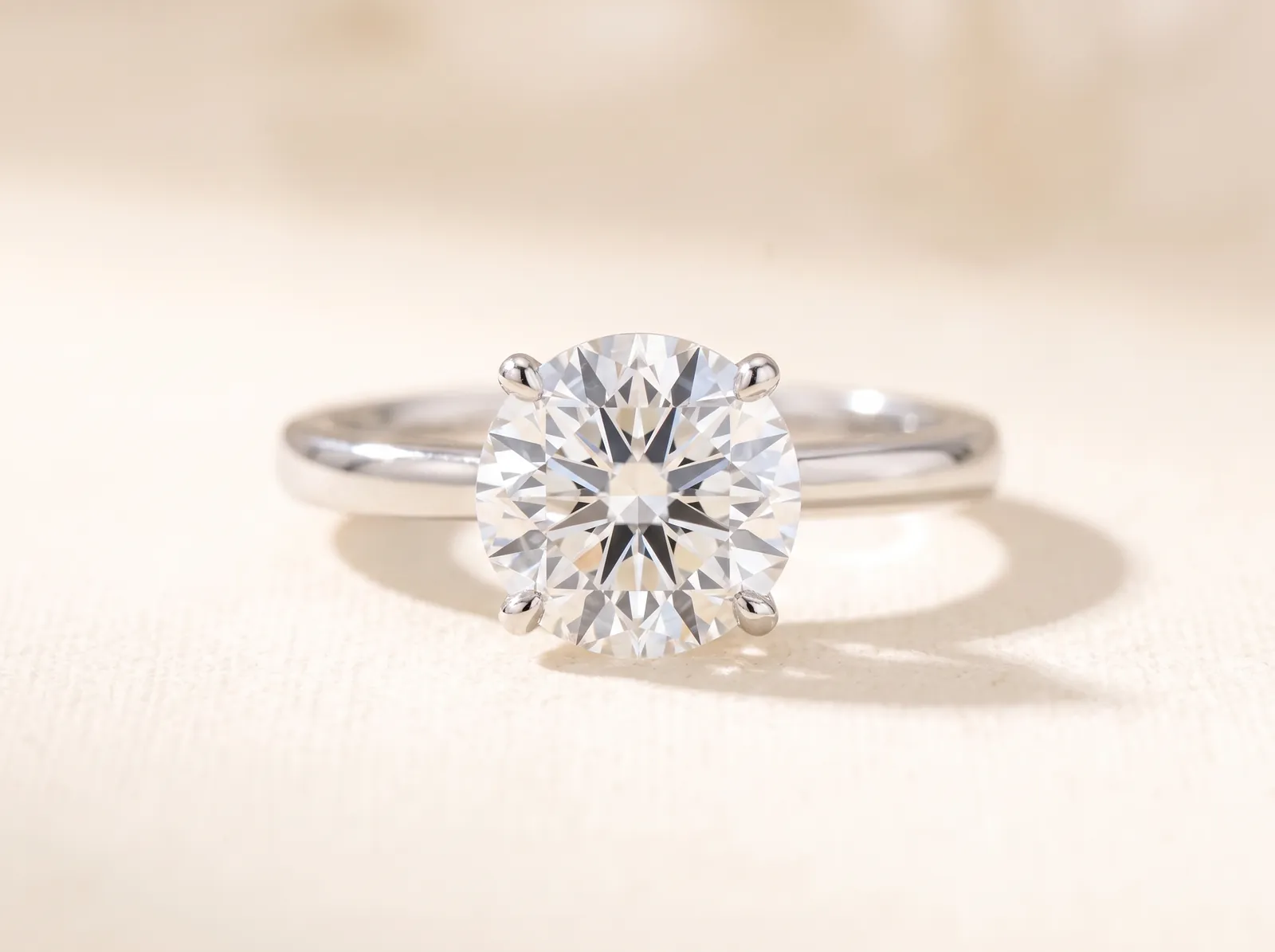
Round — the round cut diamond, and the only one GIA grades
Average price of a ring with a round center stone in our collection: $1,974
It is the outline most people picture, and the one the whole trade is calibrated around. It is also the only one the GIA issues a grade of finish for — its cut grading system covers standard round brilliants and nothing else — so it is the single case where you can buy a stone whose quality of make has been judged by somebody other than the seller.
Who it suits:
- anyone who wants maximum sparkle and is not trying to make the stone read larger
- anyone who wants an independent grade of finish behind the purchase
- anyone buying with resale or reset in mind — it is the easiest outline to re-home
The trade-off: it costs the most per carat of any outline, and it shows the least face-up area for that carat because it carries weight in depth. You are paying a premium and then hiding some of it below the setting. See round cut engagement rings for what we currently have.

Princess — the princess cut diamond, square with sharp corners
Average price of a ring with a princess center stone in our collection: $2,031
Brilliant faceting inside a square boundary, so it sparkles like a round but reads geometric and modern rather than classical. Because the outline wastes less of the rough crystal, it costs meaningfully less per carat than a round of matching color and clarity.
Who it suits:
- anyone who wants sparkle without the round’s price per carat
- anyone drawn to clean geometry over soft, traditional outlines
The trade-off: those four unbroken corners are the thinnest, most exposed part of the stone, and a knock lands on them first. A setting that covers them — V-prongs or a full rim — is not a style preference here, it is the protection the outline needs. Browse princess cut engagement rings.
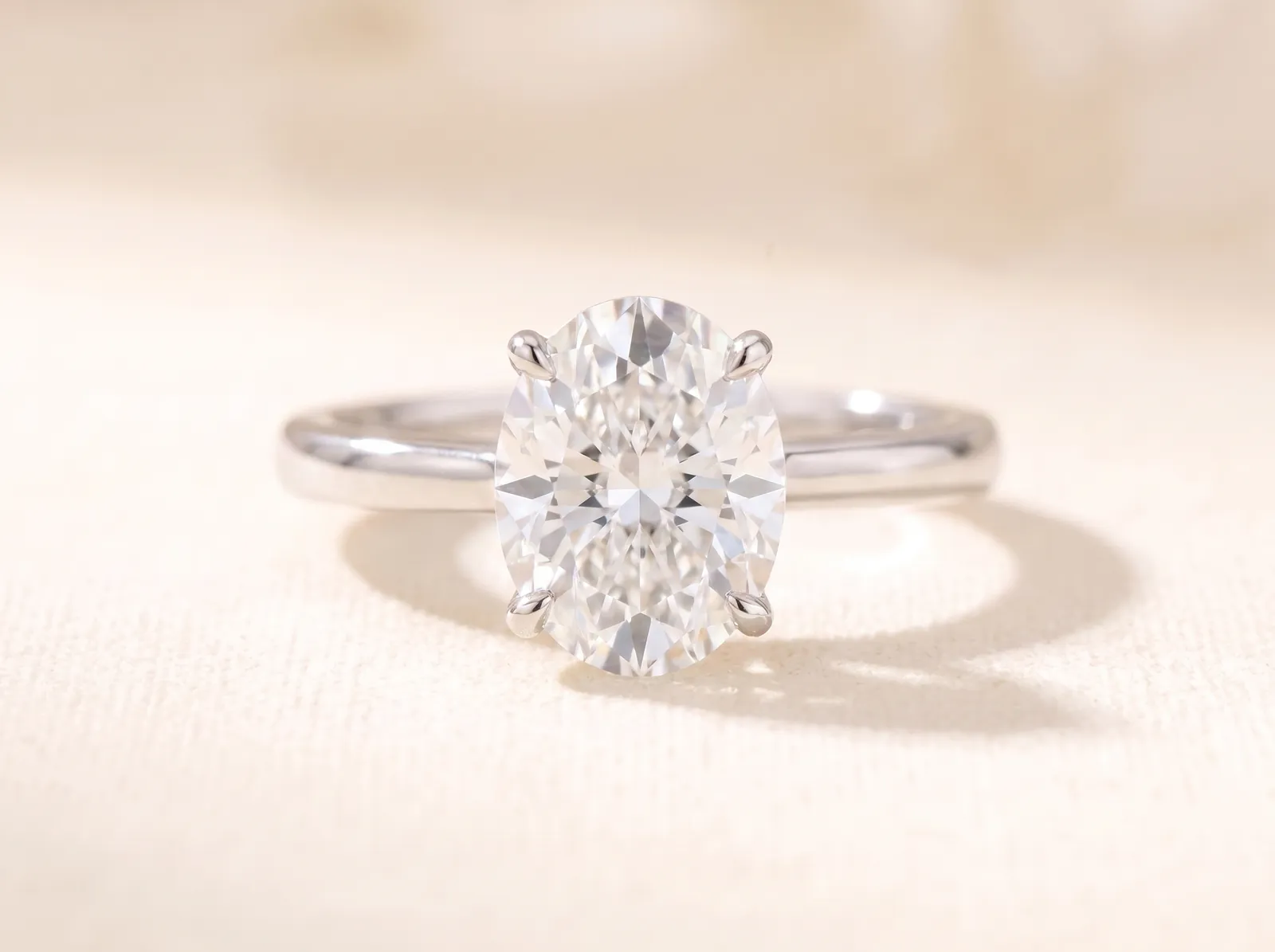
Oval — the oval cut diamond that lengthens the finger
Average price of a ring with an oval center stone in our collection: $1,921
The faceting is a round’s, spread into a longer outline. Two things follow: it shows more face-up area per carat than a round, and its length draws the eye along the finger rather than across it, which is why it is so often described as flattering.
Who it suits:
- anyone who wants the largest-looking stone their budget will buy
- anyone with shorter fingers, where the added length reads as elongation
The trade-off: a dark band across the middle — the bow-tie — is present to some degree in almost every elongated stone. It is not a flaw you can read off a grading report; the only way to judge how pronounced it is is to look at that specific stone, tilted, under normal light. See oval cut engagement rings.
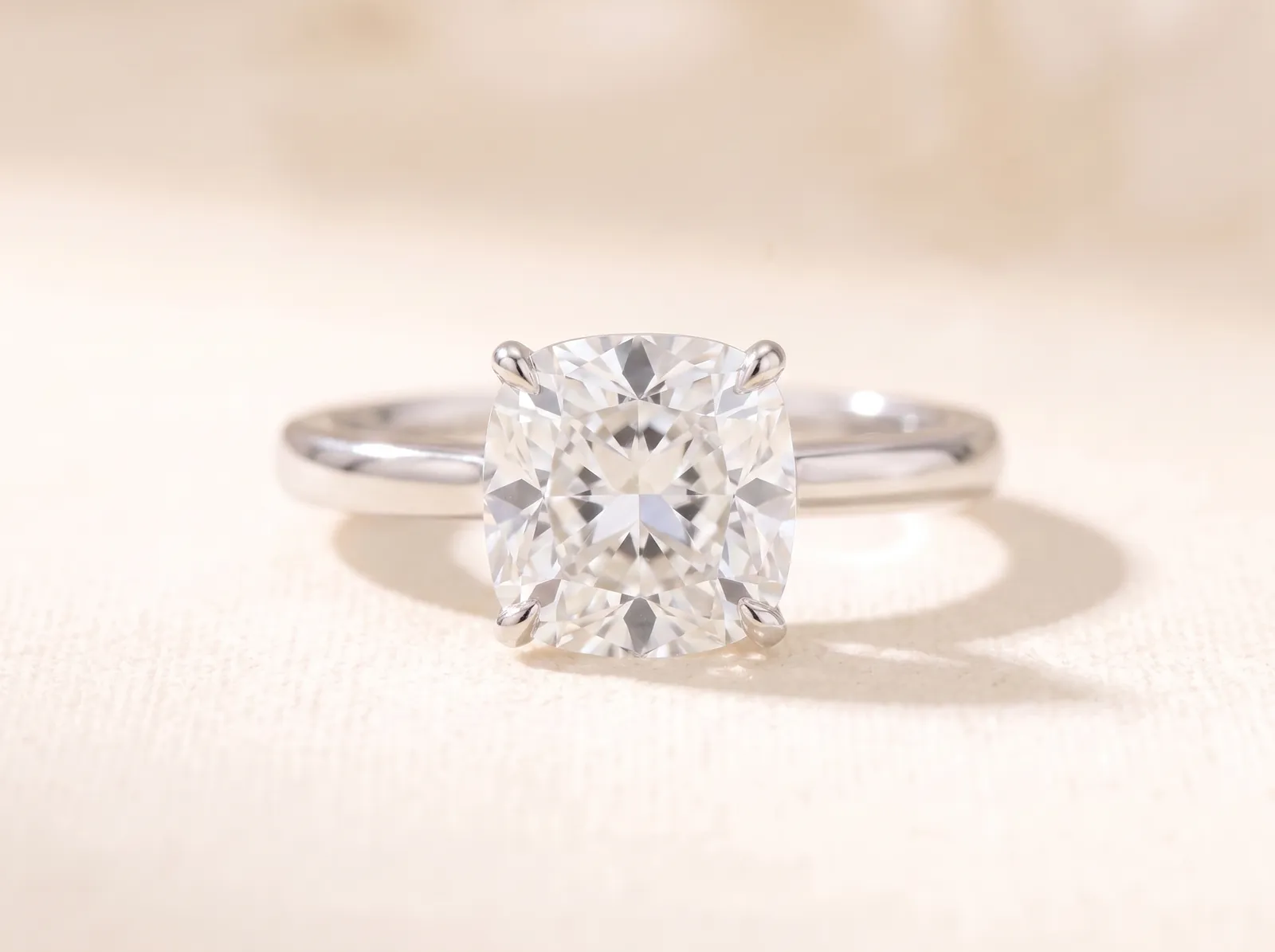
Cushion — the cushion cut diamond, and the elongated cushion
Average price of a ring with a cushion center stone in our collection: $2,012
Brilliant faceting inside a squared, soft-cornered boundary. It throws light in broader, slower flashes than a round does, which reads as warm and slightly antique. The elongated version — a longer rectangle with the same soft corners — has become the more requested of the two.
Who it suits:
- anyone who wants a vintage feel without buying an actual antique
- anyone who finds a round too sharp or too obvious
The trade-off: the open, rounded form holds body color more visibly than a round of the same grade, so a faint tint that would disappear in a brilliant can be seen here. Buy a grade higher on color than you otherwise would. Browse cushion cut engagement rings.
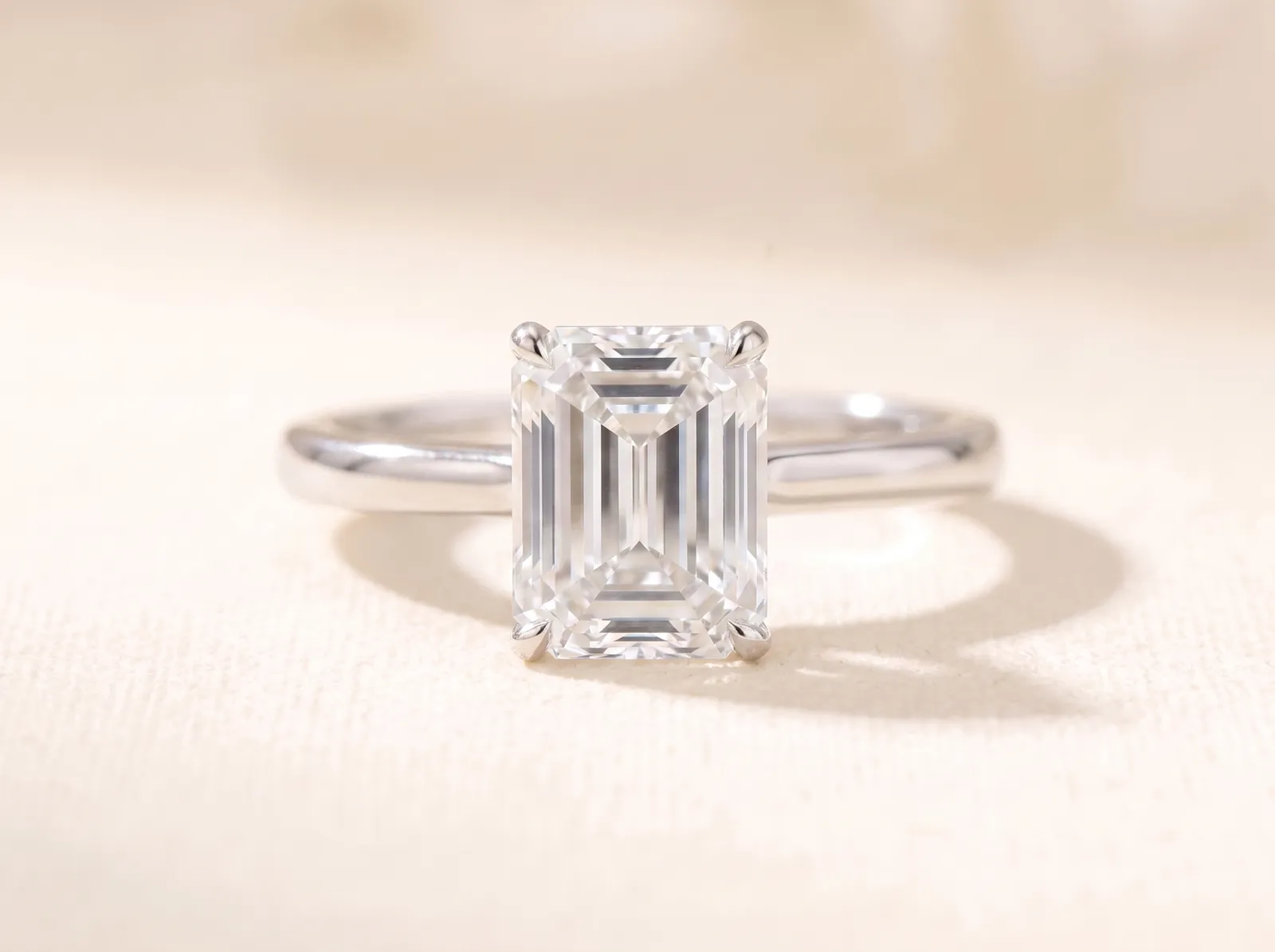
Emerald — the emerald cut diamond, long flashes not sparkle
Average price of a ring with an emerald center stone in our collection: $2,055
A rectangle with cropped corners and long parallel facets that step down to a wide, flat table. It does not sparkle in the way a brilliant does — it flashes, in long clean planes, an effect the trade calls a hall of mirrors. It reads as restrained and architectural.
Who it suits:
- anyone who finds a lot of sparkle busy and wants something quieter
- anyone who wants a stone that looks long and elegant on the hand
The trade-off: that wide open table hides nothing. An inclusion that would vanish inside a brilliant’s faceting is plainly visible here, so clarity is where the money has to go — a grade or two above what you would accept in a round. See emerald cut engagement rings.
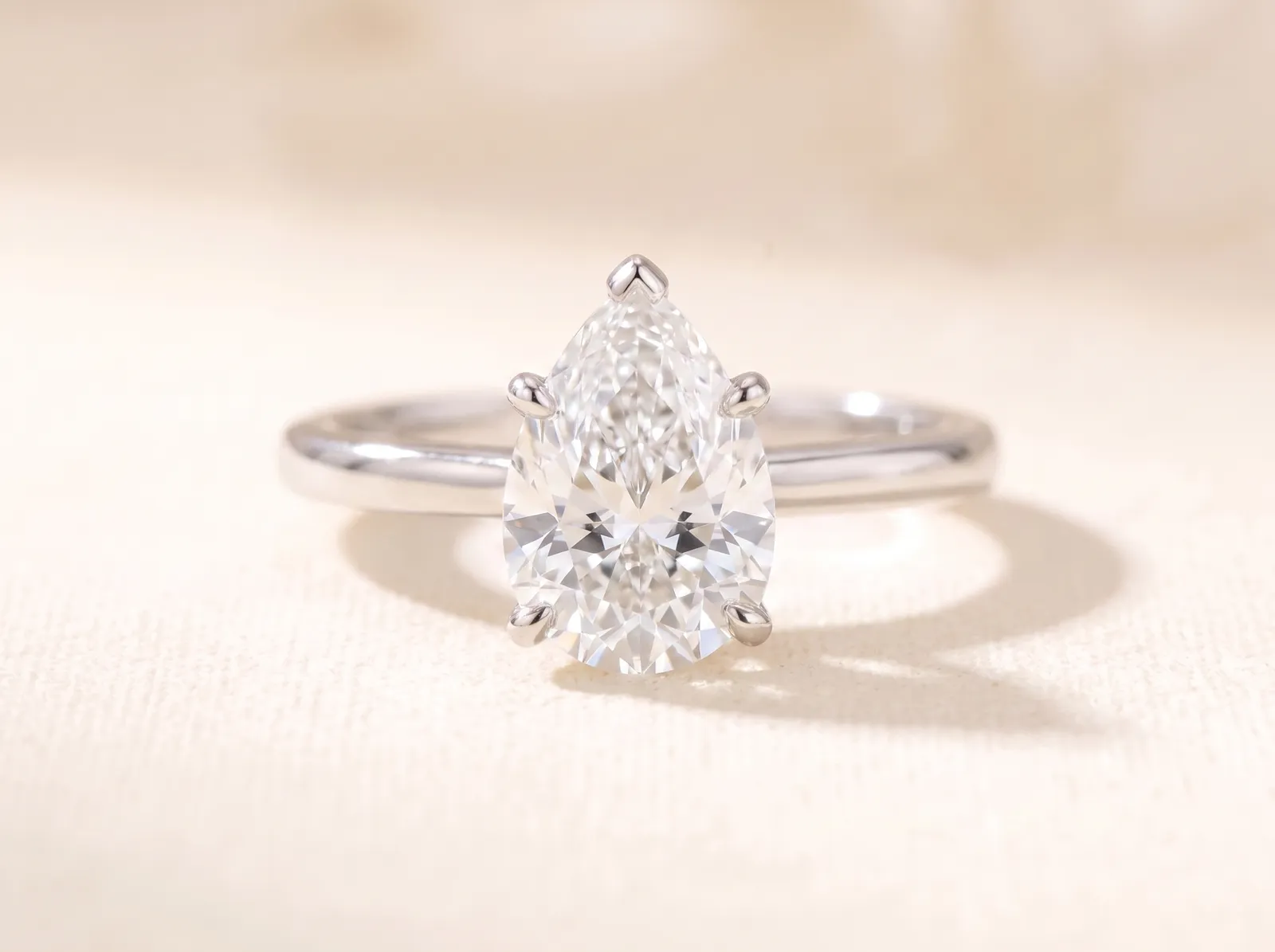
Pear — the pear cut diamond, half round and half marquise
Average price of a ring with a pear center stone in our collection: $2,048
One rounded end and one point, worn with the point toward the fingertip. It shows well above its weight for face-up area, and it is distinctive without being difficult — which is the combination that has made it one of the fastest-growing choices.
Who it suits:
- anyone who wants something recognizably not-a-round without going far out
- anyone who wants elongation on the hand for the money
The trade-off: two things to watch, and both are per-stone. The point is the vulnerable part and wants a V-prong over it, and symmetry is unforgiving — if the two shoulders are not even, the eye catches it immediately. Browse pear shaped engagement rings.
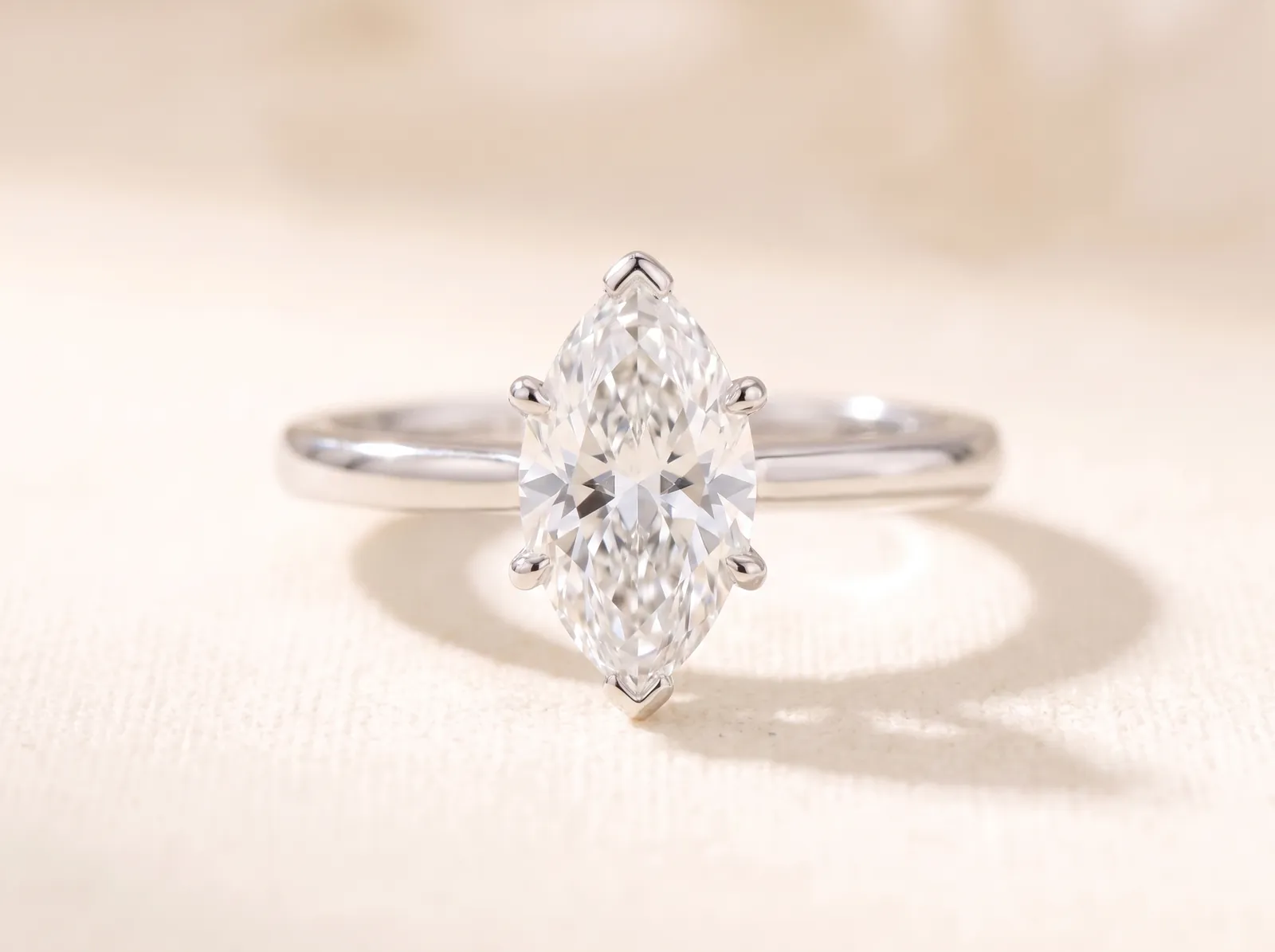
Marquise — the marquise cut diamond, biggest face-up of all
Average price of a ring with a marquise center stone in our collection: $2,051
The most efficient outline there is for looking large: its weight is spread into a long shallow boat rather than carried in depth, so no other shape shows as much surface per carat. Set lengthwise, it covers more of the finger than anything else at the same weight.
Who it suits:
- anyone whose priority is the largest possible look for a fixed budget
- anyone who wants a stone nobody else in the room is wearing
The trade-off: it has two points instead of one, so it carries the pear’s vulnerability twice over and wants V-prongs at both ends. It shows a bow-tie like the oval does, and being the most elongated outline it tends to show it most. See marquise cut engagement rings.
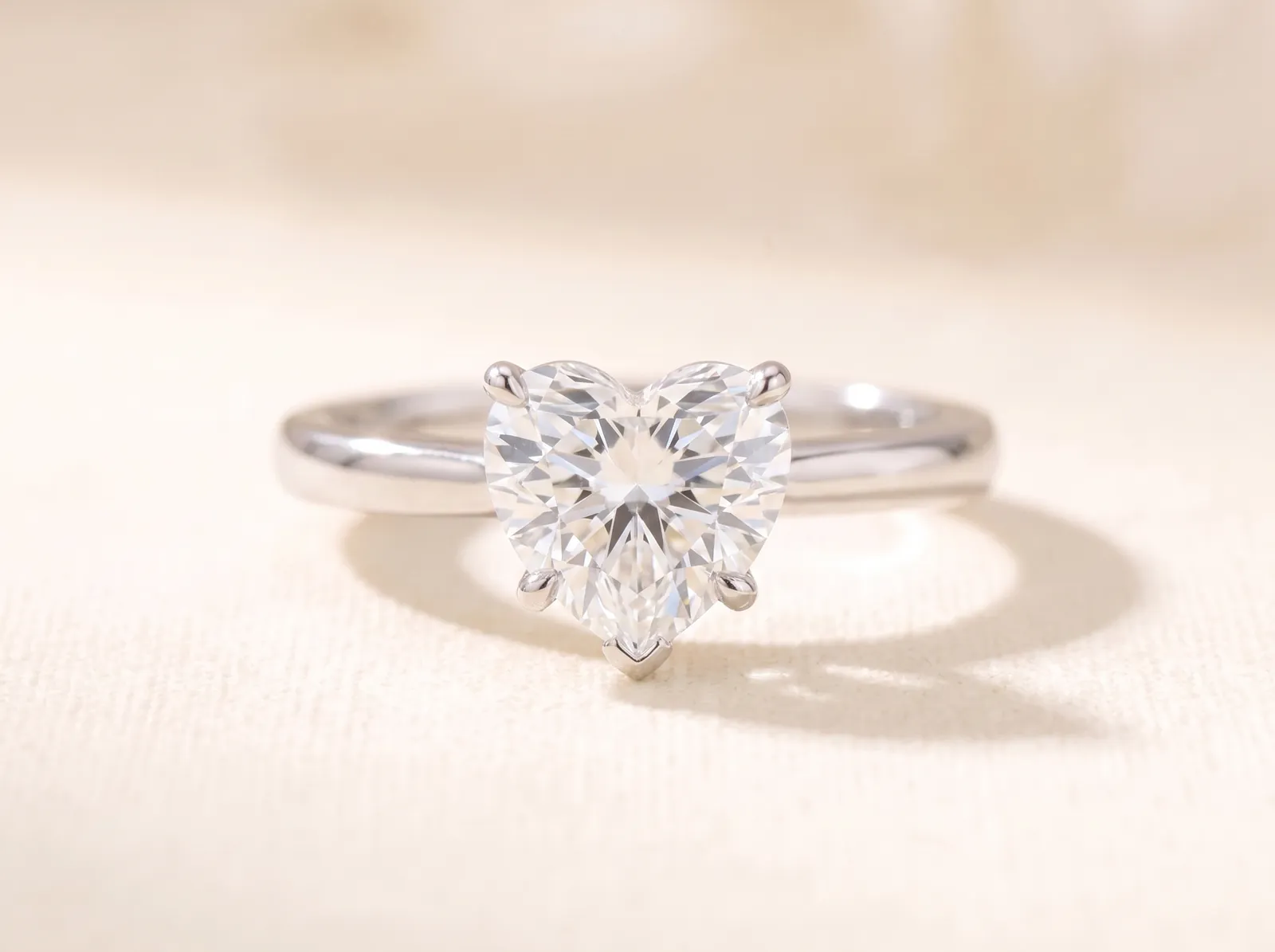
Heart — the heart shaped diamond, and the hardest to get right
Average price of a ring with a heart center stone in our collection: $2,075
The most openly sentimental of the nine, and the one where craftsmanship is most visible to an untrained eye. It is essentially a pear with a cleft cut into the rounded end, and everything depends on that cleft being crisp and the two lobes matching.
Who it suits:
- anyone who wants the ring to say something explicit rather than something classic
- anyone commissioning a piece with a story attached to it
The trade-off: it needs size to read. Below about a carat the outline starts to look like a rounded blob once it is set and seen at arm’s length. It also has a point to protect and demands near-perfect symmetry, which is why good ones are scarcer than the demand suggests. Browse heart shaped engagement rings.
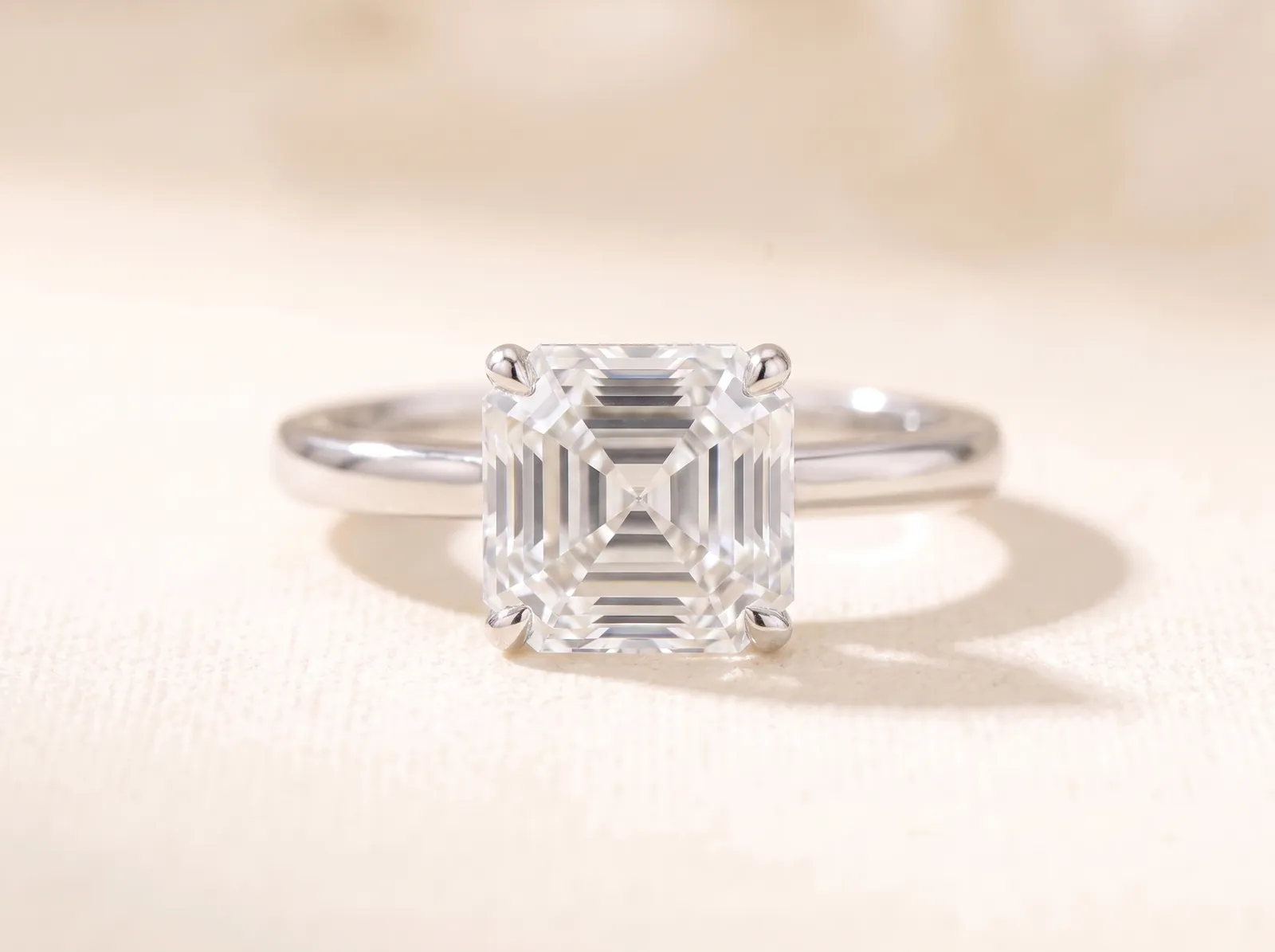
Asscher — the asscher cut diamond, a square step with cropped corners
Average price of a ring with an asscher center stone in our collection: $2,029
The emerald’s square sibling, and the shape most often mistaken for it. Where an emerald is a rectangle, an asscher is square, with all four corners cropped hard enough that the outline reads as an octagon. Its steps are deeper and run concentrically inward, so instead of long planes you get a series of flashes receding toward the center — the effect people mean when they say a stone has depth.
Who it suits:
- anyone who wants the emerald’s restraint in a square outline
- anyone drawn to Art Deco design, where this shape belongs
- anyone who wants a step cut but finds the emerald too elongated
The trade-off: the same open-table honesty as the emerald, so clarity carries the stone and a lower grade will show. It also shows less face-up area per carat than almost anything else here, because the outline is deep — a stone that spends its weight where you cannot see it. See asscher cut engagement rings.
How to narrow it down
Three questions get most people to a shortlist of two:
- Does the ring have to survive rough days? If it does, rule out the pointed outlines first, or commit to a setting that shields them. This question comes first because it eliminates, and the other two only rank.
- Is apparent size or quality of finish the priority? Size for the money points at the elongated outlines. Verified quality of finish points at the round, which is the only one carrying an independent grade for it.
- Sparkle or stillness? If the answer is stillness, you are choosing between the two step shapes, and then it is only a question of square or rectangular.
Once the shape is settled the rest follows: pick the setting, then the metal, then the weight your budget supports. Our budget guide covers that last step honestly, and all nine are in the showroom to try on.
Frequently Asked Questions
Related guides & collections
- Engagement rings by diamond shapeShop all nine shapes with live pricing.
- Engagement ringsThe full hub — styles, shapes, carat and metals.
- Engagement ring stylesSolitaire, halo, three-stone and the rest.
- How much to spend on an engagement ringWhat real budgets buy, and the myth to ignore.
- Diamond buying guide — the 4CsWhere the money shows, and where it does not.
- Engagement ring metals — platinum vs. white goldWhat each metal costs to own, not just to buy.
Nine outlines, one setting
Compare the Shapes in Person
How big a stone reads, and whether an outline suits a hand, are things you judge on a finger rather than on a screen. Bring your shortlist to our Snellville showroom near Atlanta and see all nine side by side.
Prefer to talk? Call (704) 684-7530