Why Choose 14K Gold for Earrings
Earrings sit against pierced skin all day, which makes metal choice matter more here than on almost any other piece of jewelry. A post has to hold its shape through years of insertion and removal, the back has to carry the weight of the earring on the lobe without stretching the piercing, and the metal touching the wound has to be tolerated by skin that is more reactive than intact skin elsewhere on the body. 14K gold is the practical floor for pierced ears that react to cheaper alloys — the karat is high enough to resist the daily wear a post and back endure, and low enough (mixed with harder base metals) to hold its shape better than very soft 22K or 24K gold would.
14K gold is meaningfully less reactive than gold-filled or gold-plated earrings, since there is no thin surface layer to wear through and expose a base metal against sensitive skin — it is not, however, universally hypoallergenic, since white gold alloys can carry trace nickel. For a closer look at how yellow, white, and rose gold differ in color and composition, see our metals guide. Browse the full earrings collection to compare styles side by side.
14K Gold Across Every Earring Shape
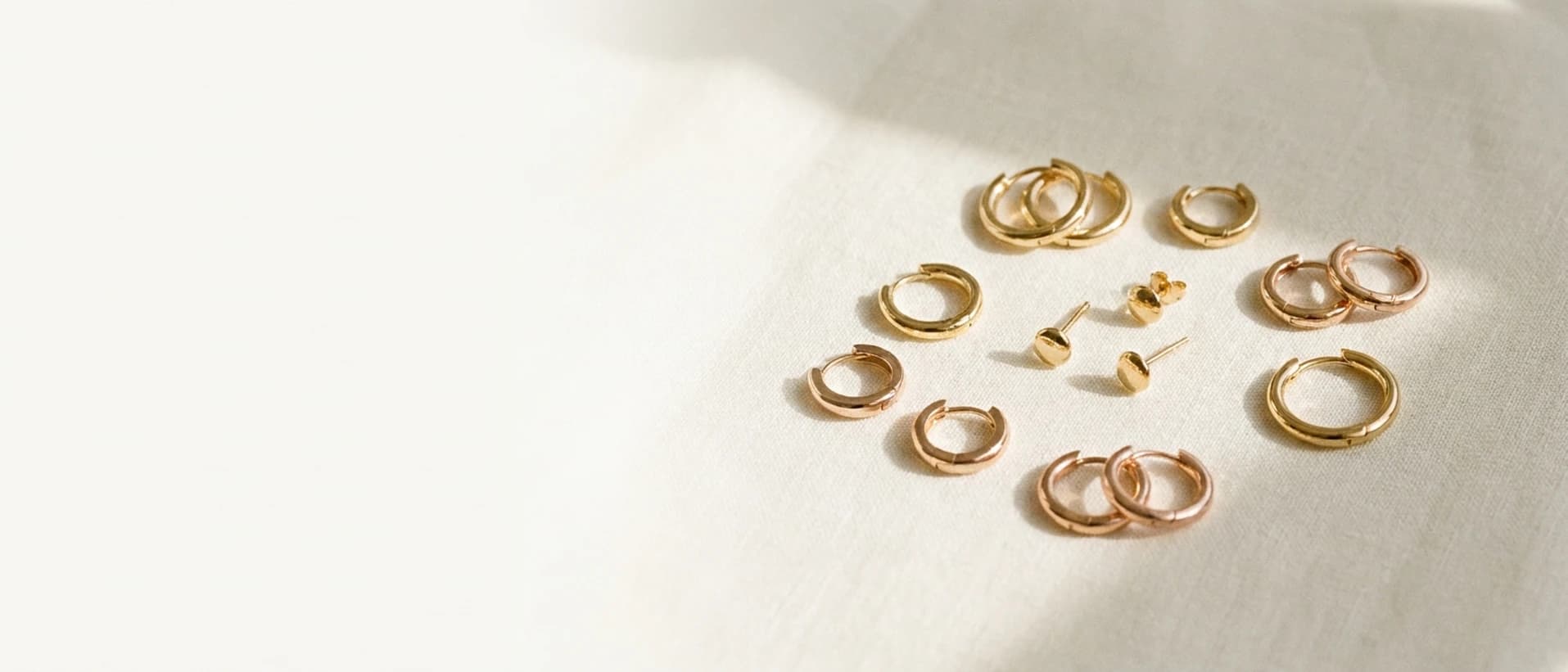
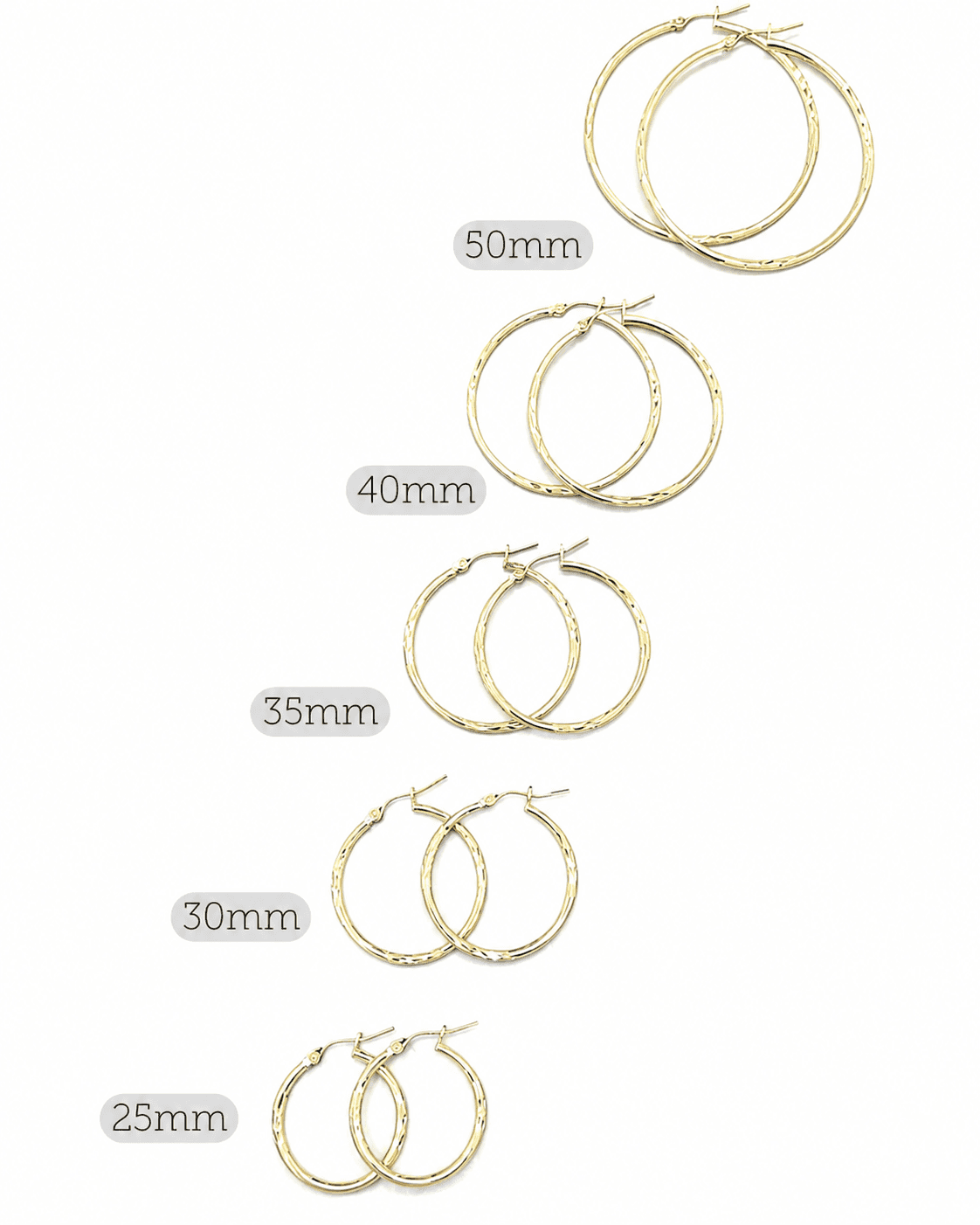
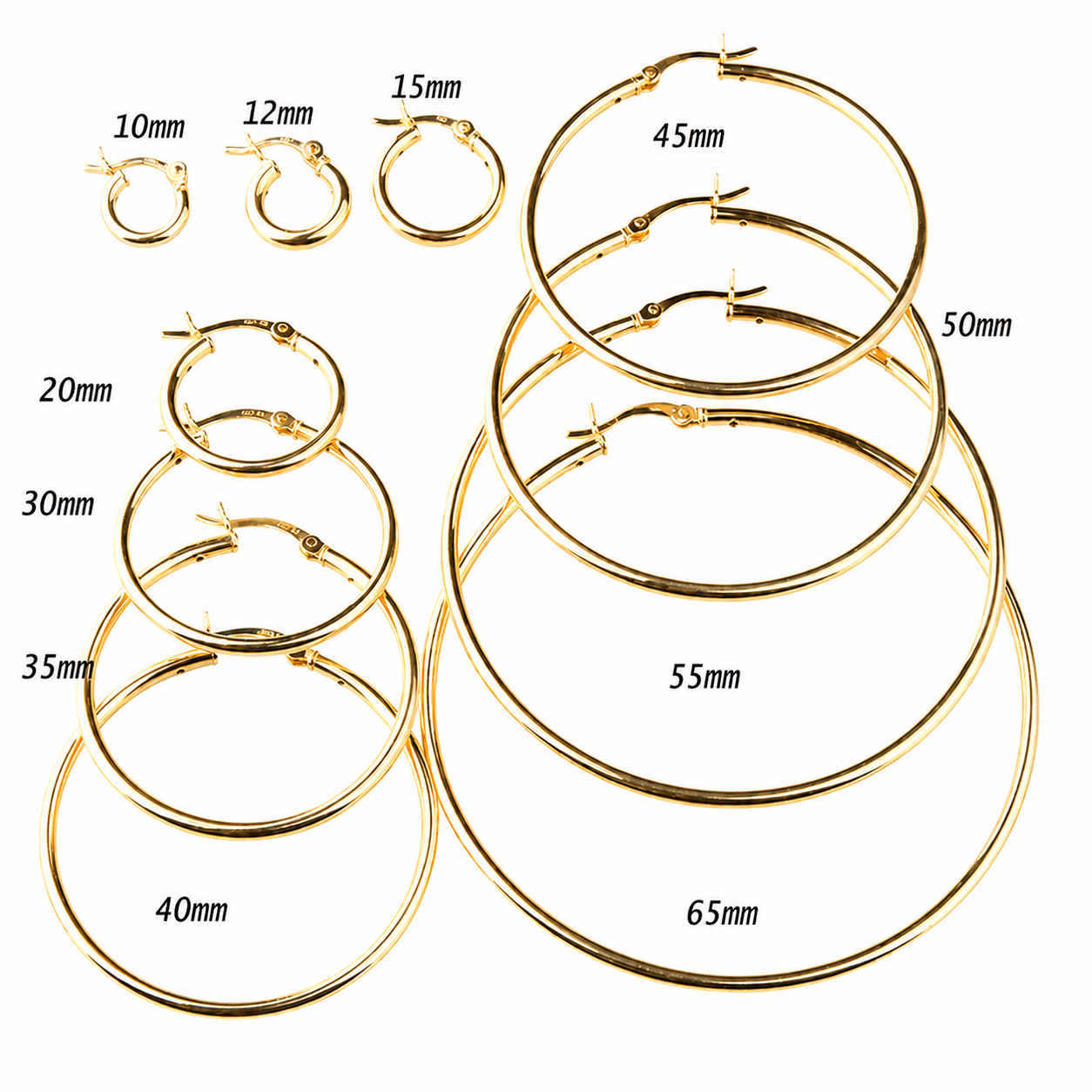
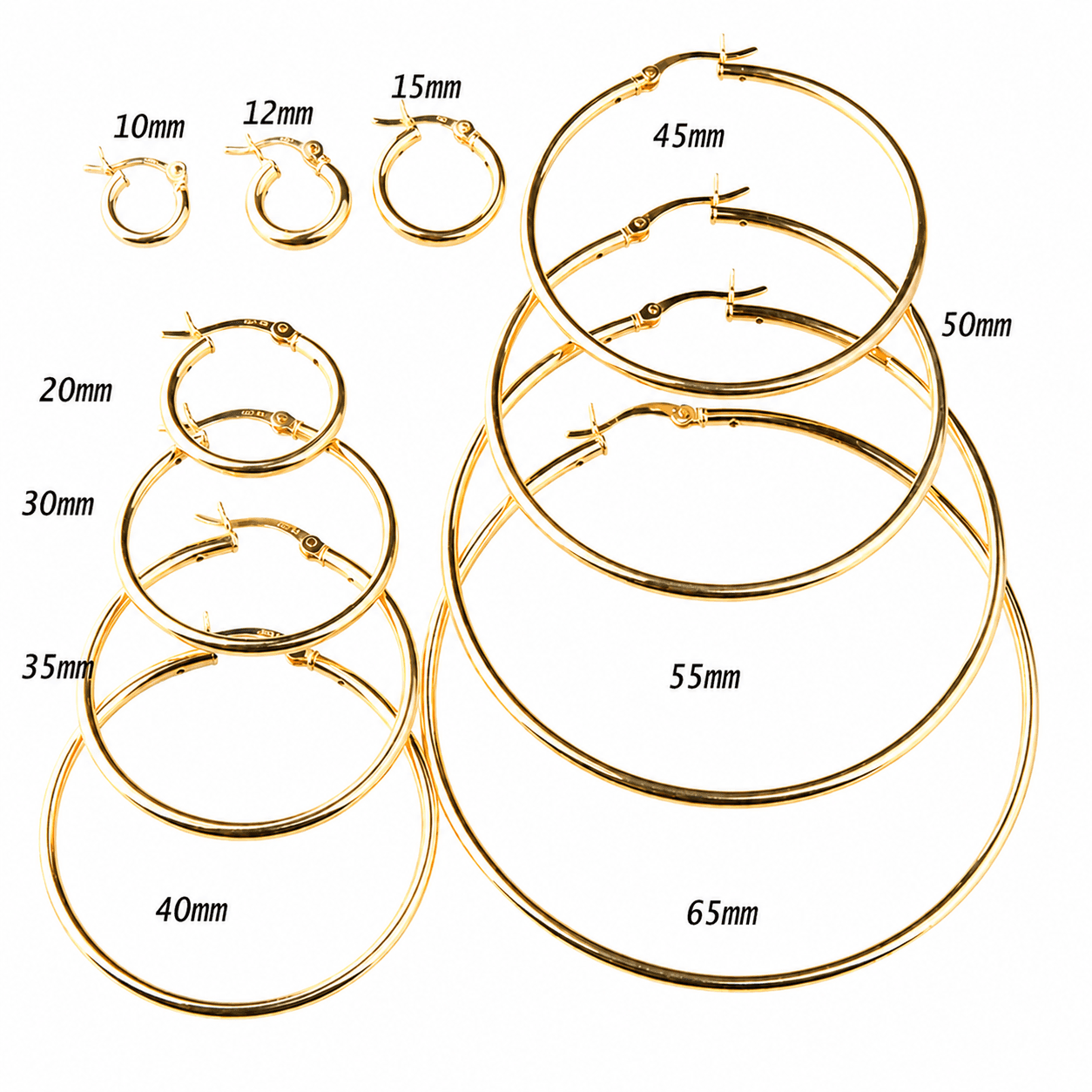
The 14K gold designation applies across every silhouette we carry, not just one shape. Studs in 14K gold hold a diamond or gemstone securely at the lobe for daily wear. Hoops and huggies in 14K gold survive years of showering, sleeping, and exercise without deforming — a real advantage over the thinner gold-filled hoops sold elsewhere, which flatten and wear through at the hinge over time. Drop earrings in 14K gold carry more visible metal along the dangle, so the durability difference between 14K gold and a plated alternative shows up faster there than on a small stud.
Whichever shape you are after, it comes in your choice of 14K yellow, white, rose, or two-tone gold. Browse our hoop earrings or diamond stud earrings to see the 14K gold options within each style.