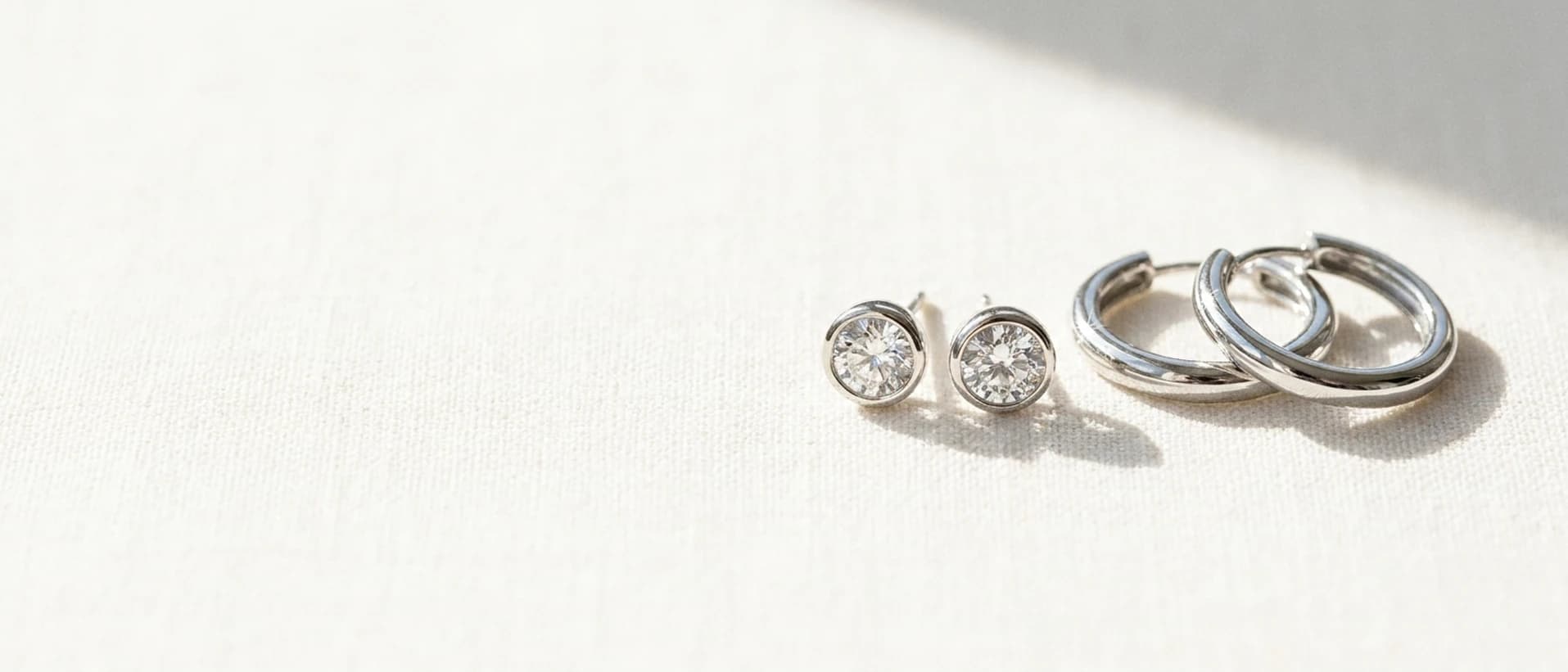
White Gold on the Ear — Why the Cool Finish Suits Diamonds
Earrings sit closer to a diamond’s sparkle than almost any other piece of jewelry, and white gold earrings are the setting most often chosen when a diamond needs to read as bright and colorless as possible. The metal itself is gold alloyed with palladium, nickel, silver, or zinc and finished with a thin layer of rhodium plating — our guide to what white gold is made of covers the alloy in full. Against a white diamond, that cool rhodium surface all but disappears, letting the stone carry the color story instead of competing with a warm-toned setting the way yellow gold can. Browse the pairing in 14K and 18K white gold across our diamond earrings collection.
Rhodium does wear thin eventually, but earrings are the easiest place on the body for that plating to hold its shine. A ring on a working hand meets constant friction and typically comes due for re-plating within one to three years, while an earring barely touches anything else and can go years longer before the faint warmth of the alloy underneath starts to show. Every white gold earring purchased from us includes lifetime cleaning and inspection — a policy we’ve maintained since 2008.
Pairing White Gold With Platinum and Silver — and What Sensitive Ears Should Know
White gold’s rhodium plating reads close in color to platinum and sterling silver, so pairing white gold studs with a platinum band or an everyday silver piece rarely looks mismatched — weight, not color, is what gives the difference away, and only if you’re holding two pieces side by side. Platinum never needs re-plating because it’s naturally white the whole way through, while sterling silver tarnishes and needs periodic polishing to stay bright; white gold sits between the two, needing only the occasional rhodium refresh described above. Browse the full earrings collection to mix metals across studs, hoops, and drops, or see the same treatment on our white gold necklaces for a matched set.
The alloy underneath the rhodium is where sensitivity comes from. Standard white gold is typically alloyed with nickel, one of the most common contact allergens, and a nickel-sensitive wearer can react once the rhodium plating thins enough to expose it — a bigger concern for a ring in constant skin contact than for an earring that spends most of its life not touching anything else, though pierced ears are sensitive tissue and some clients still notice irritation. If that’s a concern, ask us whether a palladium-alloyed white gold earring is available for your piece; a palladium alloy removes nickel from the alloy entirely while keeping the same rhodium-finished look.