Why 14K Is the Ring Karat
A ring takes more daily contact than almost any other piece of jewelry — closing car doors, washing hands, typing, gripping a steering wheel dozens of times a day. That’s why 14K gold, at 58.3% pure gold alloyed with stronger base metals, is the standard karat for rings: the added alloy gives it the hardness to hold prongs and settings secure and resist the dents and scratches a softer metal would show much faster. Browse the full ring collection to see how 14K fits alongside our other metal options.
18K gold, at 75% pure gold, reads richer in color but is noticeably softer — better suited to occasional-wear pieces than a ring that goes on every morning. 14K and 18K carry identical color options; the difference is entirely in the gold percentage and the resulting hardness. For a deeper look at how karat and color interact across yellow, white, and rose gold, see our yellow vs. white vs. rose gold guide.
Choosing the Color — Yellow, White, Rose & Two-Tone Gold
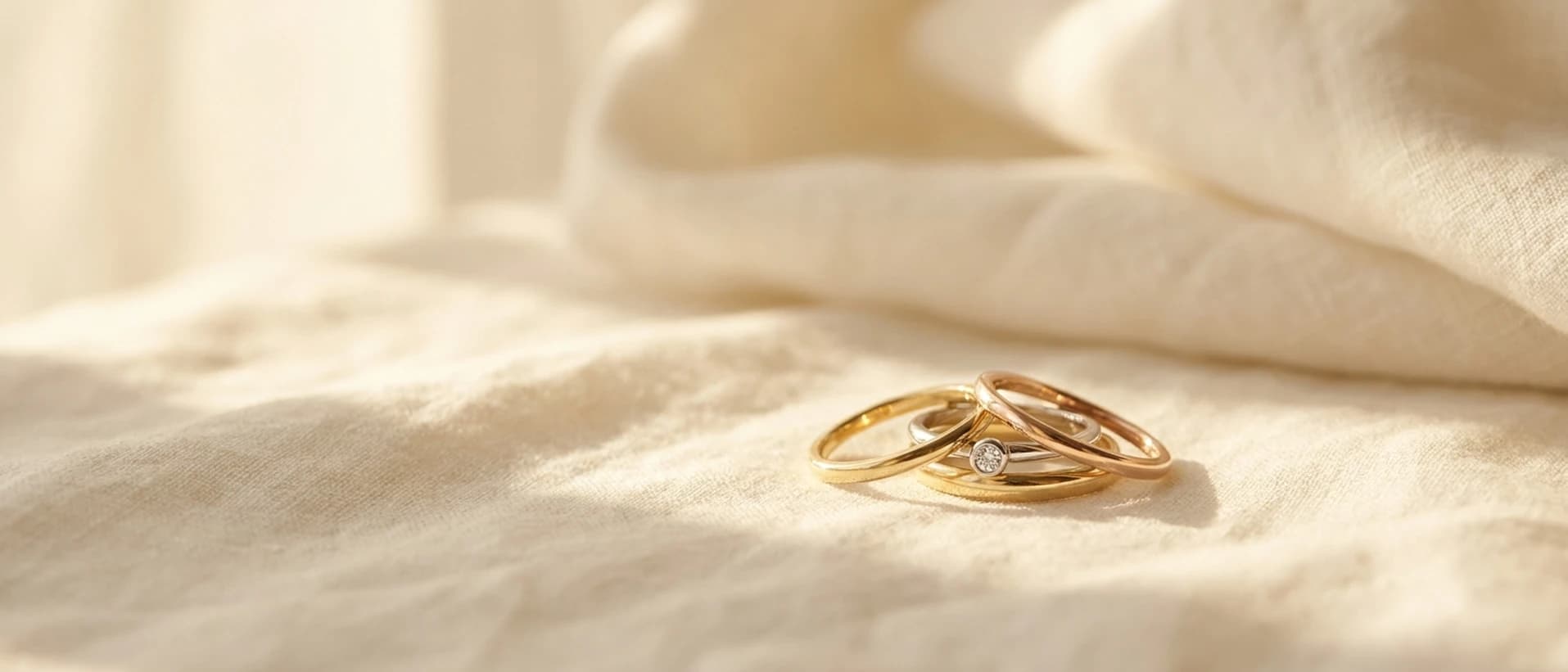
14K gold rings come in yellow, white, rose, and two-tone, all at the identical karat and durability. Yellow gold is the traditional, warm tone — gold in its most recognizable form, alloyed just enough to hold up to daily wear. White gold is rhodium-plated for a bright, cool finish that mimics platinum at a lower price, though that plating wears down gradually and needs periodic replating to stay bright. Rose gold gets its romantic pink hue from a higher copper content in the alloy, and tends to run a touch harder than yellow or white as a result. Two-tone gold combines two of these colors in a single piece.
If a lower price point matters more than gold percentage, our 10K gold rings come in the same three colors at a more affordable karat. And if you’re shopping specifically for a proposal, our engagement ring collection is built around the same yellow, white, and rose gold choices with center-stone-focused settings.