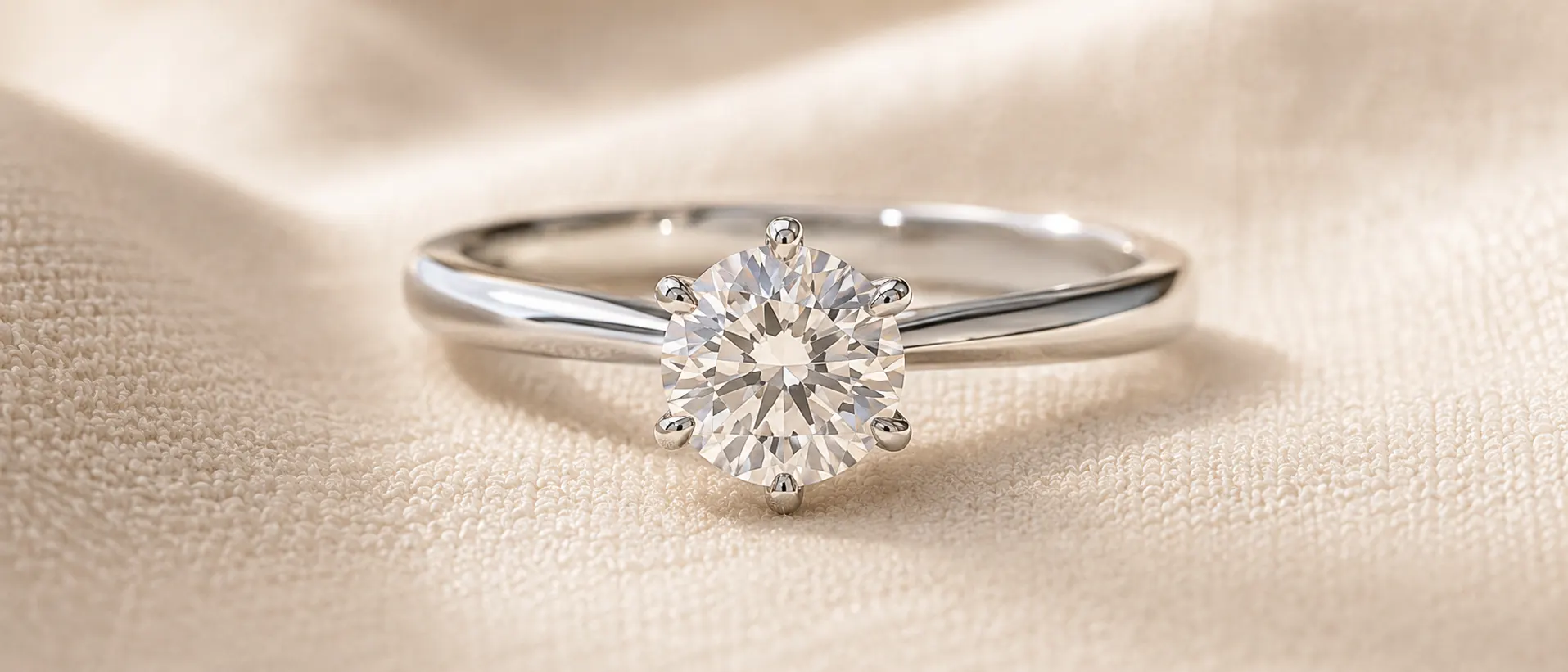
What Is a Solitaire Engagement Ring?
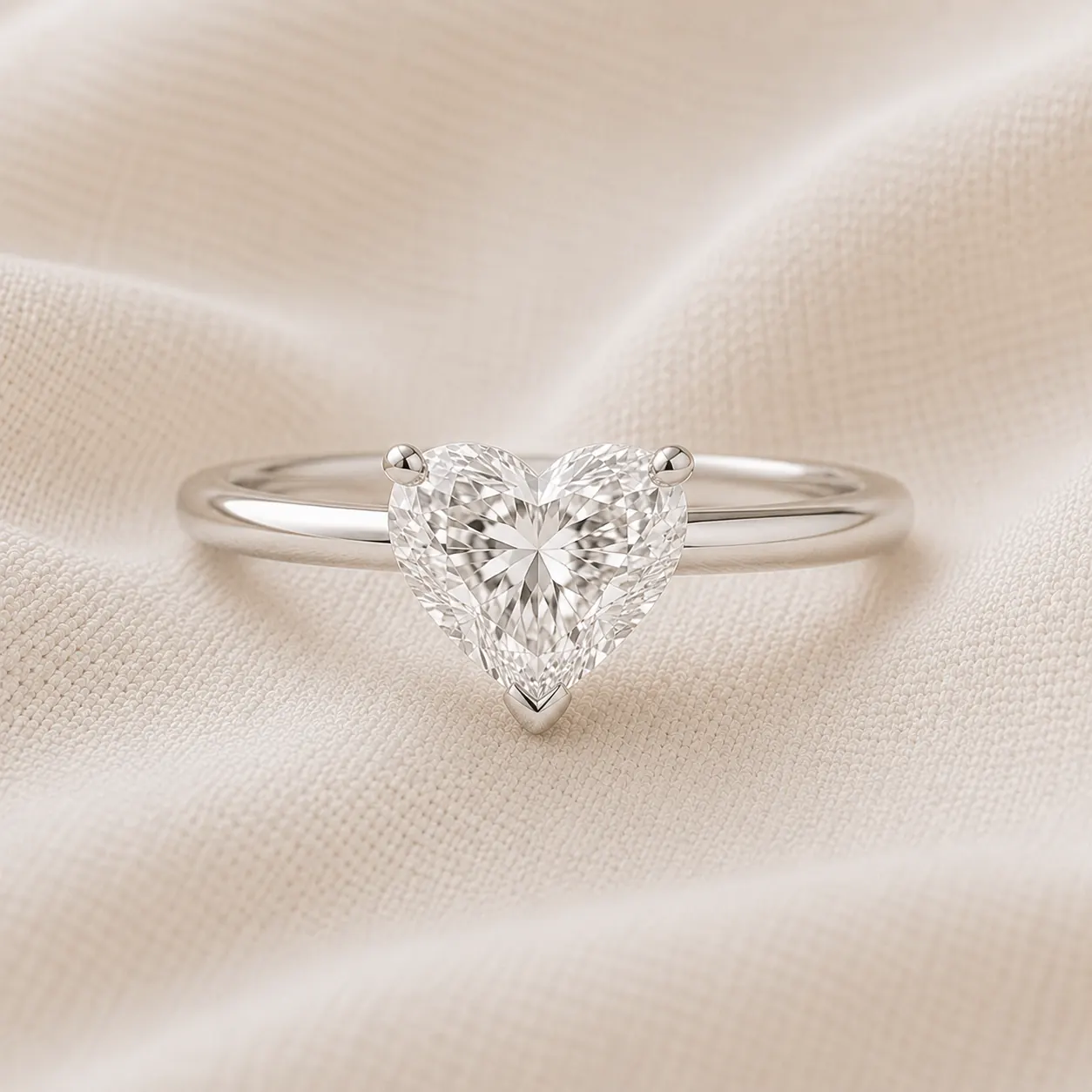
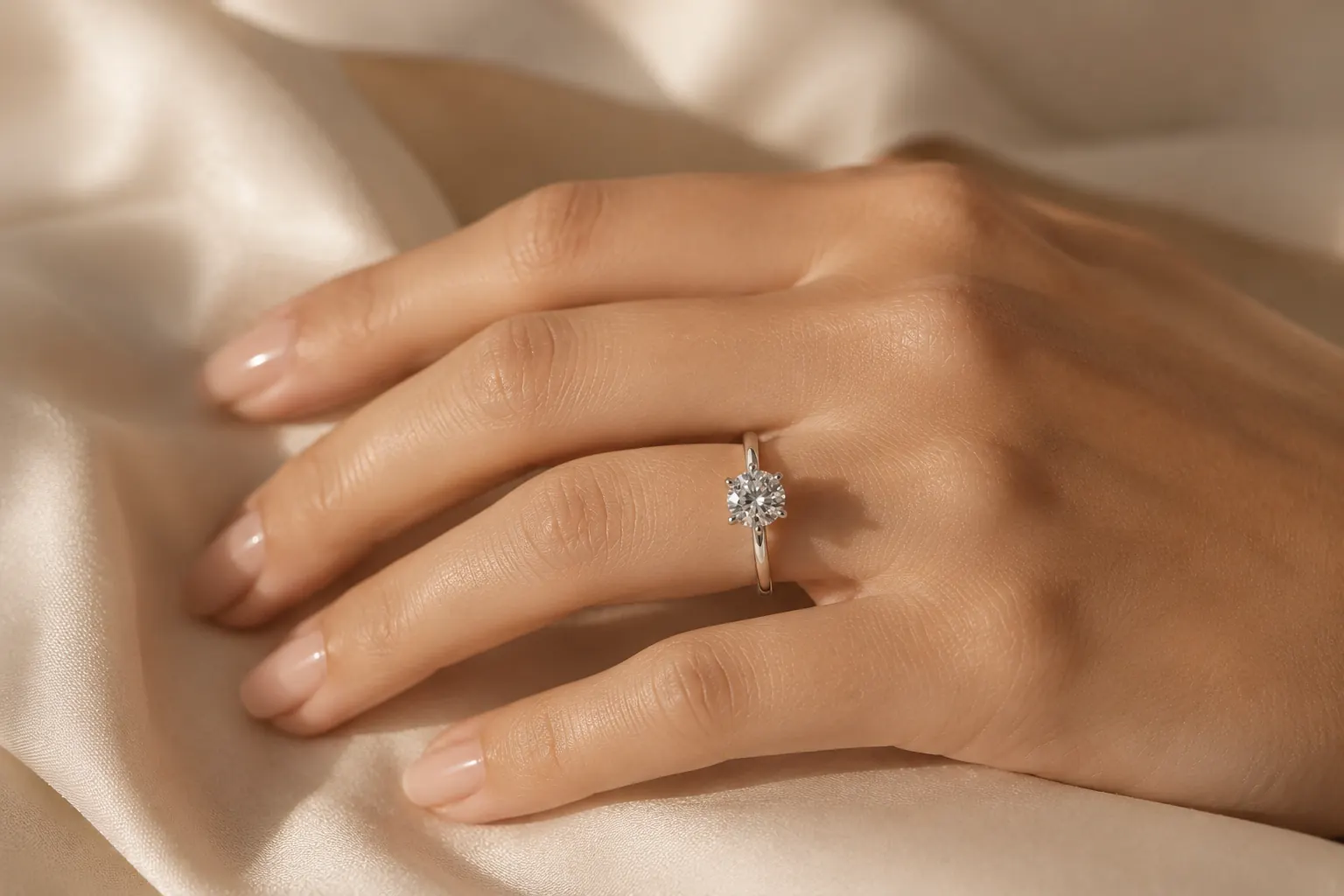
A solitaire engagement ring (or solitaire diamond ring) is a single diamond set alone on a band — no halo, no side stones. From the French solitaire (‘alone’), it’s the most recognizable ring silhouette in the world and ~35% of all engagement rings sold today.
- The classic — Tiffany & Co.’s 1886 six-prong ‘Tiffany Setting’ lifts the diamond above the band to maximize light; still the most-copied setting in the world.
- Why choose it — symbolically, a single stone for singular love; practically, every dollar of budget goes to the center stone instead of accent diamonds. The best choice when center-stone size and quality matter most.
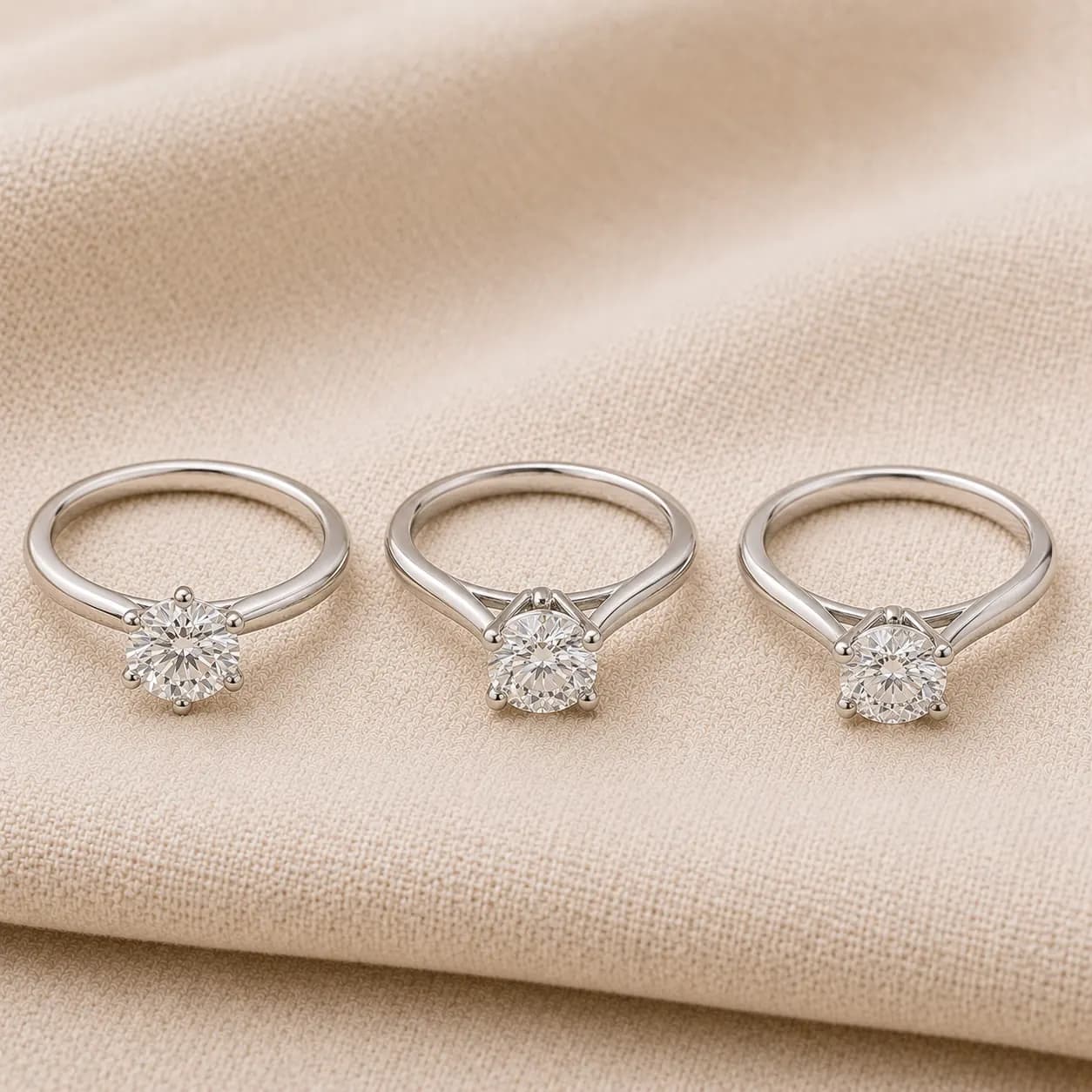
Solitaire Settings — Cathedral, Trellis, Basket, and Prong Variations
The solitaire silhouette has several setting variants — each defines how the diamond is held and how it sits on the finger:
- Cathedral — center diamond elevated on metal arches rising from the band; maximum light entry, distinctive side profile. Needs a curved ring enhancer for flush pairing.
- Trellis — prongs cross under the stone in a side-visible X-pattern; sculptural and secure, common with round and cushion centers.
- Basket — diamond cradled in a metal basket with horizontal struts between prongs; refined side profile from every angle.
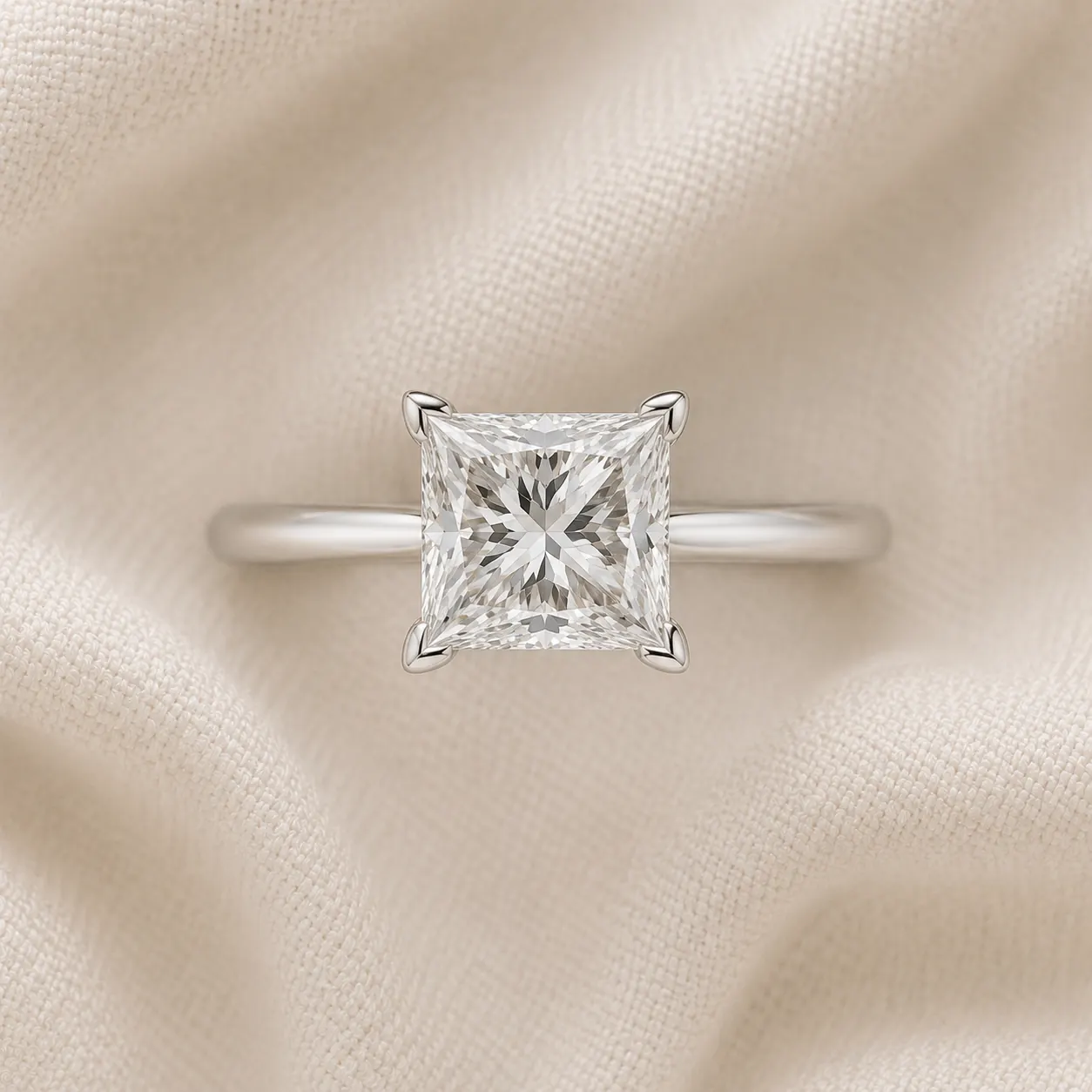
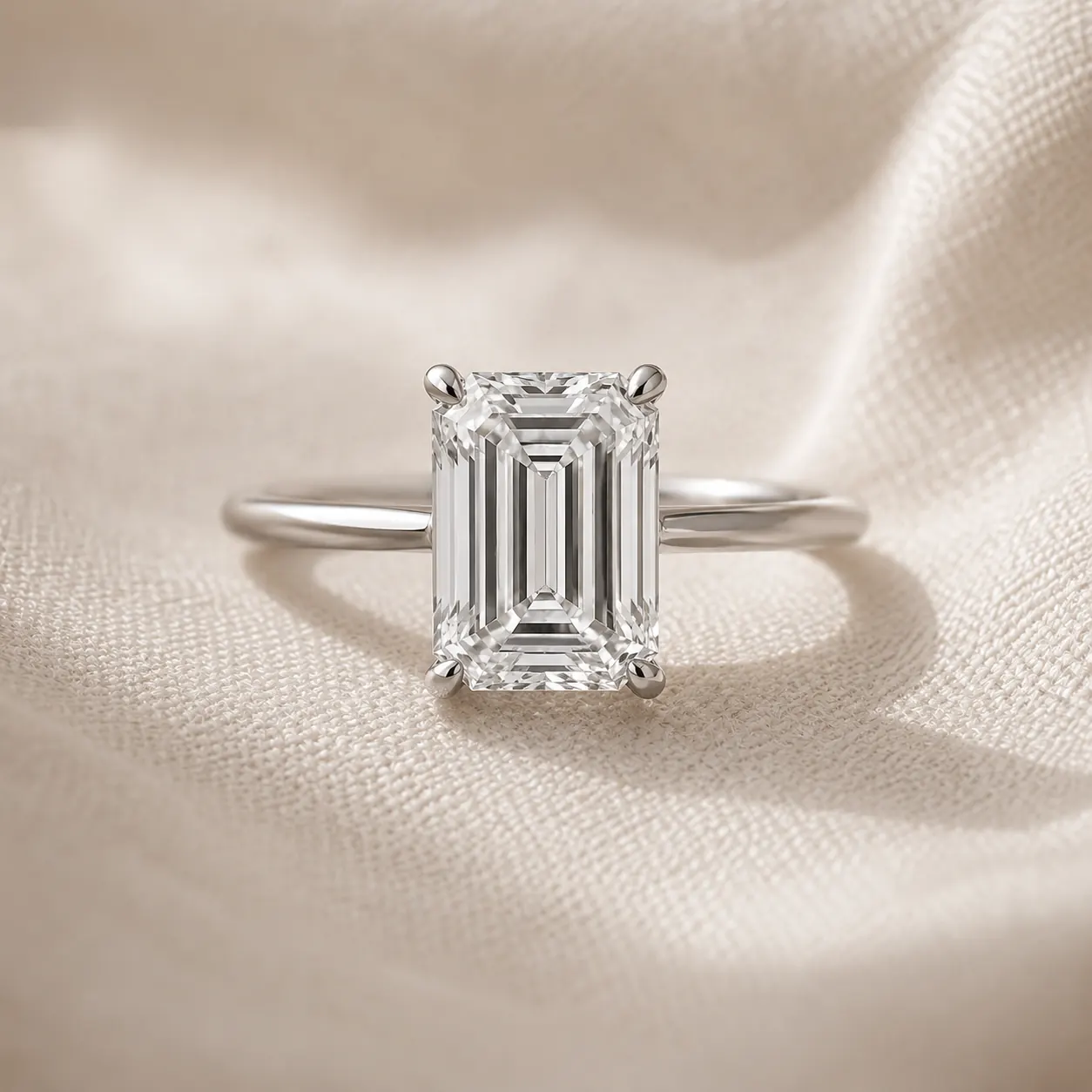
- 4-prong vs 6-prong — 4-prong (Tiffany-style) shows more diamond and reads modern; 6-prong holds more securely, reads traditional. Knife-edge + 6-prong is the historical Tiffany silhouette; princess and emerald cuts use 4 V-prongs at corners to protect edges.
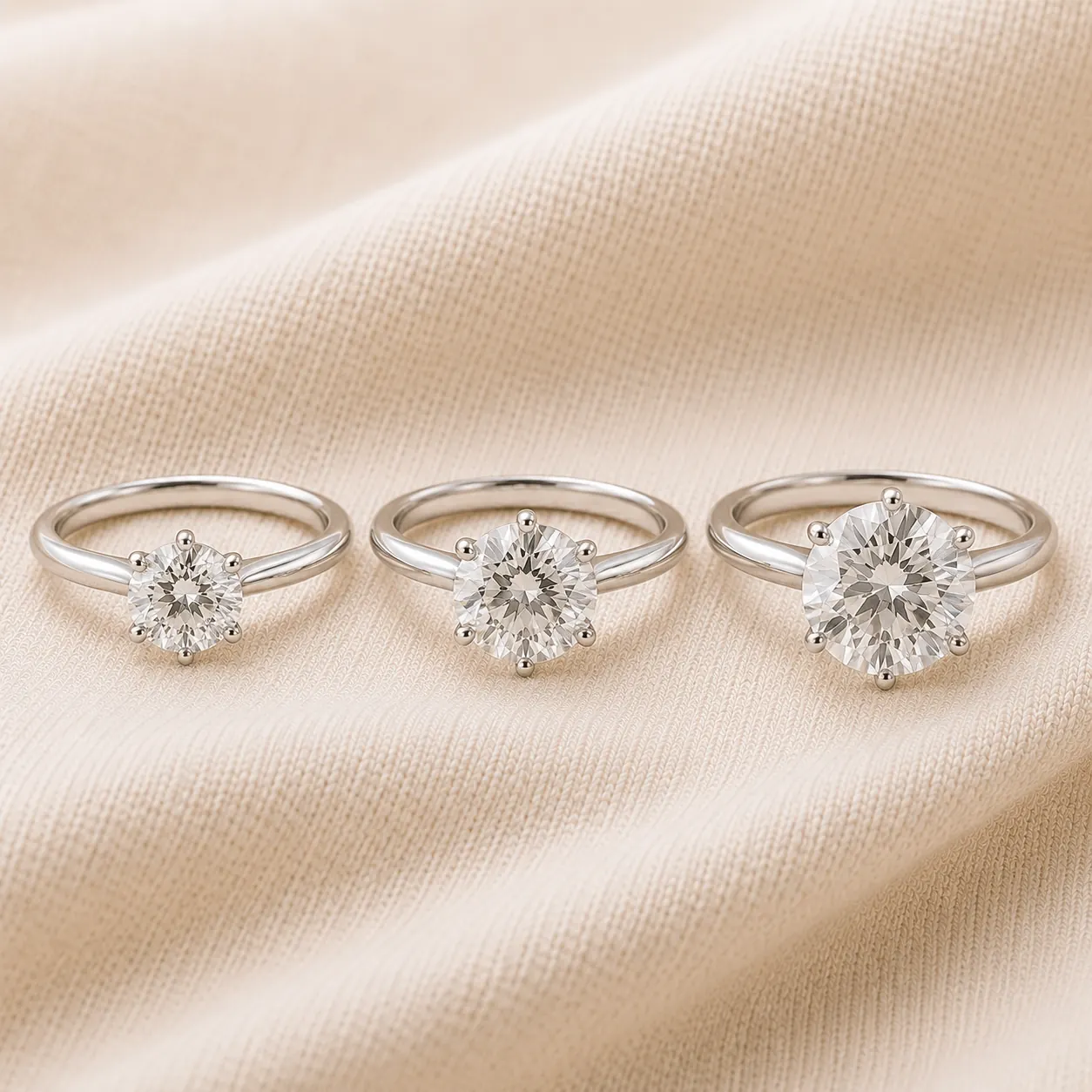
Solitaire Engagement Rings by Carat — 1ct, 2ct, 3ct
Pricing is dominated by the center stone, so carat weight is the biggest single price lever:
- 1 carat — the most popular US size; classic and well-proportioned. $4,000–$10,000 natural ($2,500–$6,000 lab-grown) at G color / VS2 / Excellent cut.
- 2 carat — statement size, visible across a room. $8,000–$25,000 natural ($4,000–$12,000 lab-grown). Pricing is non-linear; prioritize Excellent cut over premium color/clarity.
- 3 carat — anniversary or milestone size. $25,000–$80,000 natural ($10,000–$30,000 lab-grown). Supply tightens dramatically above 2.5ct; GIA certification is essential here.
- Other sizes — 0.5–0.75ct reads delicate; 1.5ct is the popular split-the-difference choice. We model proportions against your hand size at the showroom — this changes 50%+ of clients’ initial guess.
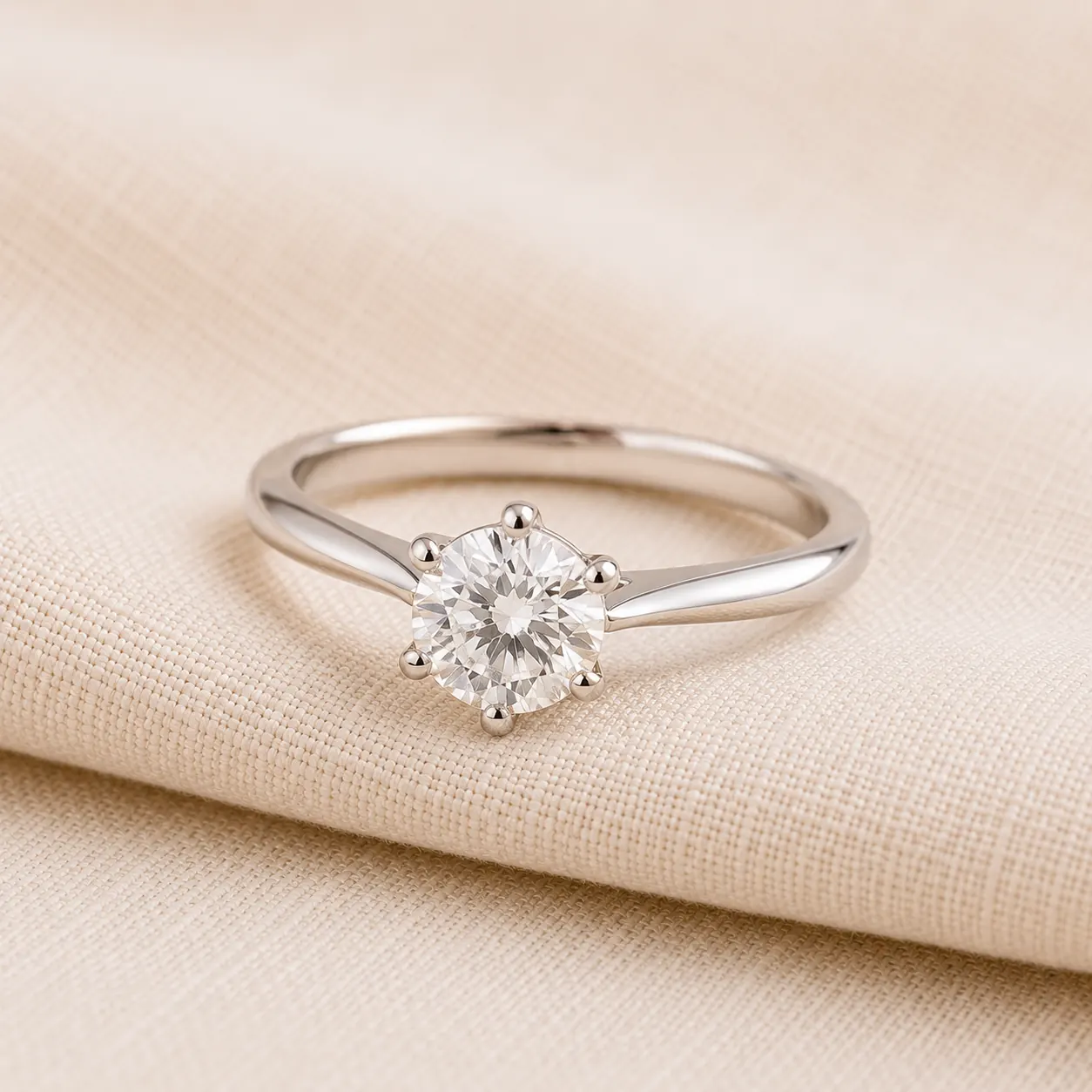
Solitaire Engagement Rings for Women
Most-purchased women’s solitaire configurations at our showroom:
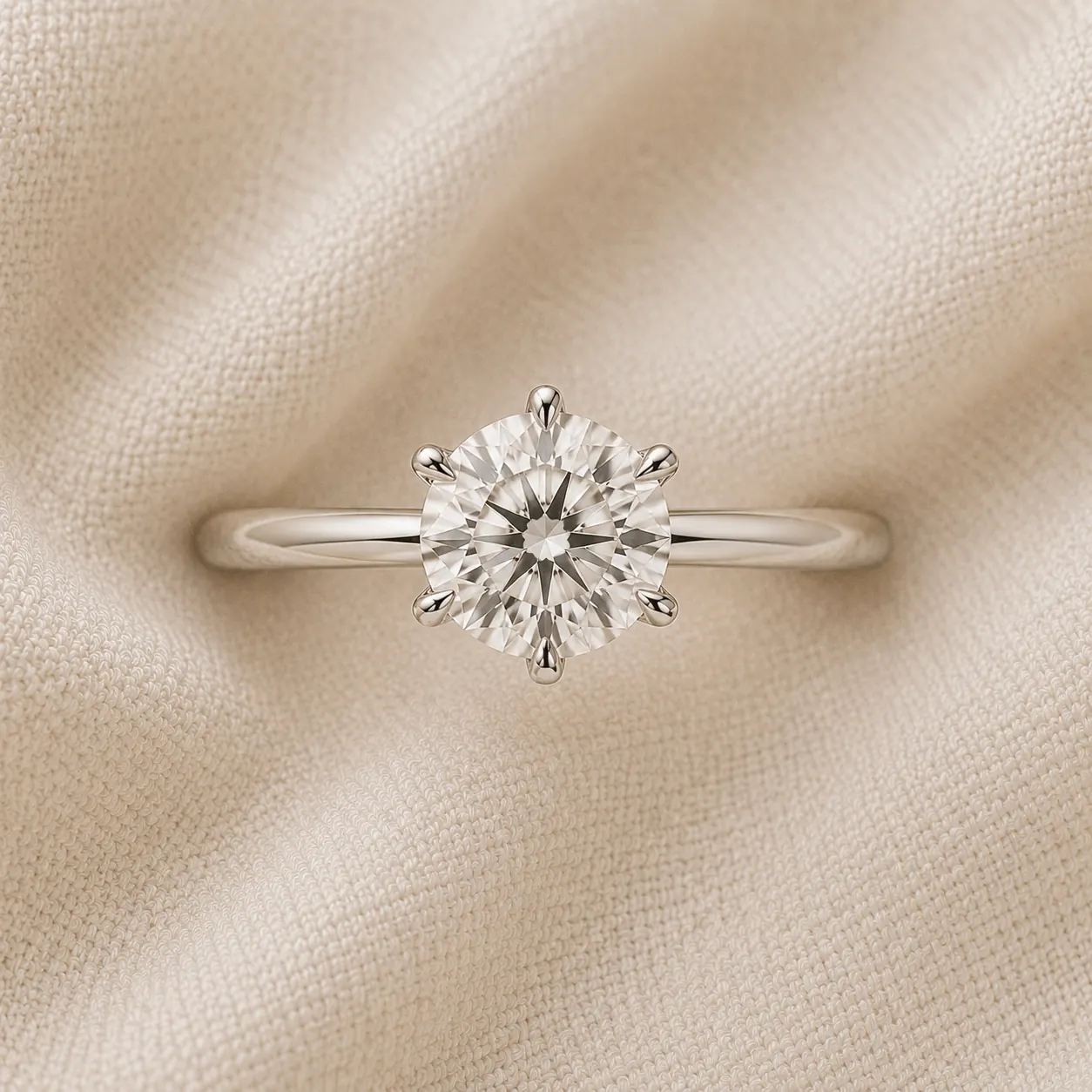
- 1ct round in 14K white gold — the modern default.
- 1ct round in platinum 6-prong — the classic Tiffany-style.
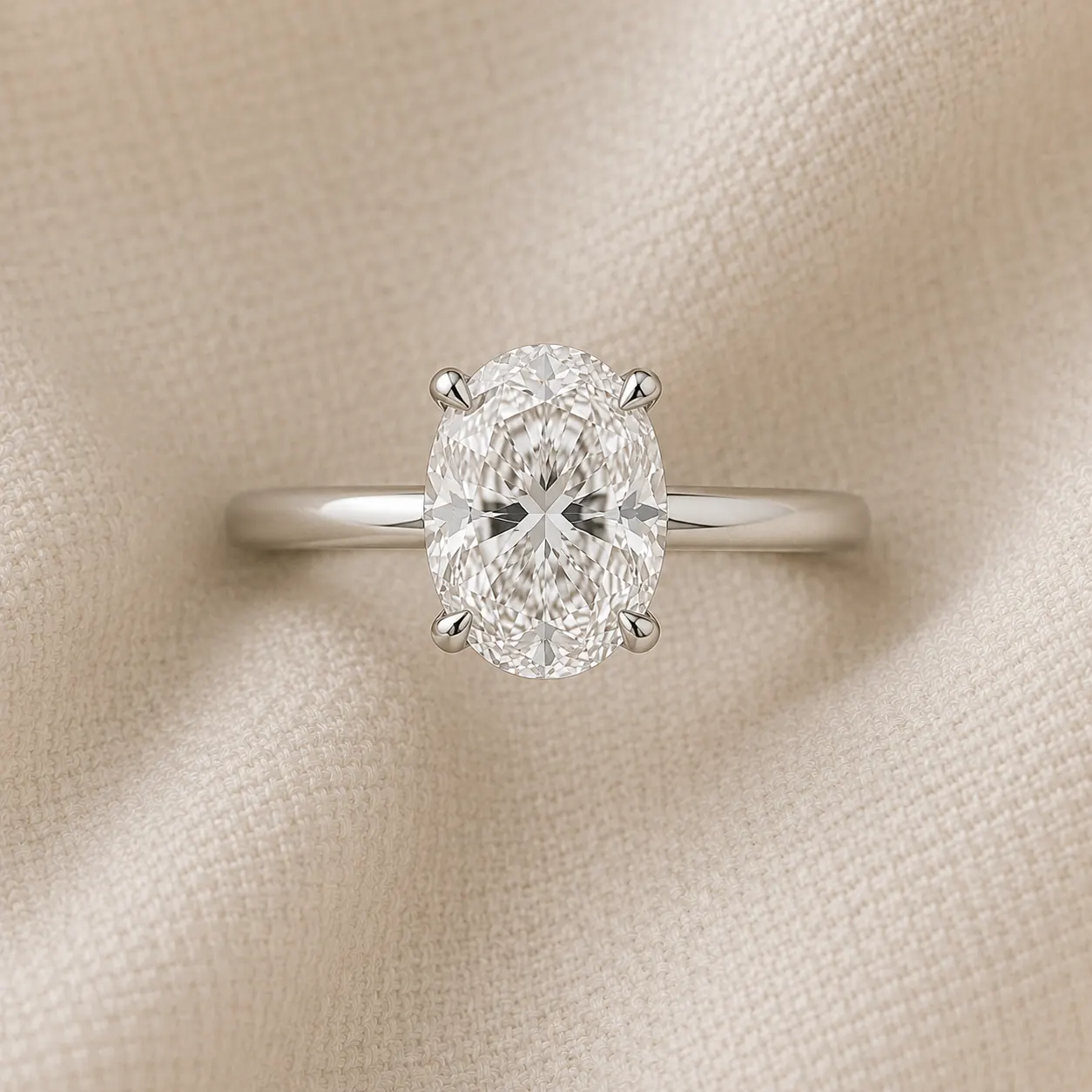
- Oval in 14K white gold — finger-elongating, fastest-growing fancy shape.
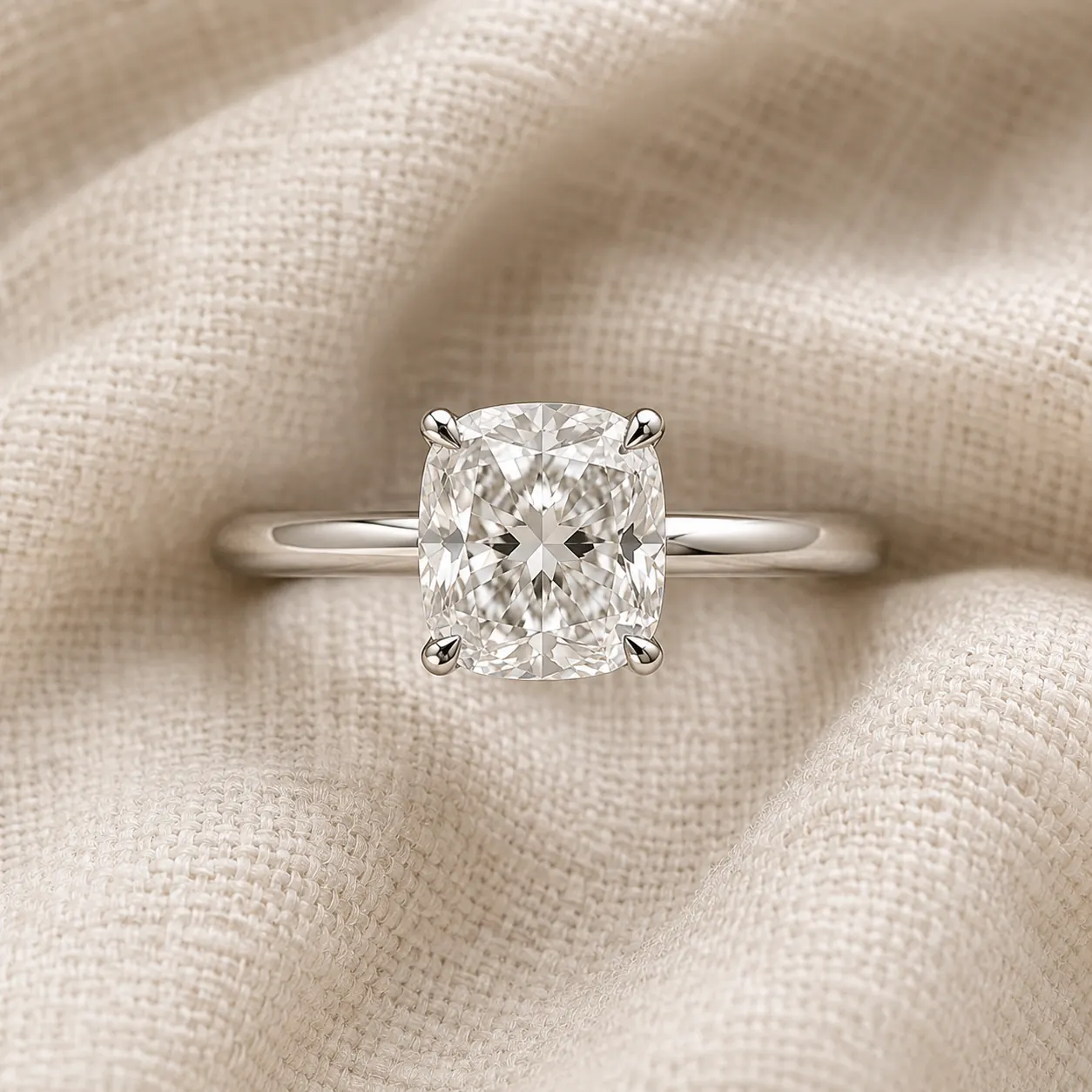
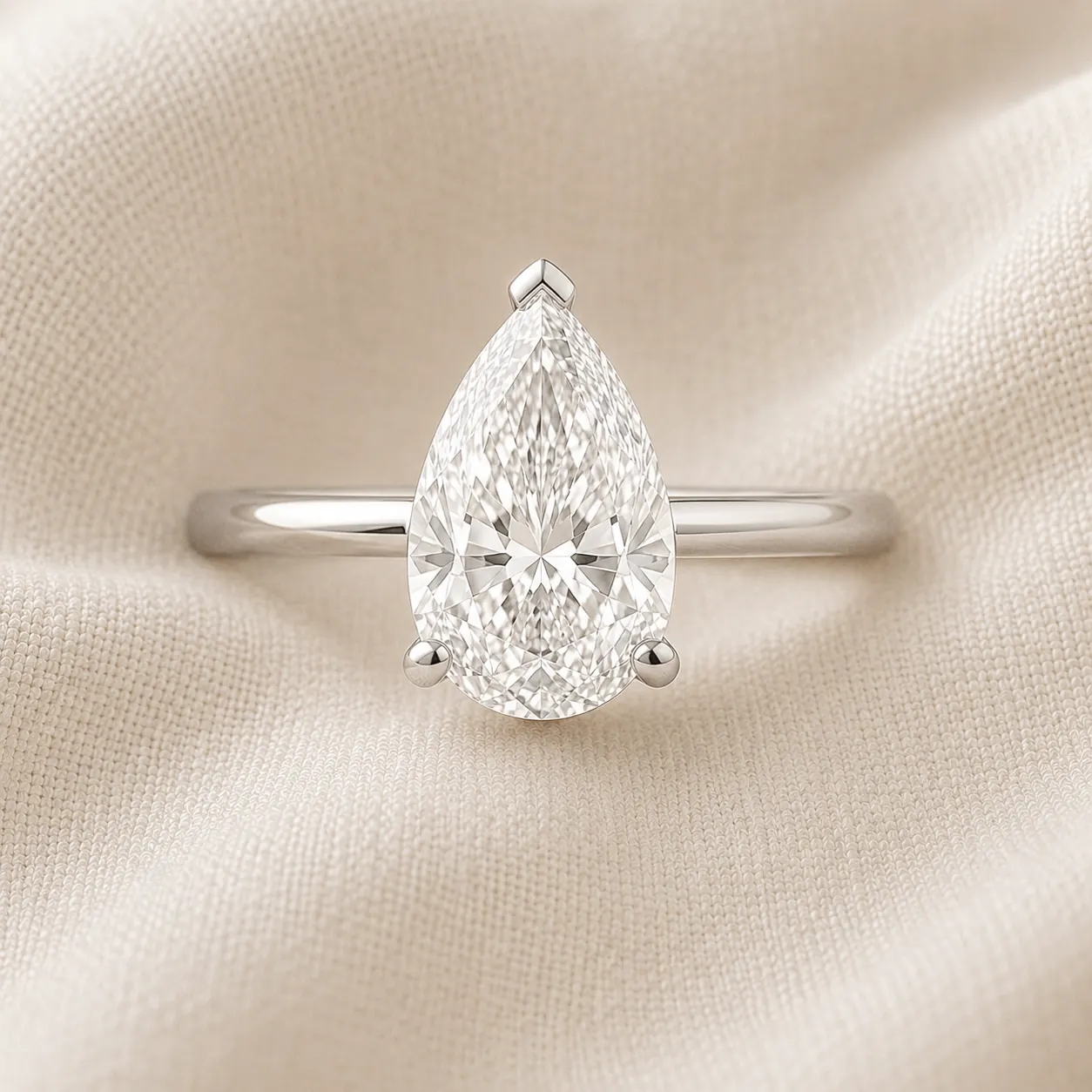
- Cushion — vintage feel, pillow-soft corners; pear or emerald for clients wanting less common shapes.
- Pairing — most pair with a same-metal diamond half-eternity band; build the stack over time with anniversary & eternity bands.
Solitaire Engagement Rings by Metal
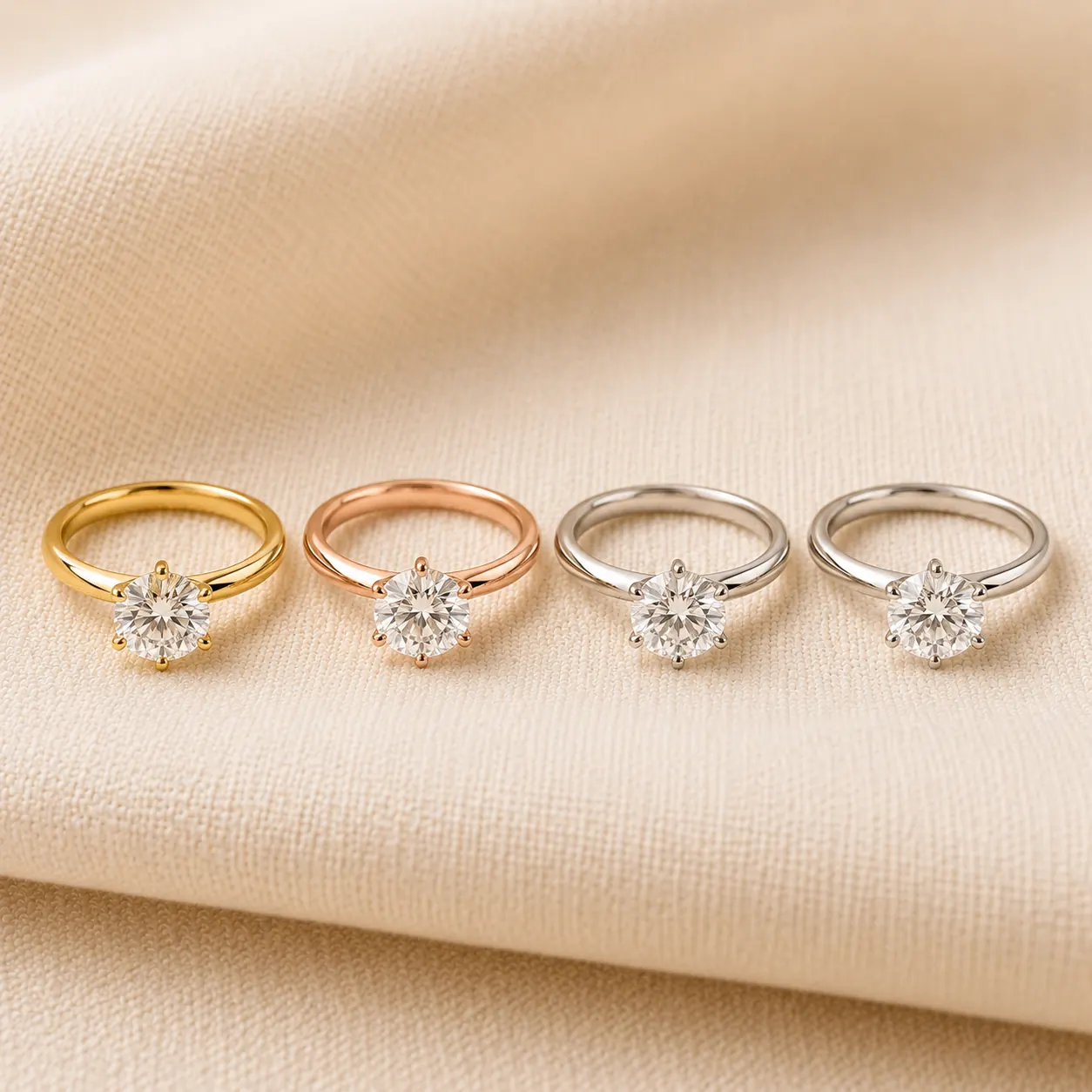
The metal affects color, weight, cost, and maintenance:
- Platinum — the premium choice; rigid enough to hold prong tension for decades, cool white shows diamonds brightest, hypoallergenic. ~2x equivalent gold. See platinum bands.
- 14K / 18K white gold — reads like platinum at 30–50% the cost; needs rhodium re-plating every 1–3 years.
- Yellow gold (14K/18K) — the traditional warm-toned default before white gold; never needs re-plating.
- Rose gold — contemporary and romantic; pairs with morganite, champagne diamond, and rose-cut centers. See gold and rose gold bands.
Lab-Grown vs Natural Diamond Solitaire
Solitaires are where this decision matters MOST — the center stone is essentially the entire ring, carrying 80%+ of cost. After carat size, it’s the single biggest price lever. Both are real diamonds, visually and chemically identical (Mohs 10, same sparkle):
- Lab-grown — created in a lab in weeks; 40–60% less per carat. A 2ct natural at $15,000 has a lab-grown equivalent at $6,000–$8,000, freeing budget for a larger or higher-quality stone.
- Natural — stronger long-term resale (lab-grown supply keeps expanding), geologic rarity, heirloom narrative. We sell both with no house preference.
Pairing Your Solitaire with a Wedding Band & Why ATL
The solitaire’s clean silhouette makes it the most flexible ring for wedding-band pairing:
- Diamond eternity band — the most-purchased engagement-to-wedding pairing in the US; continuous sparkle without competing with the center. See diamond wedding bands.
- Cathedral or trellis solitaire — high-set centers need a curved ring enhancer to fill the gap a straight band would leave.
- Plain metal band — for minimalists; reinforces the solitaire’s clarity. Add a 5- or 10-year anniversary band to build the stack over time.
Every solitaire is handcrafted at our Snellville, GA showroom (since 2008, 10,000+ pieces) with a GIA or IGI report on every center stone over half a carat — preferring Triple Excellent (3EX) on round brilliants and Excellent symmetry on fancy shapes. Includes lifetime cleaning, prong-tightening, and our 100% trade-up program.
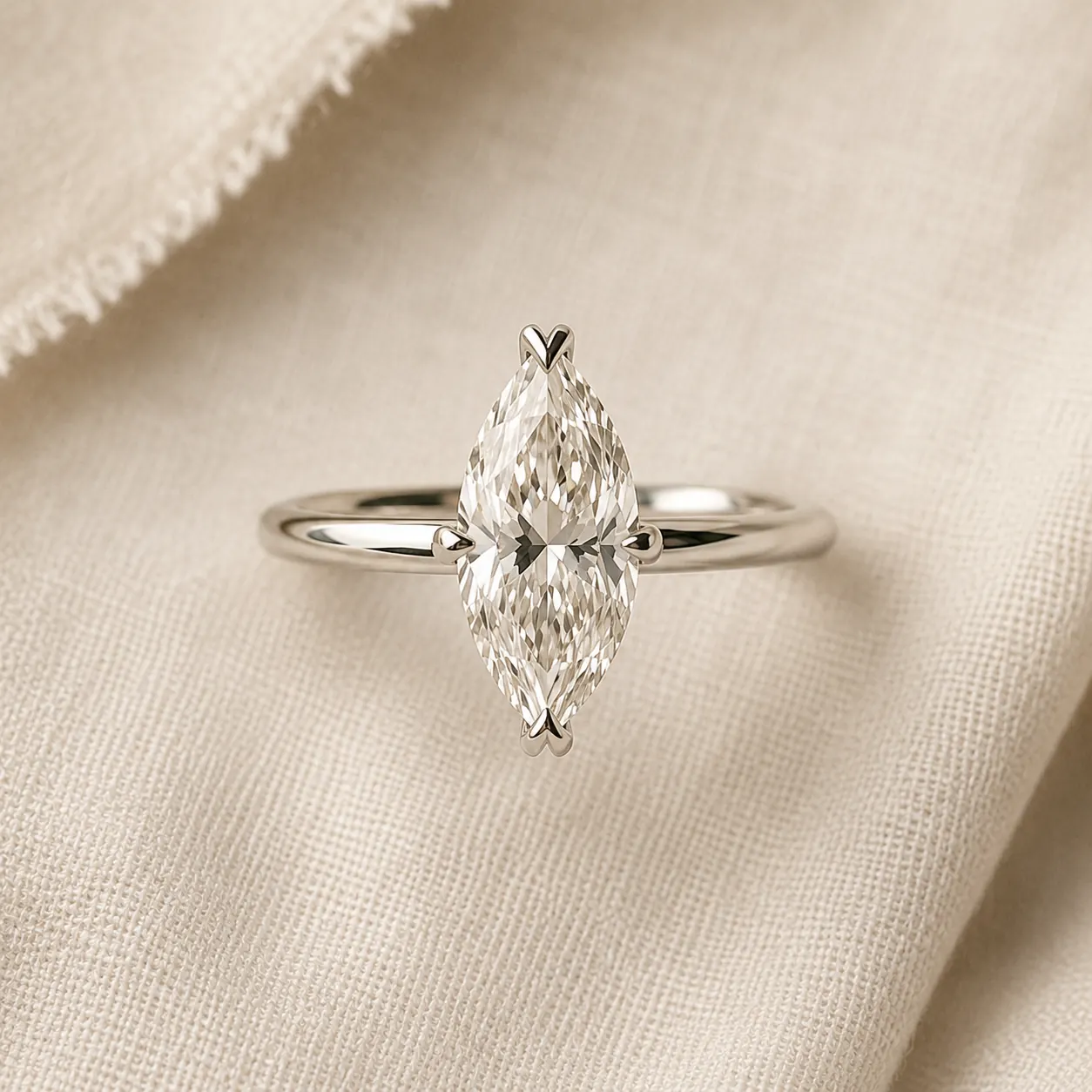
Solitaires by Diamond Shape
The solitaire works beautifully across every diamond shape. Explore the silhouette in your preferred cut:

Related Collections
Halo Engagement Rings
A frame of pavé diamonds amplifies the center stone — for clients who want extra sparkle.
Three-Stone Engagement Rings
Past, present, future — a center stone flanked by two side diamonds.
Round Engagement Rings
The most popular solitaire center stone — maximum fire and brilliance.
Oval Engagement Rings
The most popular fancy-shape solitaire — finger-flattering and 15% more economical per carat than round.
Diamond Wedding Bands
Eternity, pavé, and curved bands designed to pair with solitaire engagement rings.
Custom Design Process
Commission a one-of-a-kind solitaire engagement ring in Atlanta.
Frequently Asked Questions
Visit Our Atlanta Showroom
See Solitaire Engagement Rings in Person
Our Snellville showroom — minutes from Atlanta, Lawrenceville, and Stone Mountain — carries an extensive solitaire inventory across every diamond shape, metal, and prong configuration. Book a private consultation or call us to source a specific center stone for in-person viewing.
1905 Scenic Hwy N Ste 230, Snellville, GA 30078 · (704) 684-7530