Milgrain, filigree and engraving
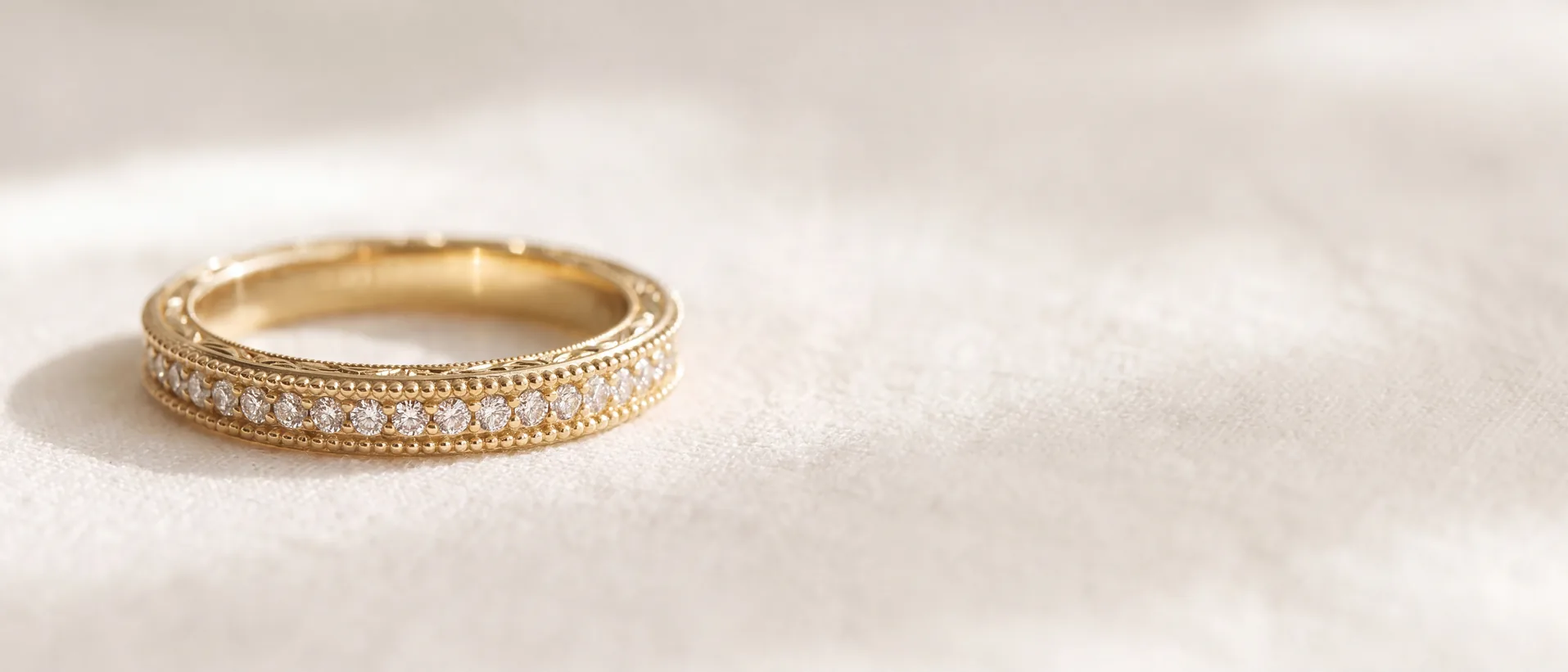
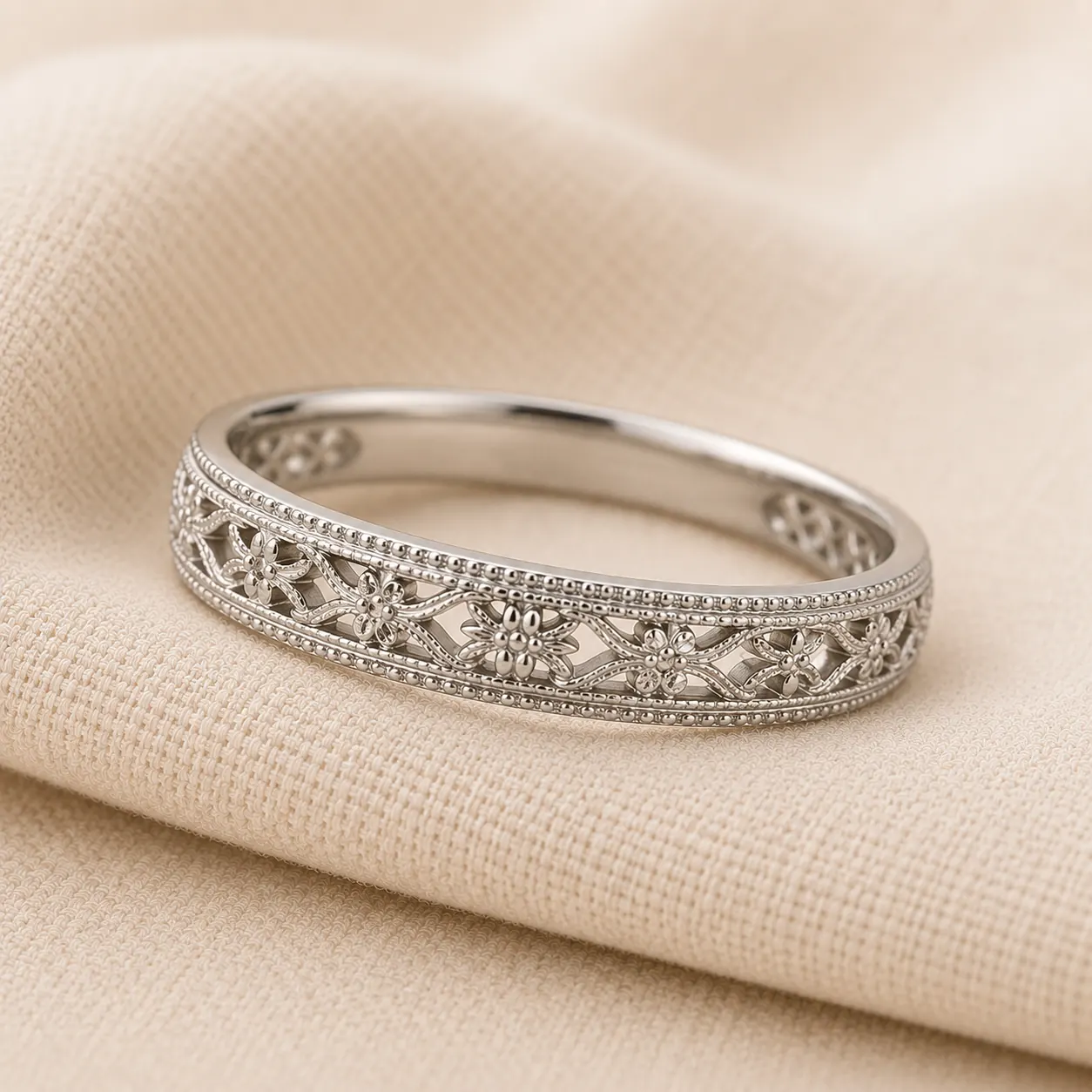
Milgrain is a row of tiny beads along the edge of a band. It gives a soft, lacy outline, and it is the detail most people picture when they say vintage. Filigree is openwork. Thin lines of metal are shaped into scrolls, flowers or lattice, and the gaps between them are left open. Engraving cuts a pattern into the surface, such as a Greek key, a leaf or a repeating scroll.
Jewelers used all three long before the 1920s, but the Art Deco years gave them a sharper look. Bands from that decade set milgrain against straight lines and stepped edges. Small diamonds sat in tidy rows, often as baguette cuts, and filigree turned more geometric than the loose scrolls of earlier rings. If you like that crisp mix of ornament and order, look at our baguette wedding bands as well.
A band can use one of these details or combine them. Our guide to types of wedding rings shows how they fit among the other band styles.
Pairing a vintage band with your engagement ring
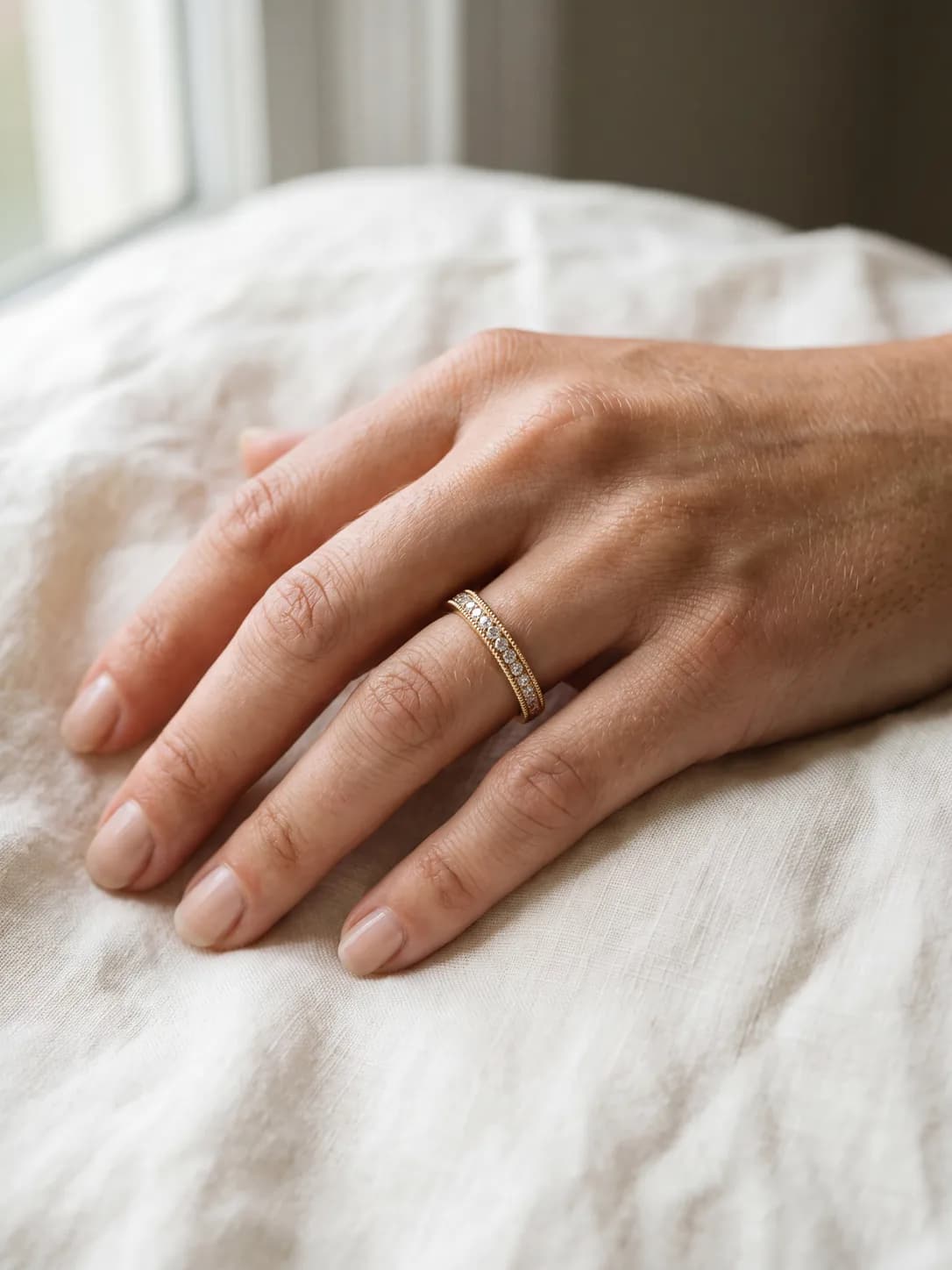
There are two ways to pair a vintage band with an engagement ring. The first is to match the period. An ornate ring with milgrain, filigree or engraving sits well beside a band with the same details, and the two read as one design. The second is contrast. A plain modern band beside an ornate ring keeps the ring as the focus and lets its details stand out.
Metal and width matter too. Match the metal if you want the two rings to look like a pair, or choose a different metal on purpose for a mixed look. If your ring has a lot of detail, a slimmer band leaves it room, while a plain ring can take a wider band with more pattern.
If your ring has a halo or a wide setting, a straight band can leave a gap. Curved wedding bands are made to sit flush against a ring like that. Our guide on how to choose a wedding band covers width, metal and fit step by step.
Related Collections
Baguette Wedding Bands
Bands set with baguette-cut diamonds, a shape common in Art Deco design.
Diamond Wedding Bands
Bands set with natural or lab-grown diamonds.
Rose Gold Wedding Bands
Wedding bands in warm rose gold.
Eternity Bands & Anniversary Rings
Diamond eternity and anniversary bands.
Vintage & Art Deco Engagement Rings
Engagement rings with vintage and Art Deco details, to pair with a band.
All Wedding Bands
Every band in the catalog in one list.
Frequently Asked Questions
Visit Our Atlanta Showroom
Try on vintage wedding bands in Snellville
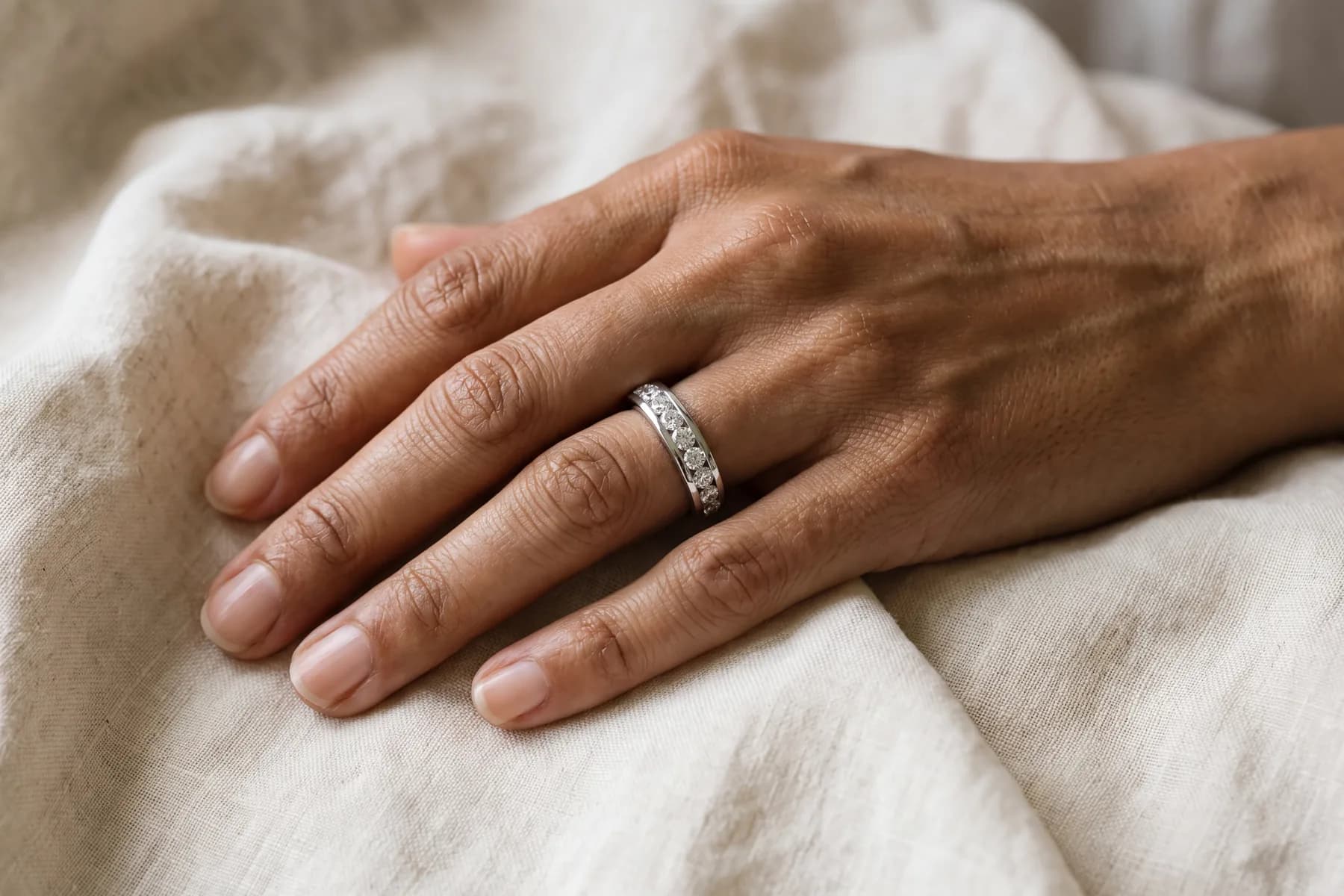
Our showroom is in Snellville, near Atlanta. Bring your engagement ring and try bands against it. You can compare metals, widths and details side by side, and see how each band looks on your hand next to your stone.
1905 Scenic Hwy N Ste 230, Snellville, GA 30078 · (704) 684-7530