Metal Guide · Published · Updated September 2026
Gold Karats Explained: 10K vs 14K vs 18K
A gold karat is a purity number, not a color. 10K is 41.7% pure gold. 14K is 58.3% pure gold. 18K is 75% pure gold.
The rest is other metals. More gold means a softer metal. Less gold means a harder, cheaper metal.
That one number decides how a piece wears. It has nothing to do with color. Color is a separate choice.
This guide covers four things. It explains what the karat numbers mean. It explains what the hallmark stamps say.
It explains how solid gold differs from gold-filled and gold-plated. And it explains how to choose a karat for each piece.
What is a karat?
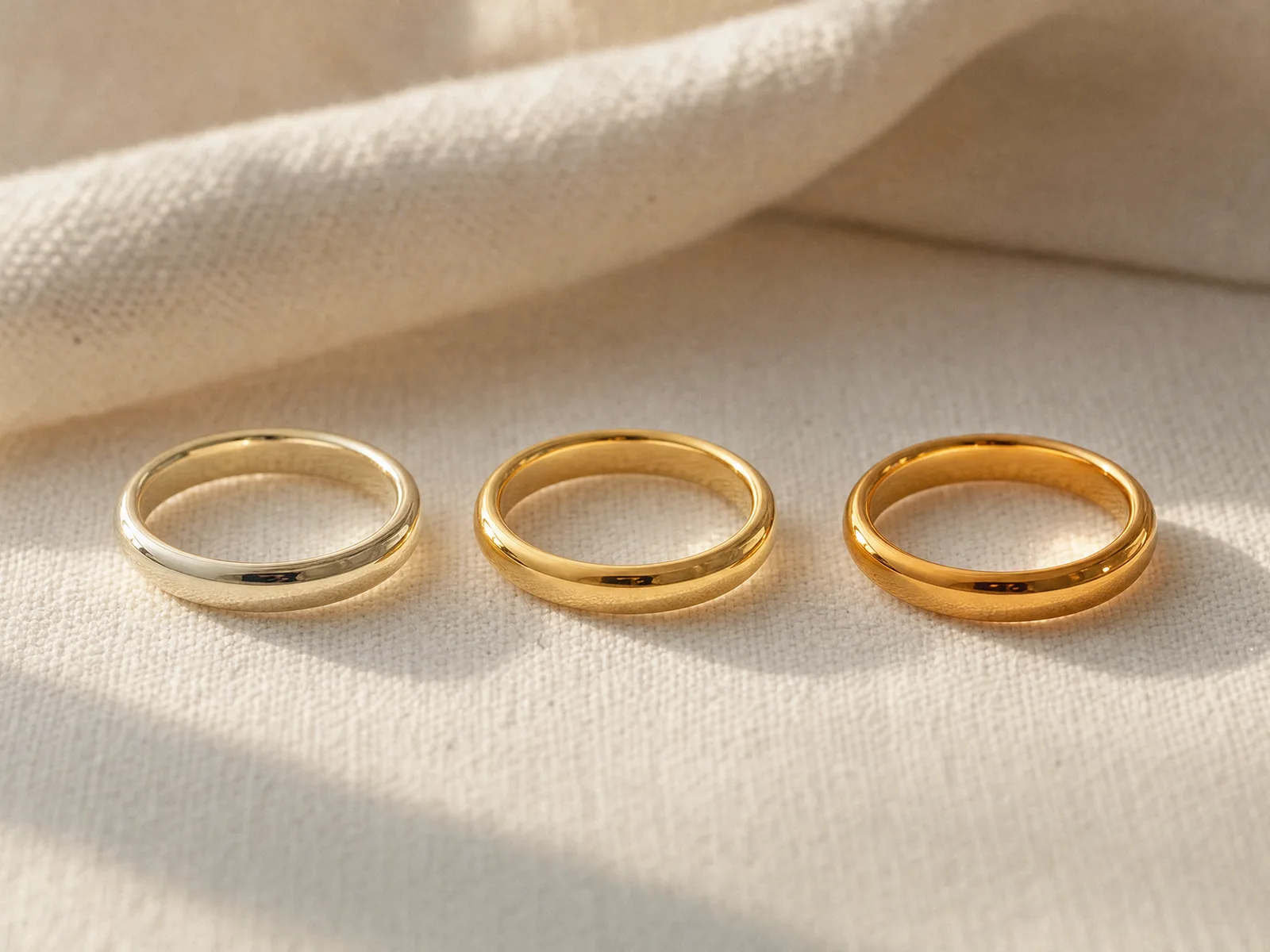
A karat tells you how much pure gold is in a piece. It is written as a fraction of 24. 14K gold has 14 parts pure gold out of 24. That equals 58.3% gold by weight.
The rest is alloy. It is other metals like copper, silver, zinc, nickel or palladium.
Alloy is what makes karat gold strong. Pure 24K gold is too soft on its own. It could not survive daily use.
Think of gripping, knocking, and hand-washing. Three karats cover almost all fine jewelry sold in the US:
- Start with 10K gold at 41.7% pure gold. This is the lowest gold content the law allows. A piece must have at least this much to be called “gold” in the US. Nothing below 10 karats can carry that stamp.
- Next is 14K gold at 58.3% pure gold. This is the most popular karat in US fine jewelry. It is also our most-stocked karat in all categories.
- Last is 18K gold at 75% pure gold. It has richer color and higher purity than 14K. Many people choose it for heirloom and statement pieces.
A karat only measures gold content. It says nothing about color. Color is its own topic, covered next.
10K vs 14K vs 18K: what changes
One note first. Karat means gold purity. Carat means diamond or gemstone weight.
They sound the same. They are not.
A 1-carat diamond can sit in 10K, 14K, or 18K gold. The stone’s weight and the metal’s purity are not linked. This guide covers only the second word: gold purity.
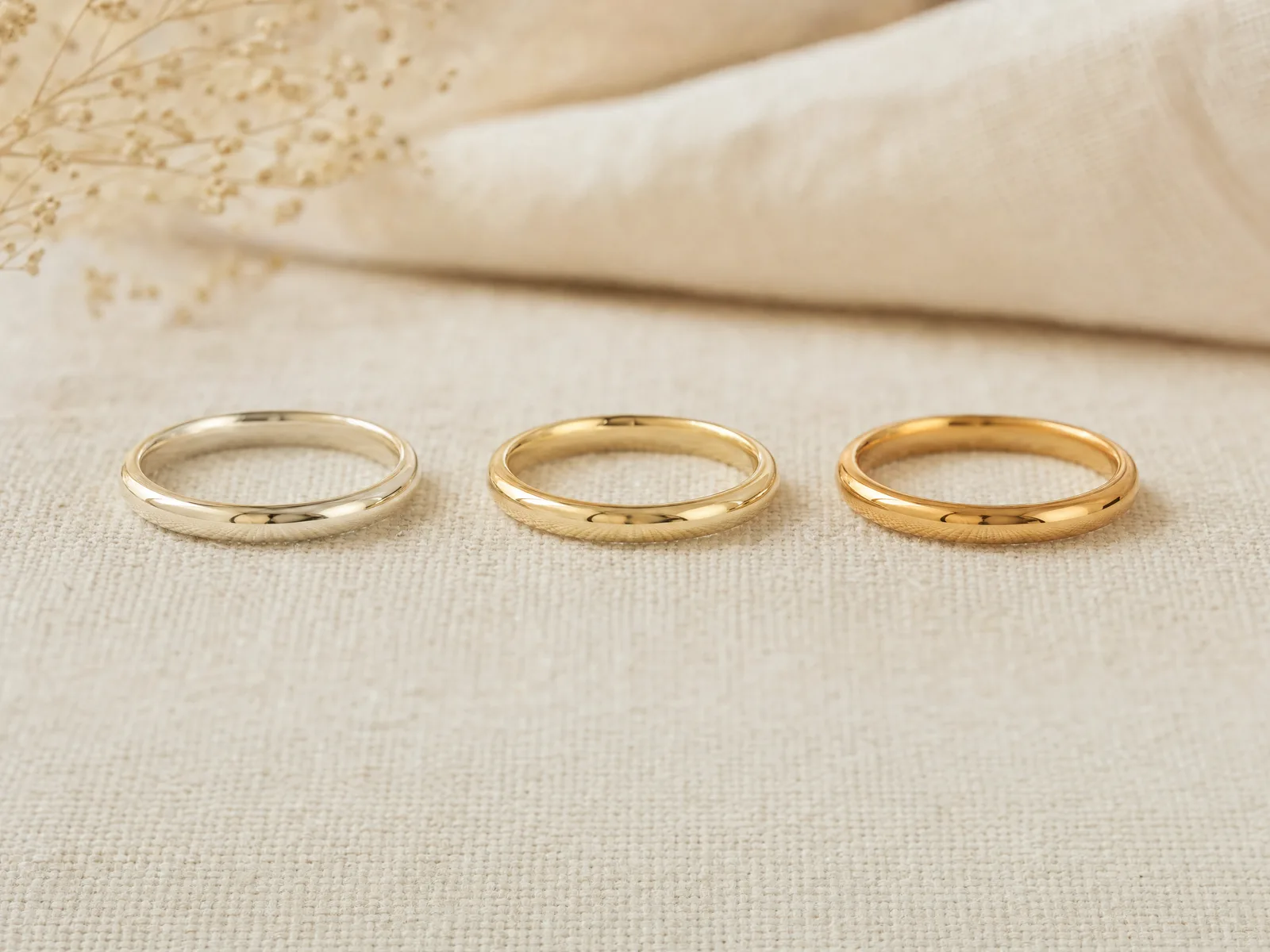
There is one trade-off. More gold means richer color and a softer metal. Less gold means a paler color and a harder, cheaper metal. The design, stones and build do not have to change with the karat.
- Start with 10K gold at 41.7% pure gold, the hardest and cheapest of the three. It holds up well against desks, tools and doorframes. It costs less without losing real, legal gold. It can tarnish a bit faster than 14K or 18K. That is because it has more base metal mixed in. It will not rust. A normal cleaning brings back the shine.
- Next is 14K gold at 58.3% pure gold, the standard for daily wear. The added alloy makes it strong enough to hold prongs and settings secure. It resists dents and scratches better than 18K. That is why it’s the karat we stock most. We use it across rings, bracelets, necklaces and earrings.
- Last is 18K gold at 75% pure gold, the richest color of the three. It looks warmer and deeper than 10K or 14K. But it is clearly softer. It suits pieces worn less often, statement jewelry and heirlooms better than something worn each day.
A 10k gold ring costs less than the same ring in 14K or 18K gold. It also resists scratches best of the three.
Some shoppers search this as ring 14kt gold instead. That means the same 14K gold, just less of it than 18K. See our 10K gold rings to compare each style.
Price follows the same pattern. At the same design and weight, a 14K piece often costs less than an 18K piece. That is because 18K holds more gold per gram.
A 14K gold name necklace starts around $400, versus around $700 in 18K. 10K sits below both. It is the smart choice on a fixed budget.
Platinum sits outside this karat system. It is never stamped 10K, 14K or 18K. Platinum jewelry is white all the way through. It is never plated, unlike white gold.
It hardly bothers skin. It never tarnishes. Several pieces in our rings, earrings and pendant pages list it alongside 18K.
There, it is a step up. It offers more strength and a higher price.
Hallmark stamps: 585, 750 and 417
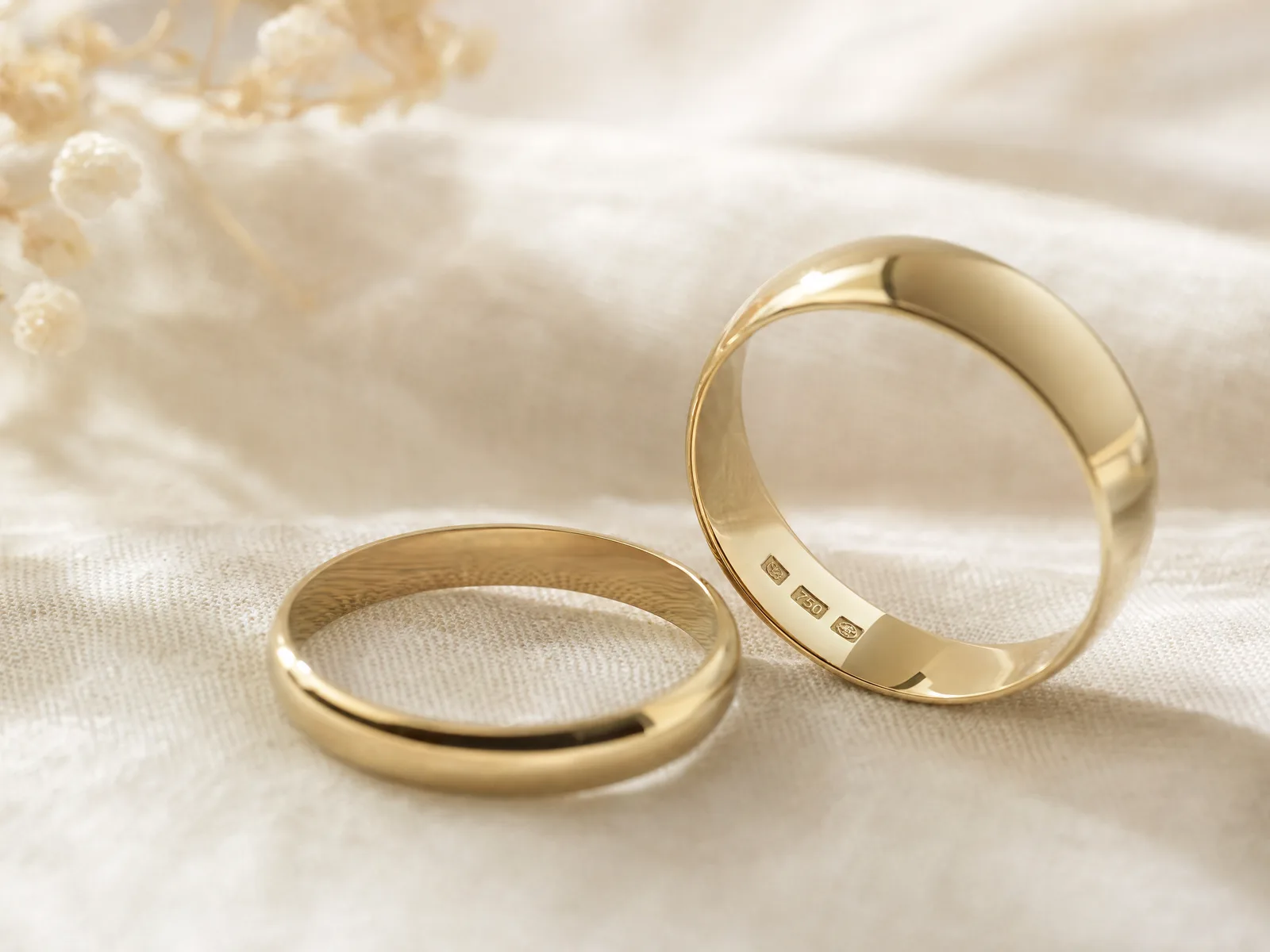
Each real piece of karat gold carries a hallmark that states its purity. It can be a karat number or a decimal number. Both mean the same thing. Look for it inside a ring shank, on a bracelet or necklace clasp, or on a pendant bail:
- Start with 10K or 417 — both mean 41.7% pure gold.
- Next is 14K or 585 — both mean 58.3% pure gold.
- Last is 18K or 750 — both mean 75% pure gold.
These are two ways to say the same thing. The decimal number is the karat fraction. It is written out of 1,000 instead of 24.
A piece stamped 585 has the exact same gold content as a piece stamped 14K. It is just written another way. This style is common on pieces made in Europe.
A missing stamp does not mean a piece is fake. It does mean the piece needs testing. Only then can its karat be confirmed.
A jeweler can test it well with an XRF analyser. This takes just a couple of minutes.
Solid gold vs gold-filled vs gold-plated
The karat number is not the whole story. You also need to know where the gold sits. It may run through the whole piece. Or it may just sit on the surface.
People use the word “gold” freely. It can mean three different things. Only one of them is what this guide has covered so far.
- Solid gold. The stated karat is alloyed with other metals. It runs all the way through the piece. The body, post and clasp are all the same solid alloy. It can be resized, repaired and repolished. It never wears down to a different metal. Each piece in our collection is solid gold. None is gold-filled or gold-plated.
- Gold-filled. A thick layer of gold is bonded to a brass core under heat and pressure. The gold layer is real. It wears through with daily contact, though. This exposes the base metal underneath.
- Gold-plated. A thin gold layer is electroplated over base metal or sterling silver. It is the thinnest, least durable option. It can flake. It can also tarnish at the plating edge within months of daily wear.
Solid gold is also gentler on skin than gold-filled or gold-plated pieces. There is no thin layer to wear through. It does not expose base metal.
It is not always gentle, though. White gold alloys can carry trace nickel. That is the most common reason skin reacts, no matter the karat.
Choosing a karat by piece
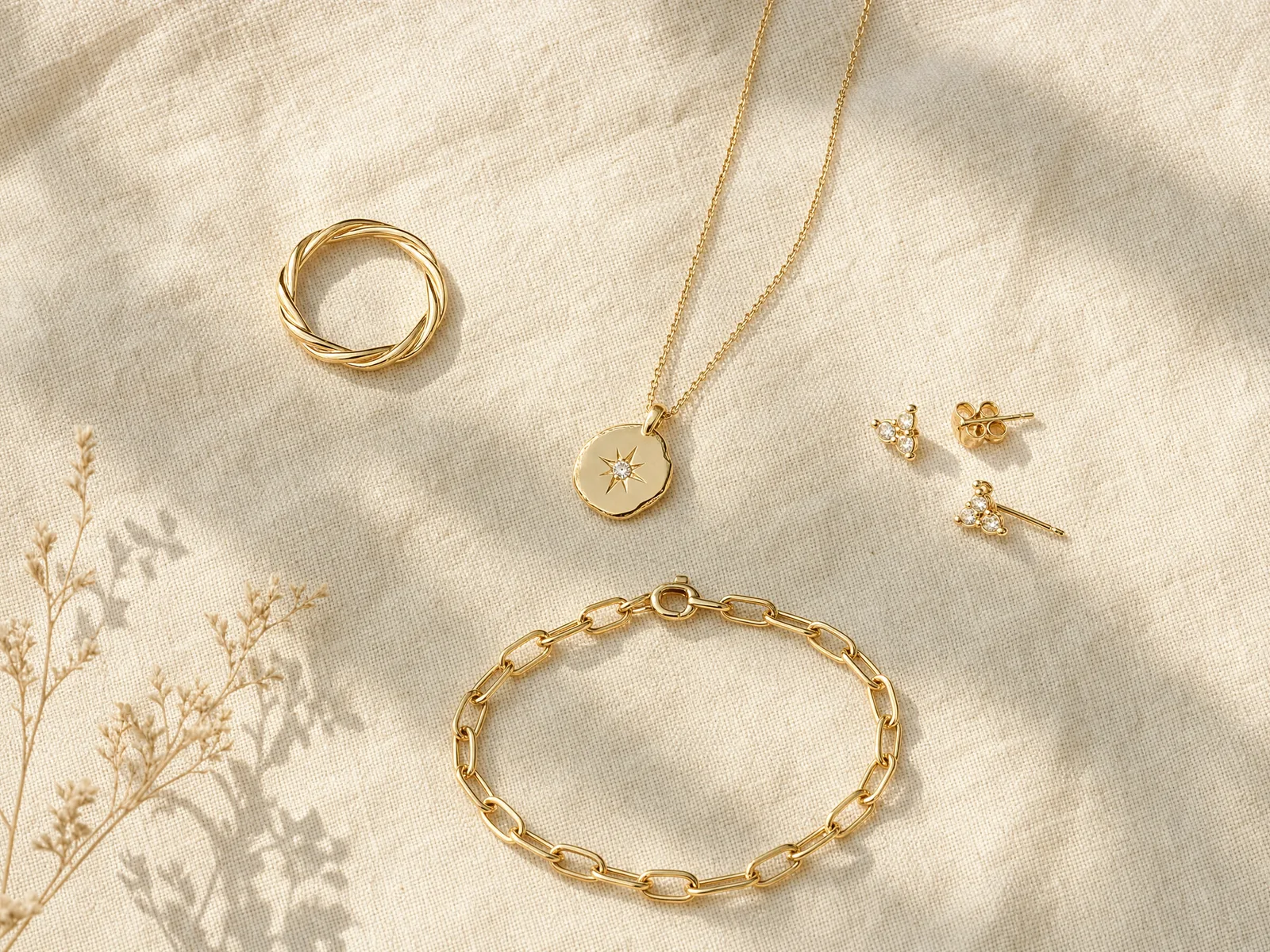
The right karat depends less on the piece type. It depends more on how much daily contact it takes. Browse the full collections to see each karat next to our other metal options.
- Rings. A ring takes more daily contact than almost any other piece of jewelry. Think about closing car doors, typing, or gripping a steering wheel, each day. That is why 14K is the standard ring karat. Our rings come in solitaire, stackable, cocktail, signet, eternity and statement styles. All are solid 14K gold, never gold-filled or gold-plated.
- Bracelets. Bracelets flex and knock against desks and doorframes all day. The same daily wear logic applies. Our bracelets come in tennis, bangle, cuff and chain-link styles. They come in yellow, white and rose gold.
- Earrings. Earrings take less impact than a ring or bracelet. So 18K works better here than elsewhere. Still, 14K stays the toughest choice for studs and hoops worn daily. 14K white gold is the most-chosen karat and color for diamond studs. The cool metal makes the stone look whiter. Our 14K gold earrings include studs, hoops, huggies and drops.
- Bangles & cuffs. 14K bangles and cuffs are the toughest, stack-friendly choice for daily wear. 18K versions trade some of that strength for a richer color. That is why they suit pieces worn less often and heirlooms. They work better than a daily stack.
- Necklaces & pendants. A chain or pendant mostly hangs still. It does not take direct impact. That is why 18K necklaces and pendants hold up well despite being softer. The richer color shows clearly on a piece that is not knocking against anything.
- Men’s pieces. Men’s rings, bracelets and diamond studs often run heavier than women’s pieces. But the karat logic is the same. 14K white gold or platinum works best for stud earrings worn each day. 14K gold works best for Cuban link bracelets, signet rings and diamond bands too. It lasts through daily wear, for the same reason.
A 14k gold ring is the safest daily pick. It takes the most contact of any piece here. It holds up best.
Some shoppers search for it as ring 14kt gold. That is the same words in a different order. See our 14K gold rings to browse each style in solid 14K.
A 14k gold bracelet holds up the same way. It resists knocks from desks and doorframes.
An 18k gold bracelet feels softer and shows a deeper color. It suits pieces worn less often better than a daily stack. See our 14K gold bracelets, or browse all bracelets for 18K styles.
Weight matters too, not just karat. A heavier 14K piece can carry more gold than a thin 18K piece. That is one reason two pieces stamped differently can still cost about the same.
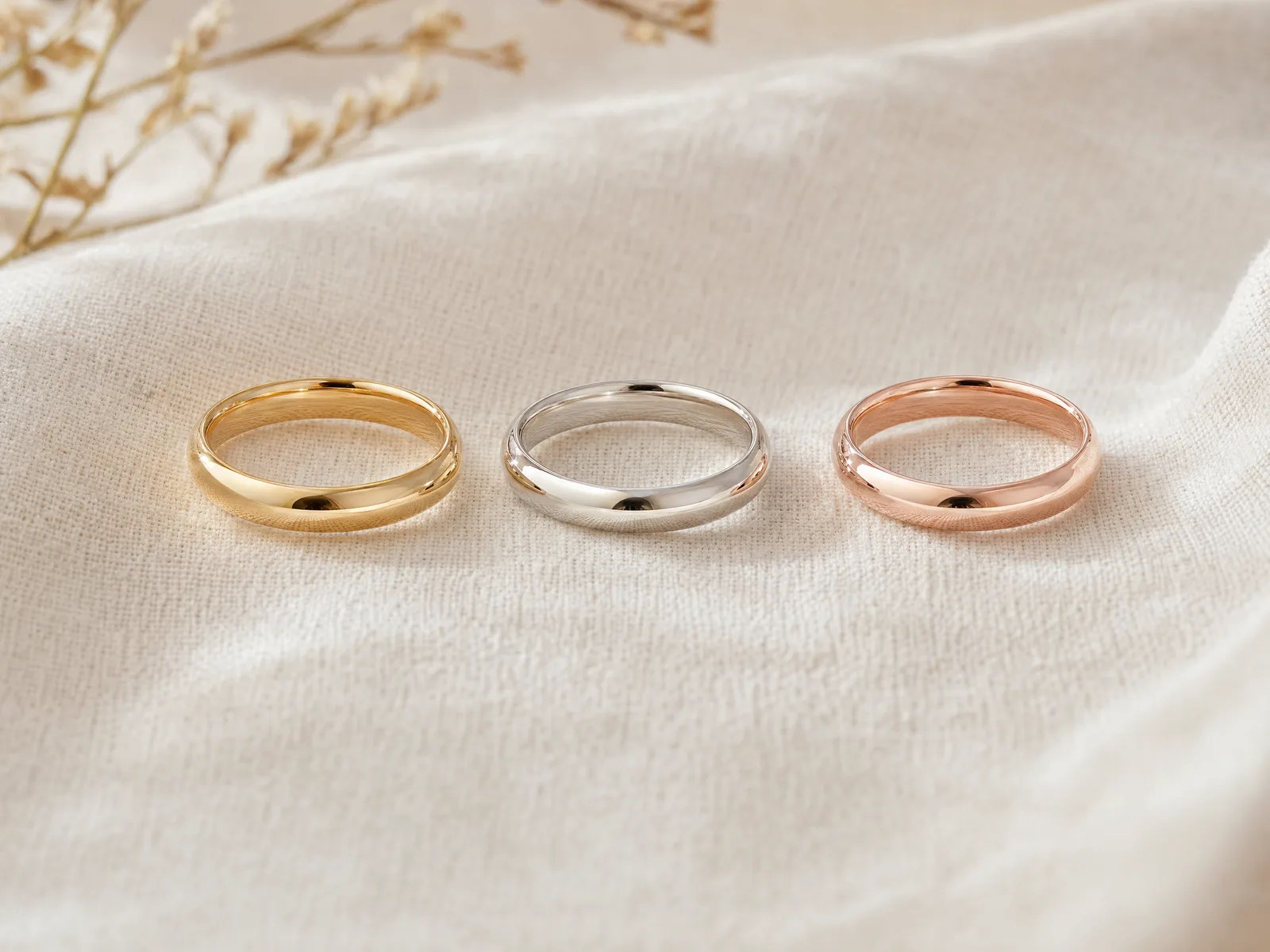
Karat and color are two different choices
Each karat in this guide comes in yellow, white and rose gold. The karat number does not change with the color. 14K yellow gold and 14K white gold both contain 58.3% pure gold by weight. That is identical gold content, and an identical karat stamp.
- Yellow gold — alloyed with copper and silver, which keep it warm.
- White gold — alloyed with white metals and usually rhodium-plated for its bright, cool finish.
- Rose gold — gets its pink hue from a higher copper content.
- 24K gold — 99.9% pure, and always yellow. There is no such thing as 24K white or rose gold. Making gold white or pink needs other metals mixed in. 24K has almost none of that alloy in it. That is also why 24K is never used for daily jewelry. Without an alloy, it is too soft to hold a setting.
This guide has stayed on one topic: purity. That is how much gold is in a piece. It shapes hardness, hallmark stamps and price.
Color is its own decision. It is covered in full in our guide to yellow vs. white vs. rose gold.
For white gold’s alloy and rhodium plating, see what is white gold.
Gold karats at a glance
Here is all of it in one place — purity, hallmark, and the trade-off each karat makes:
- Start with 10K / 417 at 41.7% pure gold. The hardest and cheapest of the three. It can dull or tarnish a little faster between polishes.
- Next is 14K / 585 at 58.3% pure gold. It is the balance point. It is the karat we stock most across rings, bracelets, necklaces and earrings.
- Last is 18K / 750 at 75% pure gold. The richest color and highest purity of the three. It costs some hardness in return. It best suits statement pieces and pieces worn less often.
- Solid vs gold-filled vs gold-plated — a question apart from karat entirely. Solid gold runs the stated karat through the whole piece. Gold-filled and gold-plated are a gold layer over a base metal. That layer wears through over time.
Caring for your gold
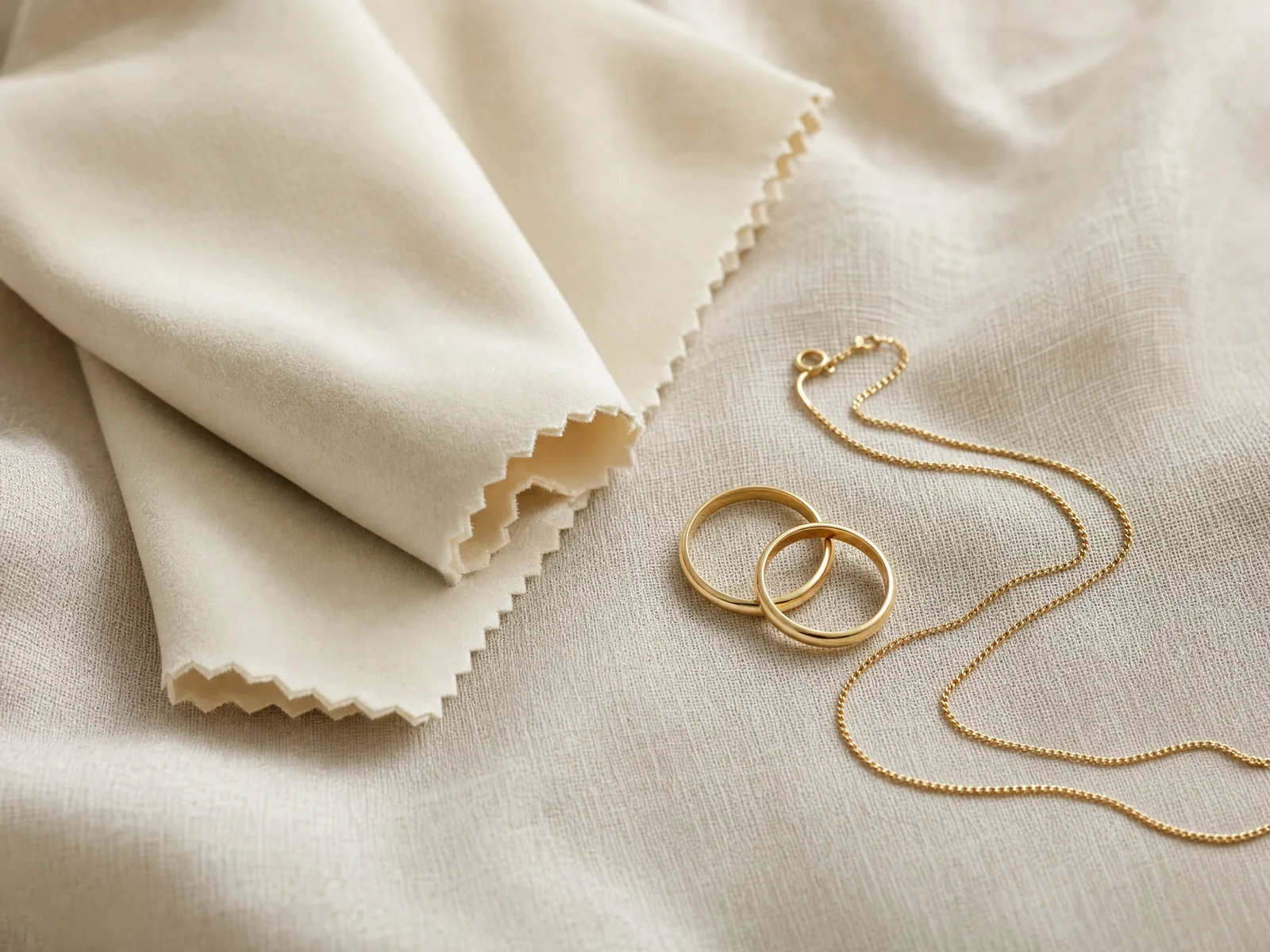
Each karat needs the same simple care. White gold also needs re-plating now and then, no matter its karat. Clean it with warm water, a drop of mild dish soap, and a soft cloth or toothbrush. Then pat it dry.
Take pieces off before you swim, shower, or apply lotion or perfume. Those speed up dulling. For 10K, tarnishing also happens faster. That is because it has more base metal alloy mixed in.
- Gold doesn’t tarnish like silver. What dulls a piece over time is lotion, soap residue and body oils. It is not the metal itself.
- White gold needs re-plating now and then. It loses its bright rhodium plating gradually. Without it, the metal shows its own warm-toned base color.
- Yellow and rose gold never need re-plating. Their color comes from the alloy itself, not a surface coating.
- Store pieces separately. A harder stone can scratch a softer metal. So can a higher karat setting. Keep them apart in your jewelry box. This costs nothing. It does more for how a piece looks in five years than almost anything else here.
Each ring, bracelet, or necklace purchased from us includes lifetime cleaning. Rings also get free prong tightening — a policy we’ve maintained since 2008. Resizing is covered by our care plans.
Engraving is included free on cuffs bought from us. Our own master jewelers do it in-house. They do not outsource it to laser engraving.
Our Snellville showroom sits minutes from Atlanta, Lawrenceville and Stone Mountain. It keeps samples in each karat and color. You can compare weight and color depth in person before you decide.
Frequently Asked Questions
Related guides & collections
Compare the karats side by side
See 10K, 14K & 18K Gold in Person
A karat difference is easier to feel than to see in a photograph — 18K sits noticeably softer and warmer in the hand than 10K. We keep gold samples in every karat and color at our Snellville showroom near Atlanta, so you can compare weight, color depth and hallmark stamps side by side before you decide.
Prefer to talk? Call (704) 684-7530