Repair Guide · Published · Updated September 2026
How Ring Resizing Actually Works
To resize a ring, a jeweller cuts through the bottom of the shank, adds or removes a measured piece of metal, rejoins the two ends and refinishes the band until the join disappears. Most rings move about two sizes in either direction without difficulty, and a plain gold band is routine bench work.
What decides whether yours is straightforward or a longer conversation is the band itself. The metal, the width, how far its stones travel around the shank and what is written inside it all change the answer. The sections below follow the work in the order a jeweller meets it.
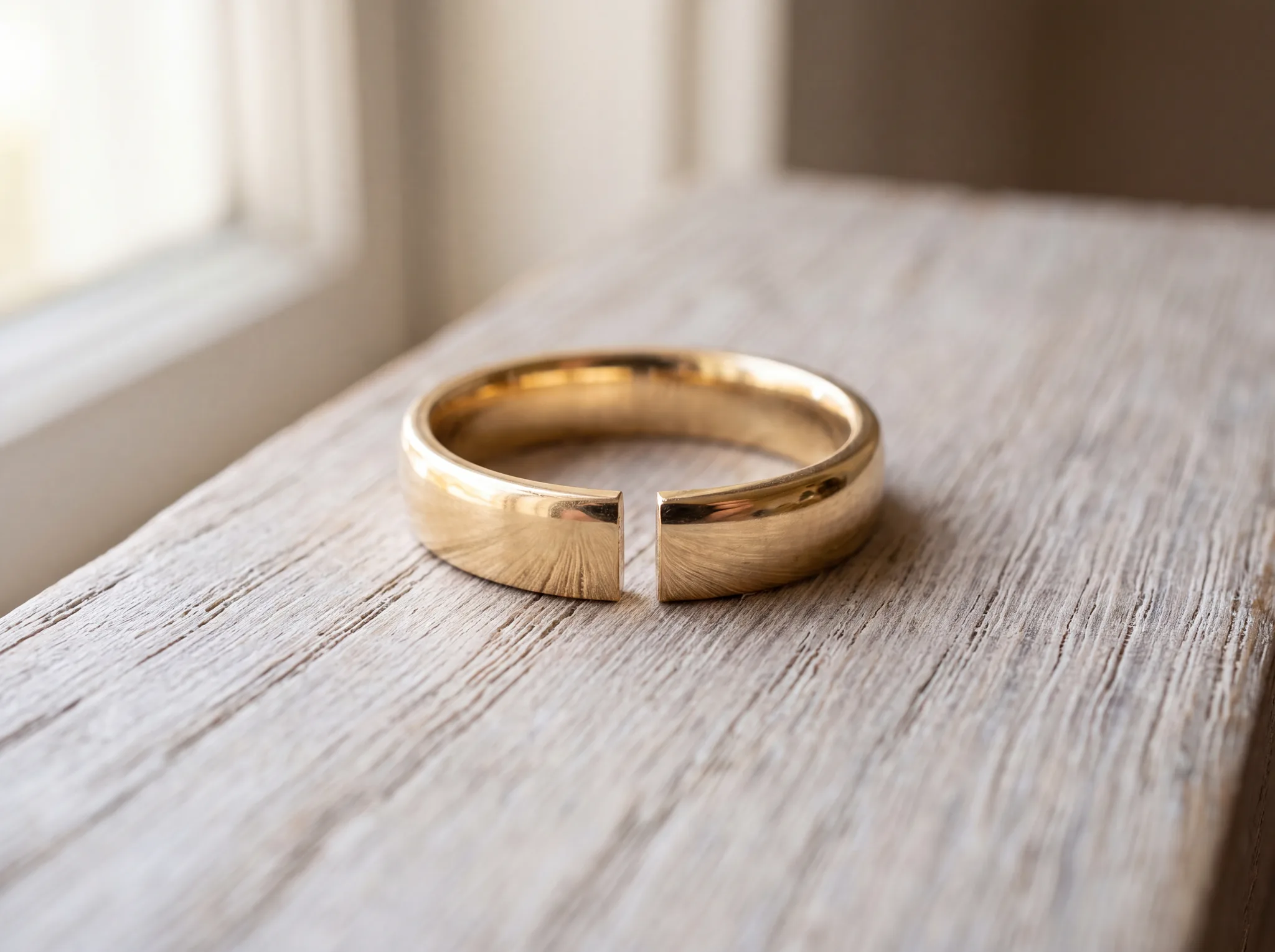
Making a ring larger
Making a ring larger starts with a cut. The jeweller saws through the base of the shank, spreads the band to the width the new size calls for, and sets a piece of matching metal into the gap. That piece comes from stock of the same alloy and the same profile, so it curves and tapers the way the rest of the shank does. Heat joins it at both ends and the ring leaves the bench as one continuous piece.
The seam disappears because the join is metallurgical rather than mechanical: the added metal and the band fuse at the boundary instead of sitting against each other. The ridge left behind is filed level and polished back to the finish the ring arrived with.
There is a limit. Every size you add stretches the same original metal around a larger circle, so on a jump of three or four sizes the wall of the band ends up marginally thinner than it was. On a heavy band nobody will notice. On a thin band worn daily for a decade, that is where a jeweller starts suggesting a new shank.
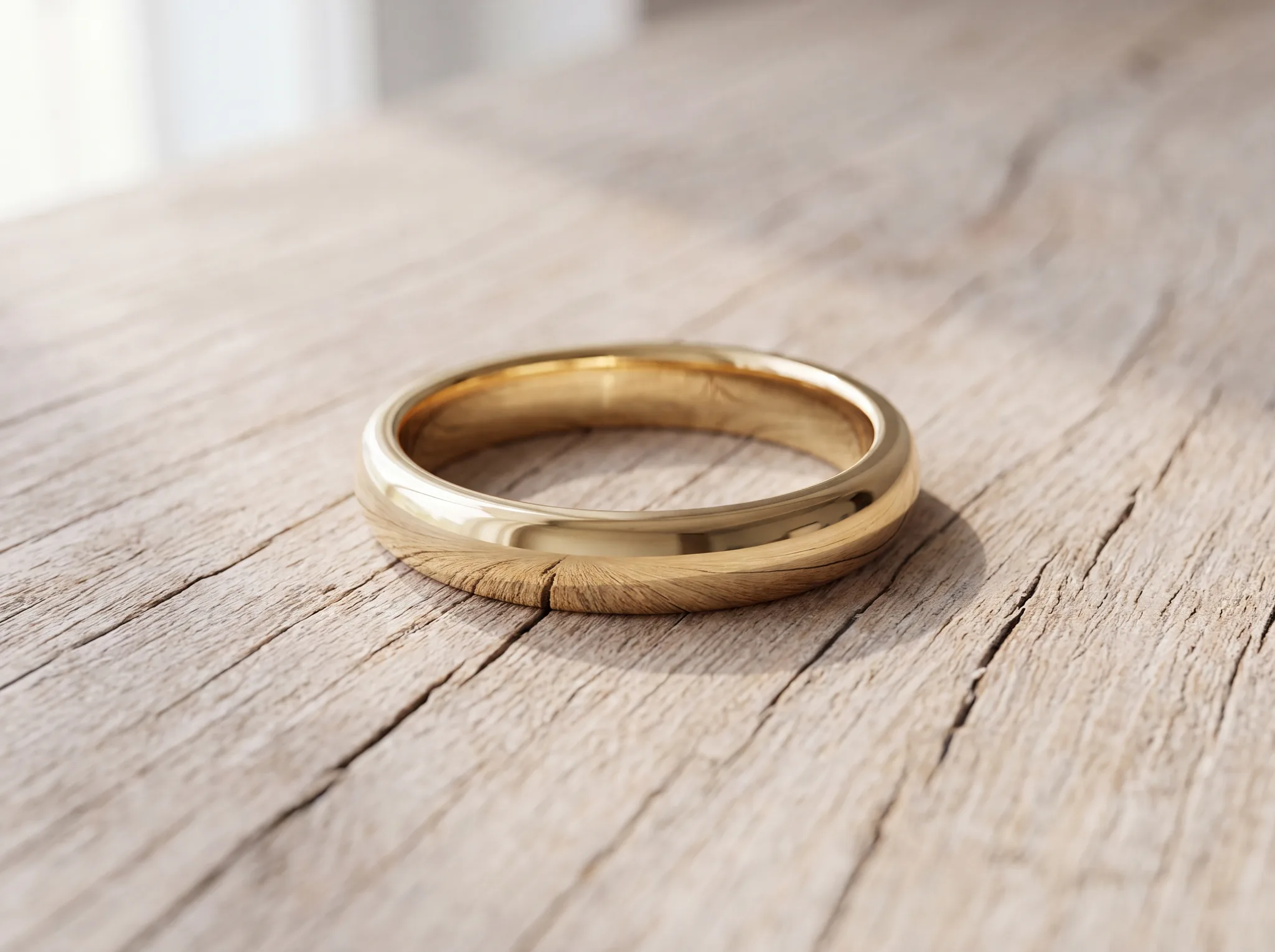
Making a ring smaller
Going down is the same operation with one step removed. The jeweller cuts the shank, takes out a measured section and brings the two ends back together. Nothing has to be matched, because the metal being rejoined is the ring’s own. There is no alloy to source that will age the same way and no risk of an added piece reading a different colour a year from now.
That is why sizing down is usually the cleaner of the two operations and the one a bench finishes faster, and the wall of the band keeps the thickness it was made with. The complication is not the shank. It is what sits above it. Pulling a band tighter changes the geometry under the head and along the shoulders, so a ring with stones running well down its sides needs those stones checked, and sometimes lifted out, before the cut is made.
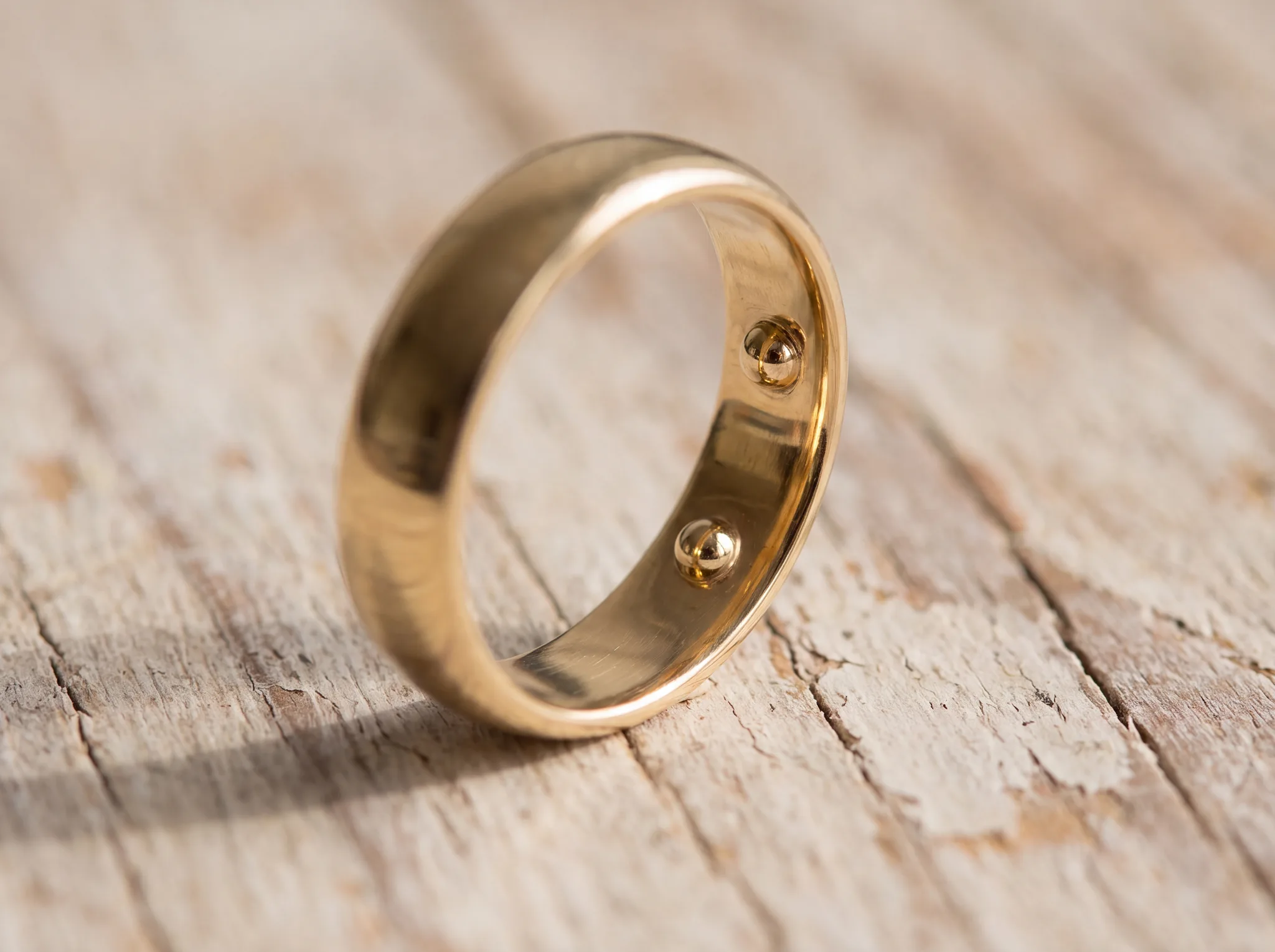
Sizing beads and a half-measure
Not every fit problem needs the band cut. Two small beads of gold soldered inside the shank, one on each side and low down where the finger is narrowest, take up roughly a quarter of a size and stop the ring rotating. They sit below the widest part of the knuckle, so the ring still passes over it easily and then settles without spinning round.
Beads are the right answer more often than people expect. They are quick, reversible, and they never touch the outside of the band, which matters on an engraved or milgrained ring where a cut would run through the pattern. They are also the standard approach on a full eternity band, which has no plain stretch of shank to cut.
What beads cannot do is move a ring a whole size. If yours is coming off rather than turning, that is a sizing job, and there is a separate guide on what to do when a ring spins or slips off that sets beads alongside the other half-measures.
What happens to the finish, the engraving and the stones
Refinishing is most of the time on a resize. The jeweller matches whatever finish the ring had before. A high polish is the easy case. A brushed, satin or hammered face has to be reapplied across the whole band rather than patched, or the repaired stretch reads as a shiny stripe.
Engraving cannot always be saved. An inscription running the full inside of the band sits across the point where metal is added or taken away, so sizing down removes part of it and sizing up leaves a gap through the middle. Either way the text is re-cut afterwards, and hand engraving has to be re-cut by hand to match. A short inscription set at the top of the band usually survives untouched. Mention it before the work is quoted.
Stones near the shank come out and go back. Heat travels through a ring quickly and several stones will not tolerate it — emeralds, opals and pearls among them, along with anything treated or fracture-filled. Rather than gamble on a heat shield, a bench unsets whatever sits close to the work and resets it afterwards. That is also the moment loose settings get found.
White gold needs one extra step. Almost all of it is plated with rhodium for that bright, cool colour, and the plating is ground away wherever the ring has been filed and polished, so a resized white gold band is re-plated to match. If yours had been drifting yellow before it ever came in, the guide on why white gold turns yellow explains what the plating does and how long it lasts.
Get your price range
Answer a few questions about your ring and the estimator returns a range in about a minute. No email address to see it.
What is the ring made of?
Re-tipping prongs while the ring is on the bench
Worn prongs are the most common thing a jeweller finds on a ring that came in for sizing. The ring is under a loupe, the stones are being checked before any heat goes near them, and the tips holding the centre stone turn out to be thin, flattened or hooked over from years of catching on fabric.
Re-tipping is the repair for it. New metal is added to the worn end of each prong, shaped to match the others, and burnished back down onto the stone so it grips the girdle again. It is done prong by prong, and it is normal for only two of four to need it. Doing it during a resize makes sense because the stone is already unset or protected, the ring is already being heated and it is already going to be polished, so it costs bench time rather than a second trip and a second setup.
If a stone already moves when you press it with a fingernail, treat that as urgent rather than as something to fold into the next job. A stone that rocks is held by far less prong than it looks like, and the distance between a loose stone and a lost one is usually a single knock.
When a jeweller says no
A small number of rings cannot be sized, and an honest bench says so before taking the work. Tungsten carbide and ceramic cannot be cut and rejoined at all, because neither behaves like a metal under heat. Titanium and most stainless steel will not take a join that can be trusted. A tension setting grips its stone by spring pressure alone, so changing the circumference changes the grip. A full eternity band has no plain stretch of shank to work on.
Each of those has a different reason behind it and, in several cases, a workaround. The full answer, metal by metal and setting by setting, is in the guide on which rings can be resized and which can’t.
Getting it done
In practice it is shorter than it sounds. You bring the ring in, it is measured on a mandrel against the size you actually need rather than the size you believe you are, and the work is quoted before it starts. Anything found along the way — a worn prong, a thin shank, an inscription in the cut line — is raised with you first.
Worth doing beforehand is establishing your real size when your hands are behaving normally. Fingers swell in heat, after exercise and late in the day, so a ring fitted on a warm afternoon can spin on a cold morning. Two measurements days apart beat one taken in a hurry.
When you are ready, our ring resizing service does exactly the bench work described here, in our own workshop rather than posted out to a trade shop. If the number matters more to you than the method, there is a fuller breakdown of how much it costs to resize a ring to go alongside the estimator above.
Frequently Asked Questions
Related guides & collections
- Jewelry repair in AtlantaEvery service done in-house, with a free estimate first.
- Ring resizing serviceThe bench work on this page, booked and priced.
- Which rings can be resizedGold, platinum and silver versus the metals that can't be sized.
- When your ring spins or slips offGuards, sizing beads, and when a resize is the real fix.
- Engagement ring metalsHow each metal behaves over a lifetime of wear.
Free estimate, no obligation
Have Your Ring Looked At
Bring the ring to our Snellville workshop near Atlanta and we will measure it, tell you what the work involves and quote it before anything is cut. Call (704) 684-7530 or book ahead.
Prefer to talk? Call (704) 684-7530