Wedding Guide · Published · Updated September 2026
What Is a Wedding Band?
A wedding band is a ring that you wear to show that you are married. It is given at the wedding and worn every day after that. Some bands are plain metal. Some carry small diamonds.
This guide covers where the tradition began, which finger the ring goes on, and how a band differs from an engagement ring. It also covers what bands are made of, who wears them and what they cost.
The short answer
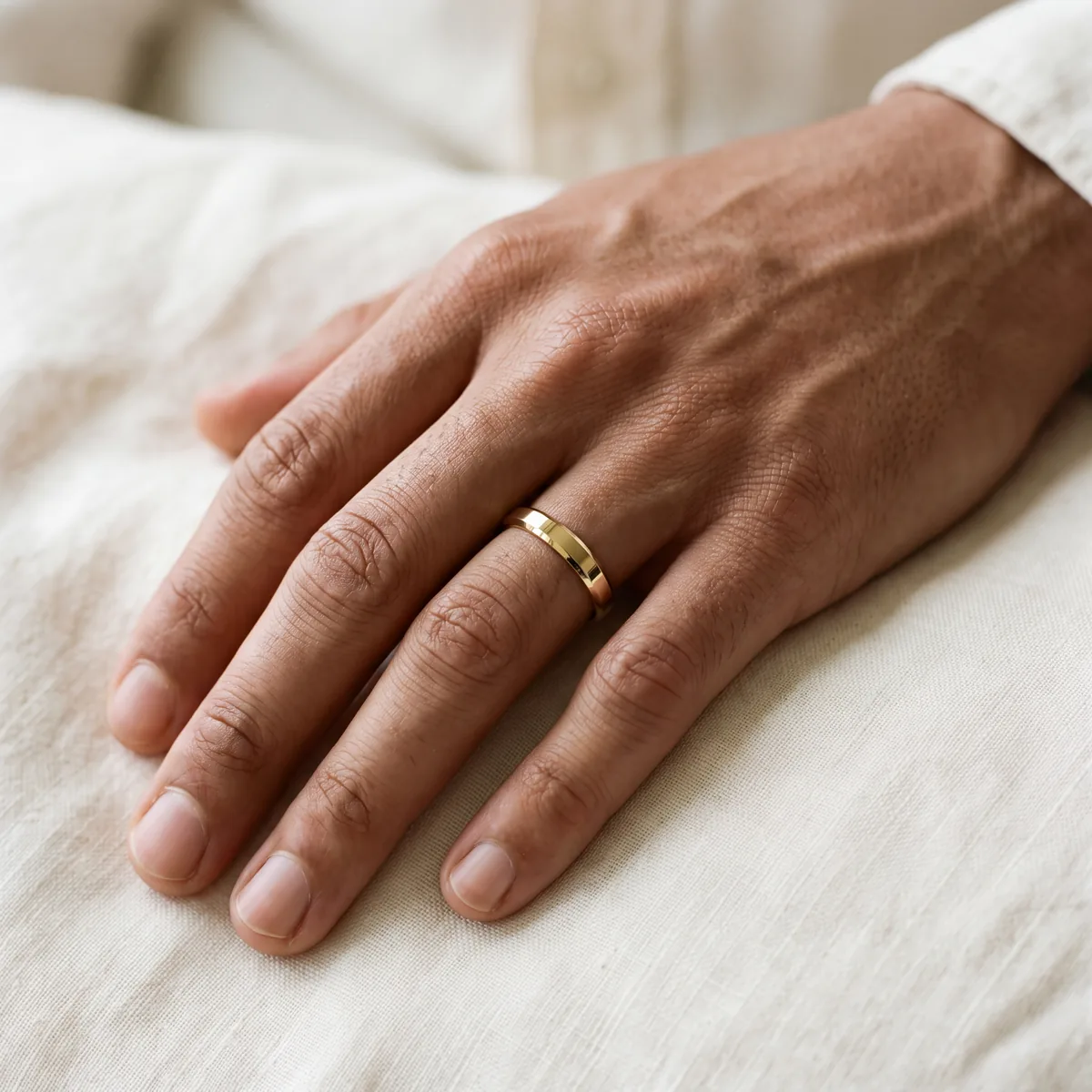
A wedding band is a ring that two people exchange when they marry. The ring is a circle, and a circle has no end. Many people see that as a sign of a promise that lasts.
Most bands are simple. A plain band is one smooth strip of metal that goes all the way around the finger. Other bands have a row of small diamonds, a pattern cut into the metal or a gently curved shape. The style changes from band to band. The meaning stays the same.
People wear a wedding band every day. It is small, but other people notice it. It tells them you are married, and that is its whole job. It does not have to be fancy or costly to do that job well.
Some people wear a band on the same hand as an engagement ring. Others wear only a band and never buy an engagement ring at all. Both are common.
Where the tradition comes from
The Romans are generally credited with starting the betrothal ring. They believed that a vein ran from the fourth finger of the left hand straight to the heart. They called it the vein of love. Modern medicine has shown that there is no such vein. The idea was so pleasing that it stuck, and it is a big part of why we still wear the ring on that finger.
Customs shifted over time and from place to place. The hand that gets the ring is not the same in every country. We will not pretend to know every step of how the modern band came to be. The story is old, and some of the tales told about it are only tales. What has lasted is the promise the ring stands for.
Which finger, and in what order
In the United States, the wedding band goes on the fourth finger of the left hand. That is the finger next to the pinky. People often call it the ring finger.
Not every country uses the left hand. Our guide to which hand the ring goes on lists the places that use the right.
If you also have an engagement ring, the order matters a little. The usual order, working out from your hand, is the wedding band first and the engagement ring next to it, toward the fingertip. Many people take the engagement ring off during the ceremony. The band goes on first. Then the engagement ring goes back on beside it.
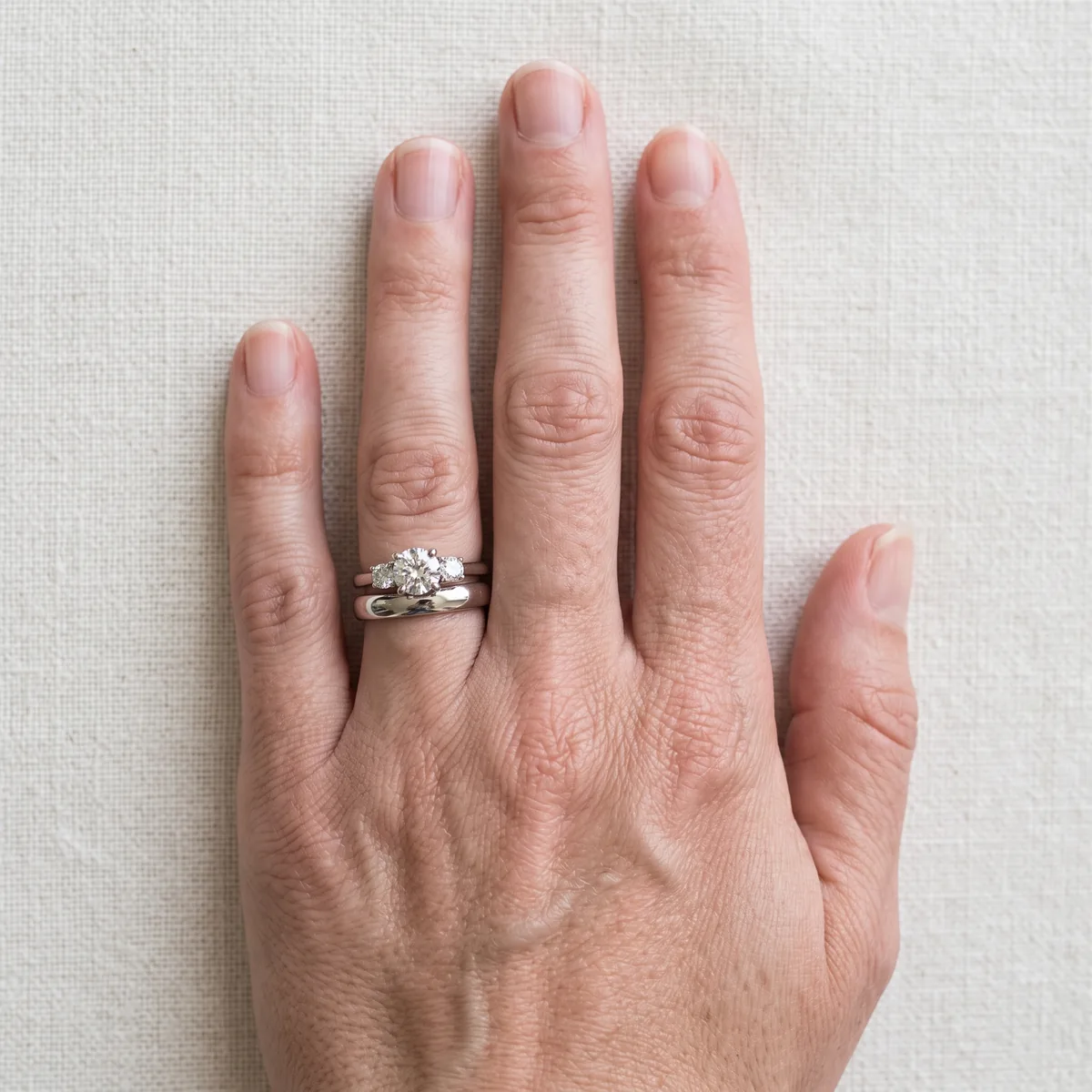
That is a custom, not a rule. Some people put the engagement ring closest to the hand because they like how the two look together. Some bands are curved to fit around a ring, and those change the order too. Try both ways and keep the one you like.
Wedding band, wedding ring and engagement ring
These three names cause the most mix-ups, so here is how they fit together.
A wedding band and a wedding ring are the same thing. Band points to the shape, which is a strip of metal that goes around the finger. Ring is the everyday word. Jewelers and shoppers use both, so you can use either one.
That means a shop that lists a wedding ring and a shop that lists a wedding band are selling the same kind of piece. The difference that matters is between a wedding band and an engagement ring, which do two different jobs.
An engagement ring is a different piece. It is given before the wedding, when one person asks the other to marry them. It often holds a large center stone. It is the ring people picture when they think of a proposal.
The wedding band comes later, at the ceremony. It is usually simpler than the engagement ring, and it does not need a center stone. Many people wear both, one after the other, on the same finger. Our guide to the difference between an engagement ring and a wedding ring goes into more detail, and it shows how the two are worn as a pair.
What wedding bands are made of
Gold is the most common metal. Pure gold is called 24 karat, and the World Gold Council says that 24 carat is pure gold with no other metals. Jewelers mix gold with other metals to make it more durable, and the mix can change the color too. That is how yellow, white and rose gold are made.
The number in front of the K tells you how much pure gold is in the ring. The lower the number, the less pure gold it holds. An 18 karat band is 75 percent gold. Most people buy 14 karat or 18 karat.
You can see the range in our gold wedding bands. Platinum is the other big choice. It is a white metal, and many people pick it for its cool, silver-white look. Platinum bands often cost more than gold bands of the same size. Browse our platinum wedding bands to compare.
You will also see palladium, a white metal that many men’s bands use, and sterling silver, which costs less than gold or platinum.
The best metal is the one you like and can wear every day. If your hands work hard, pick a smooth band with no stones that can catch on things.
Small scratches are normal on a ring you wear every day, whatever it is made of. Polishing and repairs are covered by our care plans.
Who wears a wedding band
Couples of every kind choose bands, and it is up to each person. Some couples both wear one. In some couples only one person does. Others skip the band and wear something else that matters to them.
Women’s bands are often slimmer, and many carry small diamonds along the top. You can see them in our women’s wedding bands. Men’s bands are often wider and plain, with a smooth finish. You can see those in our men’s wedding bands.
Those are habits, not rules. Anyone can wear any band. A person who likes a wide, plain band should wear a wide, plain band. A person who likes a thin band with diamonds should wear that.
Size is worth a thought too. Fingers can be a little bigger in the heat and a little smaller in the cold, so measure more than once before you order.
Many people also have a date or a short message put inside the band. Engraving is free at purchase. It is a small detail that only the person wearing the ring can read.
What a wedding band costs
Wedding bands in our collection currently run from $37 to $7,440. That is a wide gap, and three things explain most of it.
The first is the metal. Platinum often costs more than gold, and a higher karat of gold costs more than a lower one. The second is the width. A wide band uses more metal than a thin one, so it costs more. The third is the stones. A plain band costs the least, and every diamond you add raises the price.
A band is worn every day for many years, so it is worth choosing one you will enjoy. Decide on the metal and the width first. Then set a budget and see what fits. That order works better than picking a number and hoping the band you like is under it.
You do not have to buy the band at the same time as anything else. Many couples shop for their bands together after the proposal, so each person can try on what they like.
How to narrow it down
Three questions get most people to a short list.
- Will you wear it with an engagement ring? If so, pick a band that sits flat beside it, or one that is curved to fit around it.
- How hard do your hands work? A plain, smooth band takes the most wear. Bands with many small stones need more care.
- Which color of metal do you like on your skin? Hold a few colors up and choose the one that looks right.
Once you have your answers, the rest is easy. Browse wedding bands in every style, or come in and try a few on.
Frequently Asked Questions
Related guides & collections
- Engagement ring vs wedding ringWhat each ring does, and how the two are worn together.
- Types of wedding ringsPlain, diamond, eternity, curved and stackable bands compared.
- What hand does the ring go onLeft or right, and which countries do it differently.
- Wedding bandsBrowse the full collection for her, for him and for both.
Visit the showroom
Try a Few Bands On
Width and weight are easy to judge on your own finger and hard to judge on a screen. Bring your engagement ring if you have one, and we will show you how the two sit together. We also design custom wedding bands with you in the showroom.
Prefer to talk? Call (704) 684-7530