Diamond Guide · Published · Updated September 2026
Carat Sizes: What 1ct Actually Looks Like on Studs, Pendants and Tennis Jewelry
A carat is a unit of weight. It is not a size. The same number can look very different. It depends on what holds it.
A 1 carat diamond ring holds one stone. That stone carries the full weight. A pair of “1 carat total weight” studs is different. It splits that weight across two ears.
A tennis bracelet spreads its weight out. Dozens of tiny stones share it. They run the full length of your wrist. None of these pieces is wrong to call “1 carat.”
Each one just answers a different question. Learn which question your piece answers. That is the trick to shopping by carat size.
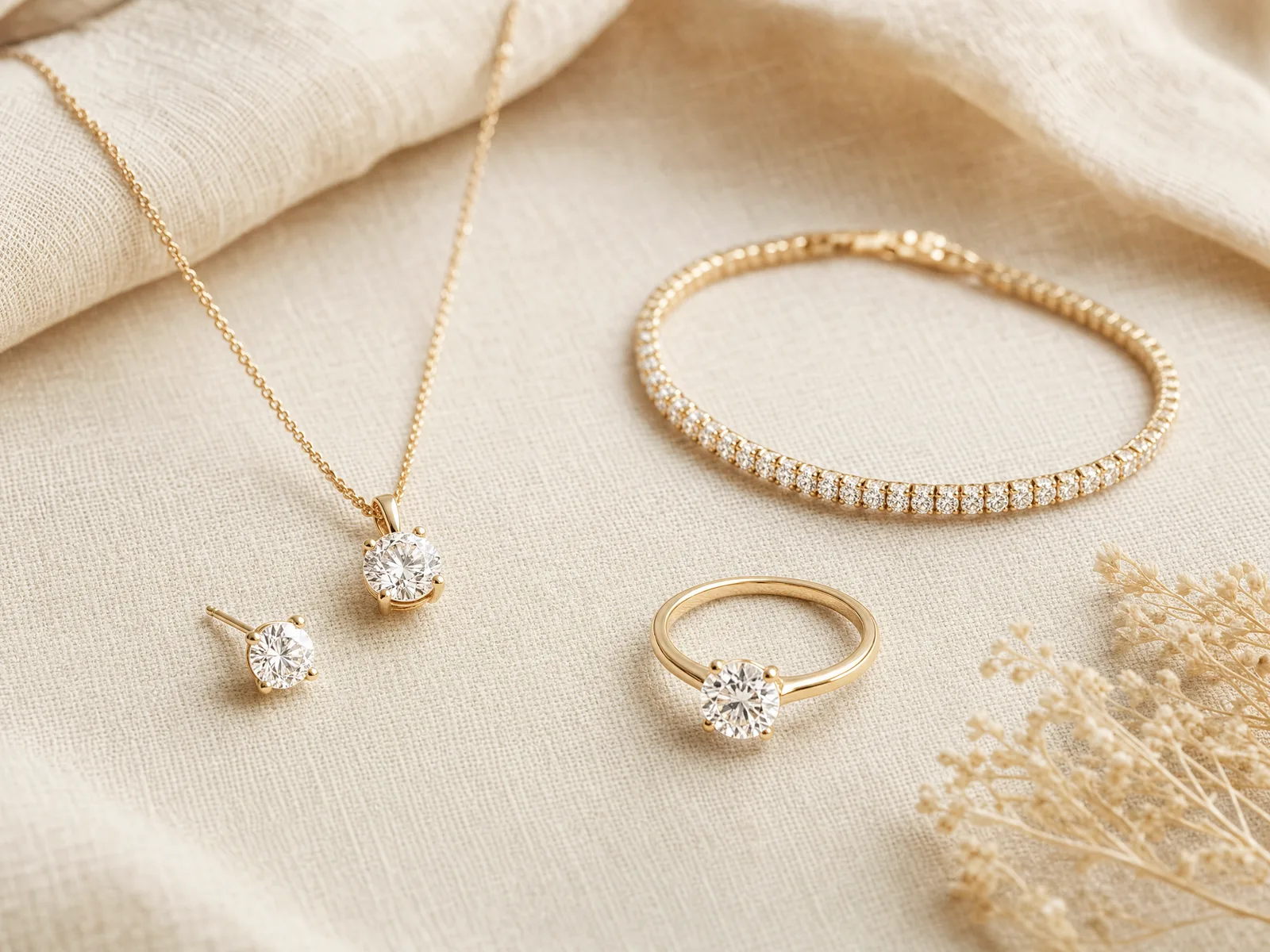
What carat weight actually measures
A carat is a unit of weight, not size. Two stones can share a carat weight. They can look very different.
It depends on how the stone is cut. It also depends on how many stones share the weight.
Every size on this page comes from real pieces. We handcraft them ourselves. Our showroom is in Snellville, GA, near Atlanta. That includes studs, pendants, rings, tennis bracelets and tennis necklaces.
This is not just any size chart. Two numbers do the real work on every price tag. They are not the same thing:
- Center-stone weight. This is one diamond and one number. A solitaire ring shows this weight on the tag. So does a pendant. That number is the one stone you see.
- Total carat weight (TCW). This adds every diamond together. Studs use this number. So do tennis bracelets and tennis necklaces. Each one is built from many stones, not one.
A “1 carat” pair of studs is one example. A “1 carat” ring is another. A “1 carat” tennis bracelet is a third.
Side by side, they can look nothing alike. This matters most when you compare two pieces.
A 2 carat solitaire ring is one example. A 2 carat total weight pair of studs is another. They are not the same size on the body. A size chart may just say “2 carat.”
That chart can hide the difference. Always check the tag. Does it mean one stone, or many stones?
Do this before you compare two pieces. That one habit stops the mismatch.
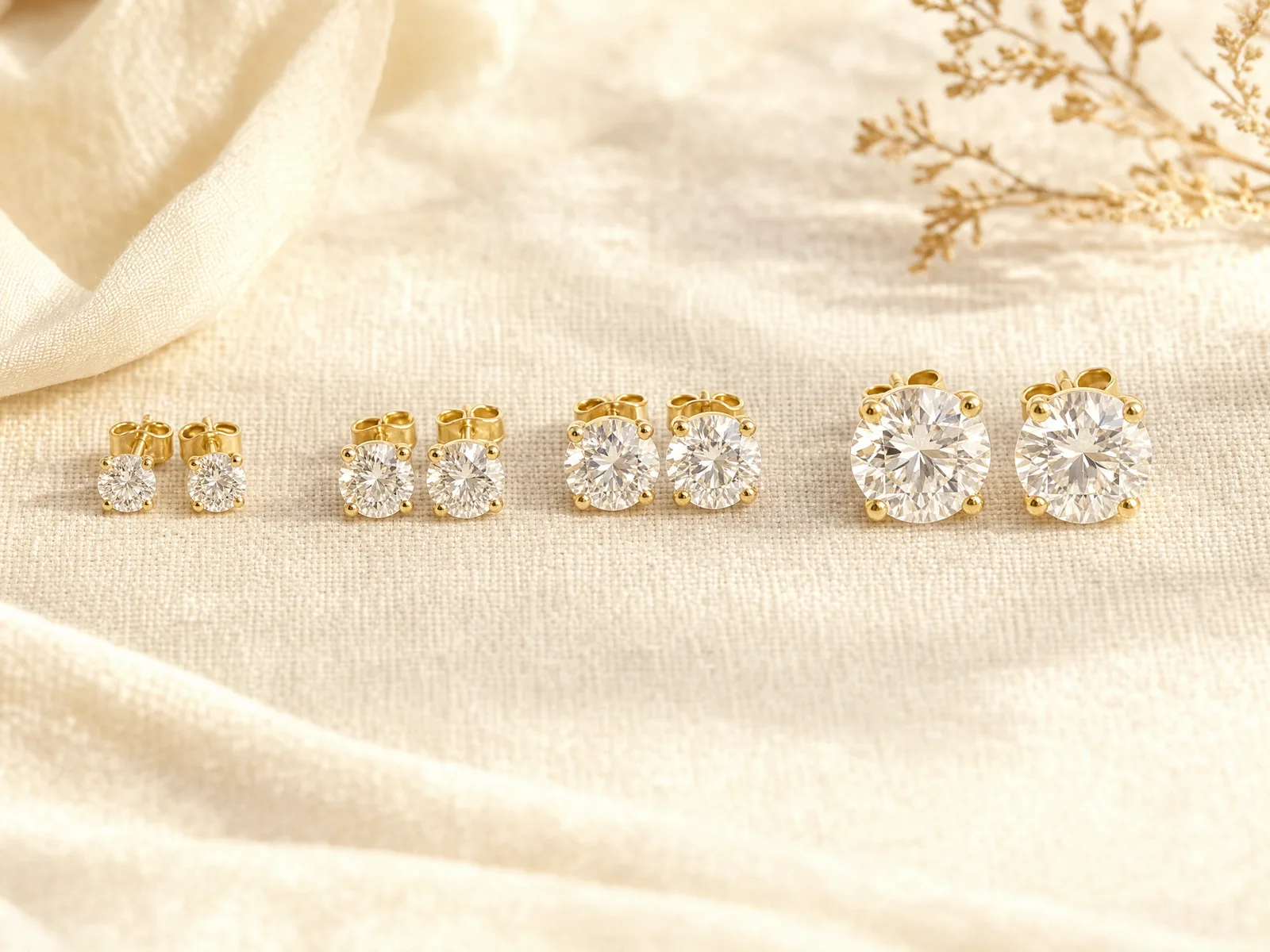
Diamond studs by carat
Earring pairs are sold by total weight, not per ear. The tag number is always twice what one ear holds. That fact surprises most new buyers.
Each section below covers one category. We start with studs. Studs are one style of luxury diamond earrings. They are part of our full diamond earrings collection.
- 1/4 carat (0.25ct) total weight — 0.12ct per ear. A starter or second pair.
- 1/2 carat (0.5ct) total weight — 0.25ct per ear. A common graduation or milestone-birthday gift.
- 1 carat total weight — 0.5ct per ear. The most popular stud size we sell.
- 2 carat total weight — 1ct per ear. A major-milestone pair.
- 3 carat total weight — 1.5ct per ear. A statement pair.
- 4 carat total weight — 2ct per ear. Heirloom-tier.
0.5ct to 1.5ct total weight is worn every day. It does not feel heavy on the ear. A halo is a ring of tiny diamonds.
It circles the center stone. It adds apparent size.
A 0.5ct stone can wear a halo. Then it can look like a 0.8–1ct solitaire. A smaller stone can carry a bigger-looking pair this way.
- Hand-matched pairs. One artisan sets both earrings together. The prong height and angle match on each ear. This detail matters more with bigger stones.
- Men’s studs are sized solo. A man’s stud is worn alone, not paired. It is sized on its own, often 0.5ct to 2ct per earring. That is well above a matched pair’s per-ear weight. The total-weight number can still be the same.
Not every stud holds a diamond. Some shoppers pick plain 14k gold earrings instead. They wear them alone or stack them with a diamond pair.
Carat weight does not apply here. There is no stone to weigh.
Gold earrings often carry no stones at all. The same is true for other fine earrings. Simple fine jewelry earrings skip the carat scale too. Browse every style in our full earrings collection.
See the full range in our diamond studs collection.
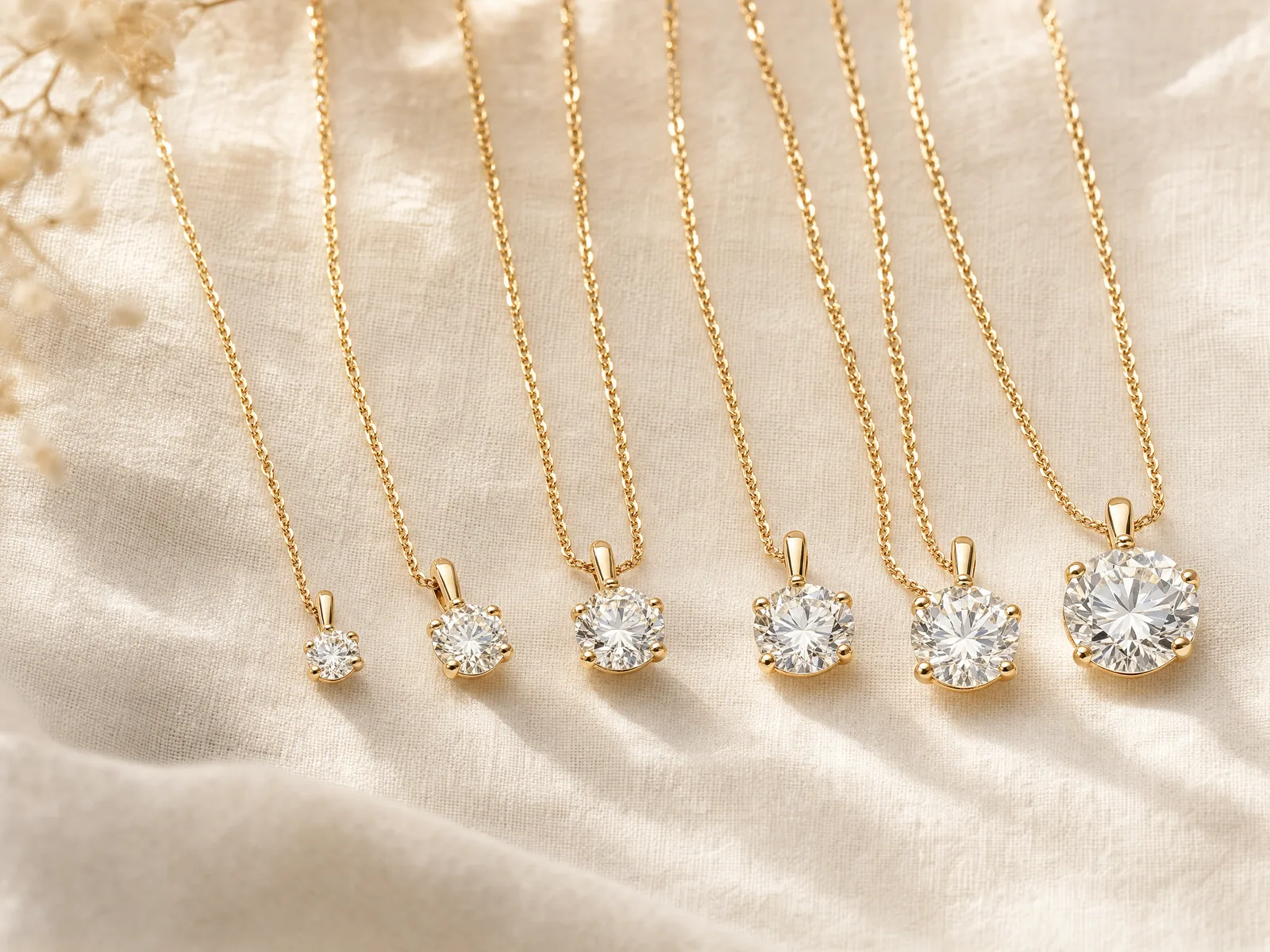
Diamond pendants by carat
A diamond pendant states one number for one stone, the same as a ring. That makes it easy to size by eye. What changes is how it reads from across a room. Up close, it can look different:
- 0.10–0.25 carat — small, everyday wear, a starter piece.
- 0.5 carat — our most popular pendant size. Visible across a room. Still quiet.
- 1 carat — a strong presence at the throat, a common milestone-gift size.
- 2 carat — a bold statement, our push-present and major-anniversary size.
- 3 carat — a bold statement, ultra-luxury for a pendant.
A halo pendant works like a halo stud. It makes the center stone look bigger. A 0.5ct stone ringed in pavé can look bigger.
It can look like a 0.75–1ct solitaire. A hidden-halo setting adds that same size. It does not change the pendant’s front profile.
Grading matters at every size. Center and loose diamonds over half a carat come with a GIA report (natural) or an IGI report (lab-grown). We can source an exact weight, natural or lab-grown.
You can view it in person at our Snellville showroom. That beats judging scale from a photo. Browse the full range in our diamond pendants collection.
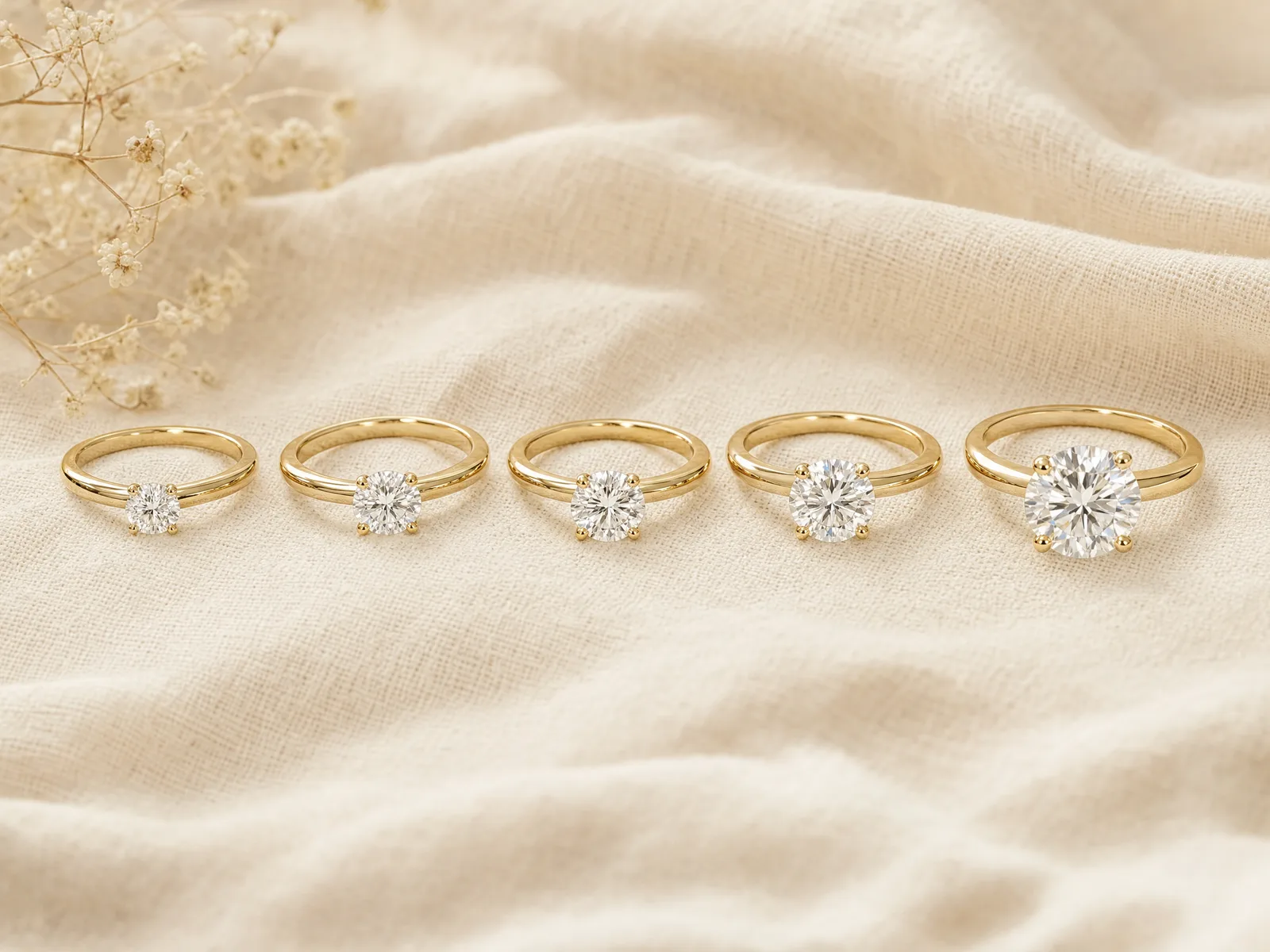
Diamond rings by carat
A diamond ring’s carat weight is almost always one stone. That is why you judge ring size on the hand. You do not judge it from a distance. Common sizes, from small to rare:
- 1 carat — a noticeable look, with wide appeal. Our most popular ring size.
- 2 carat — a bold look, mostly in solitaire or halo settings.
- 3 carat — a bold statement size, harder to find at retail.
- 4 carat — a true statement piece.
- 5 carat — very rare.
- Halo and side-stone settings add apparent size. They make the full stone look bigger. The full weight still sits in one stone. This is the same trick a halo pendant uses. Here it works on the hand, not the throat.
- Three carats and up is rare. Stones that large are hard to find already set. We source them on request. You can view the stone in person. That beats deciding from a photo.
Carat size is only half the choice. Cost is the other half. Our guide to how much to spend on a ring works through that side of it.
Tennis bracelets by carat
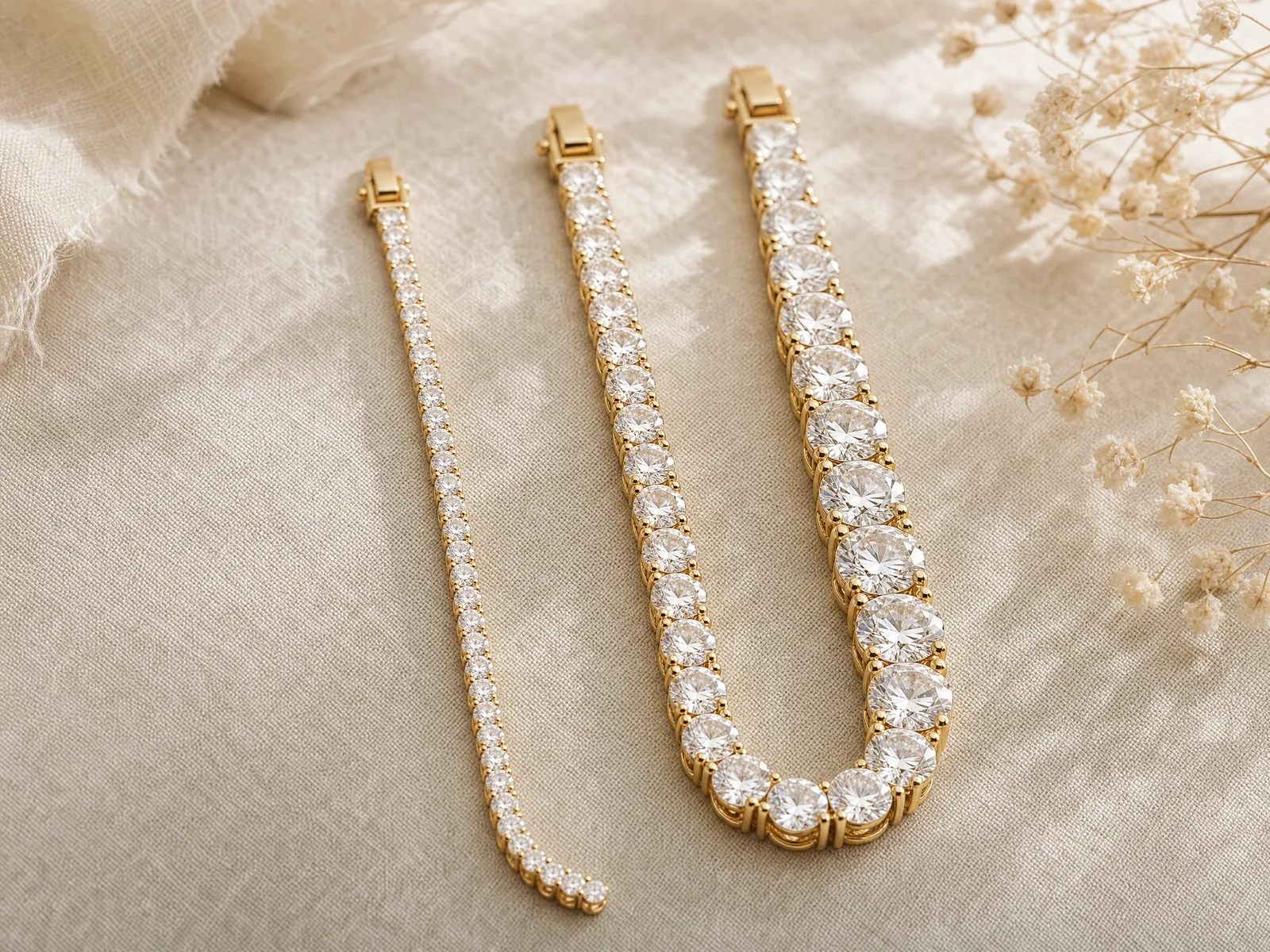
A tennis bracelet’s total weight is shared across every stone. Those stones run along the wrist. There are 30 to 60 stones.
The same total weight looks like a line of sparkle. It does not look like one large diamond. Common total-weight sizes:
- 1 carat total weight — entry-level, small daily wear. Each stone runs about 0.02–0.03ct.
- 2 carat total weight — a small daily-wear line. Each stone around 0.04ct.
- 3 carat total weight — our most-sold size. Each stone around 0.07ct.
- 4 carat total weight — a common gift-sizing sweet spot.
- 5 carat total weight — a milestone-gift size. Each stone around 0.10–0.12ct.
- 7 carat total weight — a major milestone. Each stone around 0.15ct.
- 10 carat total weight — a statement or heirloom line. Each stone around 0.20–0.25ct.
The weight spreads across many stones. A 10 carat bracelet is not ten times bigger than a 1 carat one. A single 10 carat stone would look that much bigger. This bracelet just looks like a wider, denser line of diamonds.
- Matched runs, not random stones. We match every run within one grade of color, clarity and cut. This keeps the line looking uniform, not speckled. At 3 carats and up, the stones grow large. They are easy to compare by eye. That is where the difference shows most.
- Set one stone at a time. One jeweler sets each bracelet, over 12 to 18 hours. That keeps the spacing and prong tension even. It stays that way down the whole length.
- Men’s bracelets run bigger. They use a heavier gauge per stone. They run a longer 8 to 8.5-inch length. 2 to 5 carats total weight is most common.
See the full range of diamond tennis bracelet styles in our tennis bracelets collection.
Tennis necklaces by carat
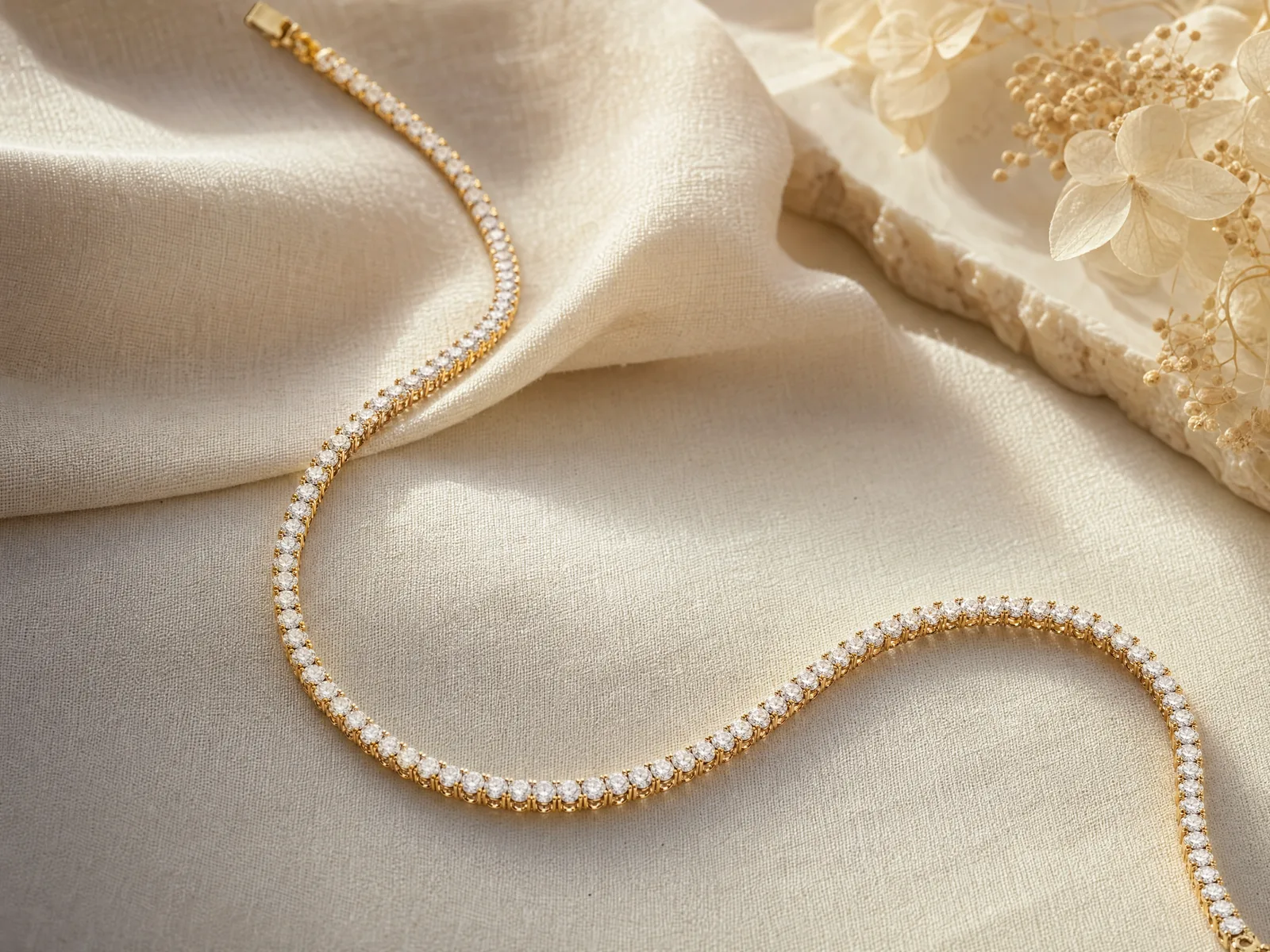
A tennis necklace works like a tennis bracelet. It just spreads its weight across more stones. The metal holds 50 or more prongs around the neck.
Total weight climbs much higher here. It climbs higher than on a bracelet or ring. It takes a bigger number to look “big.”
- 3 carat total weight — entry-level, small daily wear. Each stone runs about 0.04–0.05ct.
- 5 carat total weight — our most popular gift size. Each stone around 0.07–0.08ct.
- 7 carat total weight — a milestone-gift size. Each stone around 0.10ct.
- 10 carat total weight — a statement piece. Each stone around 0.14–0.16ct.
- 15 carat total weight — heirloom-tier. Each stone around 0.21–0.25ct.
The same matching care applies at necklace length. Even more stones sit side by side here. We match every run within one grade of color, clarity and cut.
Each necklace is set over 18 to 25 hours. That keeps the line looking like one piece. It does not look like mismatched stones.
Length changes how big that total weight looks, too:
- 13 to 15-inch tennis choker. Sits high and close to the face — bold and hard to miss.
- 17-inch necklace. Our most-sold length, falling just below the collarbone — the classic sweet spot.
- Past 18 inches. The stones sit a bit apart, so you see each one on its own instead of one smooth line — a look some people love.
A riviera or graduated necklace changes the look again. Larger stones sit at the front center. They taper smaller toward the clasp.
From the front, the eye reads one focal diamond. It does not read as a uniform band.
Graduated styles start around 7 carats total weight. Below that, the size gap is too small to see. That gap sits between the center and end stones.
Total carat weight vs. center-stone weight
Put every piece on this page side by side. One question sorts them all. Does the carat number mean one stone? Or does it mean every stone added together?
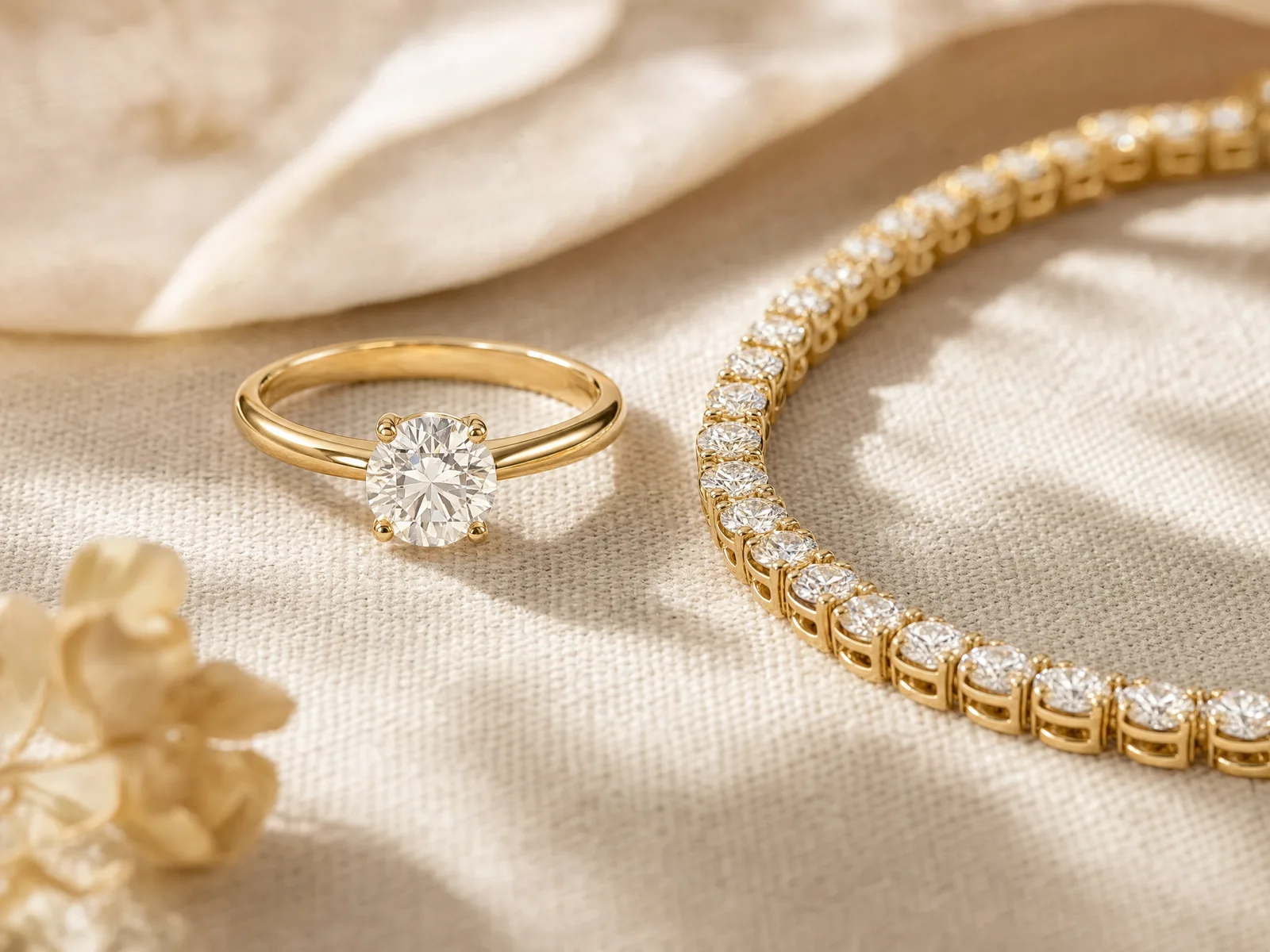
- Single center-stone pieces — a solitaire ring, a solitaire pendant. The number on the tag is the diamond you see. You judge size stone to stone.
- Total-weight pieces — stud earrings split their weight across two ears. Tennis bracelets and necklaces split it across dozens of stones. The tag number is a sum. Each stone is far smaller than the total.
- Hybrid pieces — a halo ring or halo pendant. The tag quotes a center-stone weight. That number is for the main diamond. Small pavé stones ring around it and add size. They do not add to that center-stone number.
- Graduated pieces — a riviera-style tennis necklace. The total weight is still shared across many stones. The largest stones sit at the front center. They do most of the visual work. This reads closer to one center stone. It reads less like a uniform piece.
Use this same lens across our five carat-driven collections. That is studs, pendants, rings, tennis bracelets and tennis necklaces. Do this before you compare any two by number alone.
The setup decides how big a piece looks when worn. The carat figure alone does not.
This matters most when you choose natural or lab-grown diamonds. The two are chemically and optically the same. A lab-grown stone lets you target an exact weight.
The piece still looks the same. Our lab-grown diamonds guide compares the two beyond looks.
- The one habit that matters. Read the tag as “total” or “center stone” first. Do this before you compare two pieces by carat number. The number alone tells you almost nothing about size. You need to know which question it answers.
- Choosing between two rings. Same habit, same read.
- Studs or a pendant on the same budget. Same habit, same read.
- Sizing a tennis piece as a first-time gift. Same habit, same read.
That one habit changes everything. A confusing size chart becomes a useful tool.
Frequently Asked Questions
Related guides & collections
- Diamond ringsCenter-stone sizes from delicate to statement, in every metal.
- Tennis necklacesTotal carat weight worn as a continuous line of diamonds at the throat.
- The full collections hubEvery carat size, cut and metal, across necklaces, rings, bracelets and earrings.
- Engagement ringsCenter-stone shapes, styles and carat weight for the one piece worn daily.
Photos flatten scale — carat size shouldn't be a guess
See Every Carat Size Side by Side
A 1-carat solitaire and a 5-carat tennis bracelet can look surprisingly close in a photograph and nothing alike on the hand, at the ear, or at the throat. We keep finished pieces across the sizes on this page at our Snellville showroom near Atlanta so you can hold a few sizes next to each other before deciding, and every piece we sell carries the same complimentary lifetime cleaning and prong-tightening we've offered since 2008.
Prefer to talk? Call (704) 684-7530