Engagement Guide · Published · Updated August 2026
How Much Should You Spend on an Engagement Ring?
Spend what fits your budget comfortably — there is no required amount. The “two to three months’ salary” rule you’ve heard is a 1947 De Beers advertising campaign, not financial advice. Most US couples land somewhere around $3,000–$7,000, but the right number is the one that gets you a ring you both love without going into debt for it. To see what a budget buys, start with our engagement rings in Atlanta.
Forget the “three months’ salary” rule
It’s the most repeated number in jewelry, and it’s pure marketing. De Beers introduced “a month’s salary” in the 1930s, raised it to two months by mid-century, and US advertising later pushed three — the BBC traced the whole campaign back to the agency that wrote it. The goal was to sell more diamonds — not to tell you what’s sensible.
There is no tradition, etiquette, or financial principle behind it. Spend an amount that leaves your savings and your wedding plans intact.
What real budgets buy in 2026
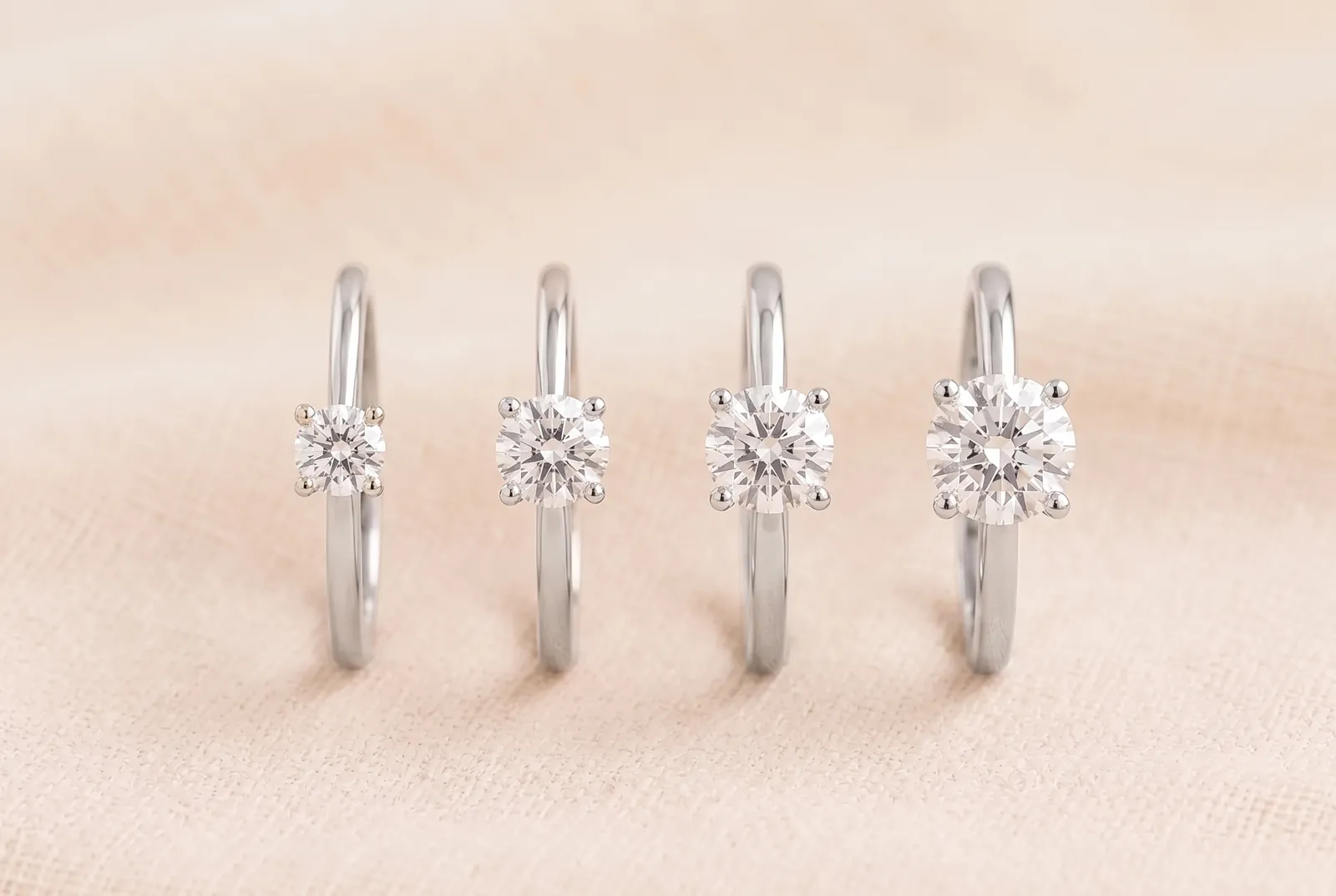
For scale: The Knot’s Jewelry & Engagement Study put total US engagement ring spend at about $6,000, in line with $5,900 before the pandemic. These are honest starting points — we tailor each one in the showroom:
- $1,500–$3,000: a beautiful lab-grown solitaire, often around 1–1.5ct, or a smaller natural diamond in a clean setting.
- $5,000: roughly a 0.9–1.1ct natural diamond (GIA, eye-clean), or a 2ct+ lab-grown if size is the priority.
- $10,000: a 1.3–1.5ct natural in an excellent cut, the sweet spot for many buyers, or a large lab-grown statement stone.
- $20,000+: a 2ct+ natural just over the magic weight, with premium color and clarity, or a custom design with side stones and detailing.
How to get more ring for your money
Budget isn’t just about how much you spend — it’s about where the money goes. Three high-leverage moves:
- Choose lab-grown for the center stone. It’s real diamond at 40–60% less — the FTC revised its definition of “diamond” in 2018 to say so — so the same budget wears far larger. See are lab-grown diamonds worth it. Choosing from loose lab diamonds is one way to get a larger center stone for the same budget.
- Buy just under a magic weight. A 0.90ct looks almost identical to a 1.00ct on the finger but costs ~20–25% less per carat; the same trick works at 1.4ct, 1.9ct, and so on.
- Prioritize cut over paper-perfect color and clarity. Cut drives sparkle; a well-cut G/VS2 outshines a poorly cut D/IF. Our buying guide shows where each dollar pays off.
Don’t forget the rest of the picture
The center stone is the headline, but budget a little for the setting metal, any side stones, sizing, and — eventually — the wedding band. Many couples plan the two rings together; our engagement ring vs. wedding ring guide explains how they pair.
Every ring bought from us also includes free cleaning, inspection and prong tightening. Resizing and repair are covered by our care plans on qualifying pieces; ask whether yours qualifies.
Frequently Asked Questions
Related guides & collections
- Engagement ringsBrowse styles across every budget.
- What hand does an engagement ring go on?The finger, the tradition, and the exceptions.
- Engagement ring vs. wedding ringBudgeting for the band too.
- Diamond buying guide — the 4CsWhere to spend and where to save.
- Lab-grown — more size per dollarStretch the budget 40–60% further.
- Engagement ring metals — platinum vs. white goldWhat each metal costs to own, not just to buy.
No pressure, no judgment
Tell Us Your Budget — We'll Maximize It
Bring any budget to our Snellville showroom near Atlanta and we'll show you exactly what it buys in natural and lab-grown, then design around it. No upselling.
Prefer to talk? Call (704) 684-7530