Lab-Grown Guide · Published · Updated September 2026
Are Lab Grown Diamonds Worth It?
Are lab grown diamonds worth it? It depends on what you are buying the diamond for. If you want the largest, cleanest stone your budget allows, yes. If you want a stone that holds its resale value or carries the weight of a mined origin, natural is the better fit.
This guide covers what stays identical between the two, how the price gap works at a given size, what to expect at resale, and how to weigh a larger lab-grown stone against a smaller natural one. It does not push you toward either answer. Both are real diamond.
Who lab-grown diamonds are worth it for
Lab-grown diamonds are worth it for the buyer whose priority is how the stone looks on the hand. At the same budget, a lab-grown diamond can be larger than a natural one, or carry a higher color and clarity grade. If the goal is a ring or a pair of studs that looks striking and gets worn every day, that trade favors lab-grown.
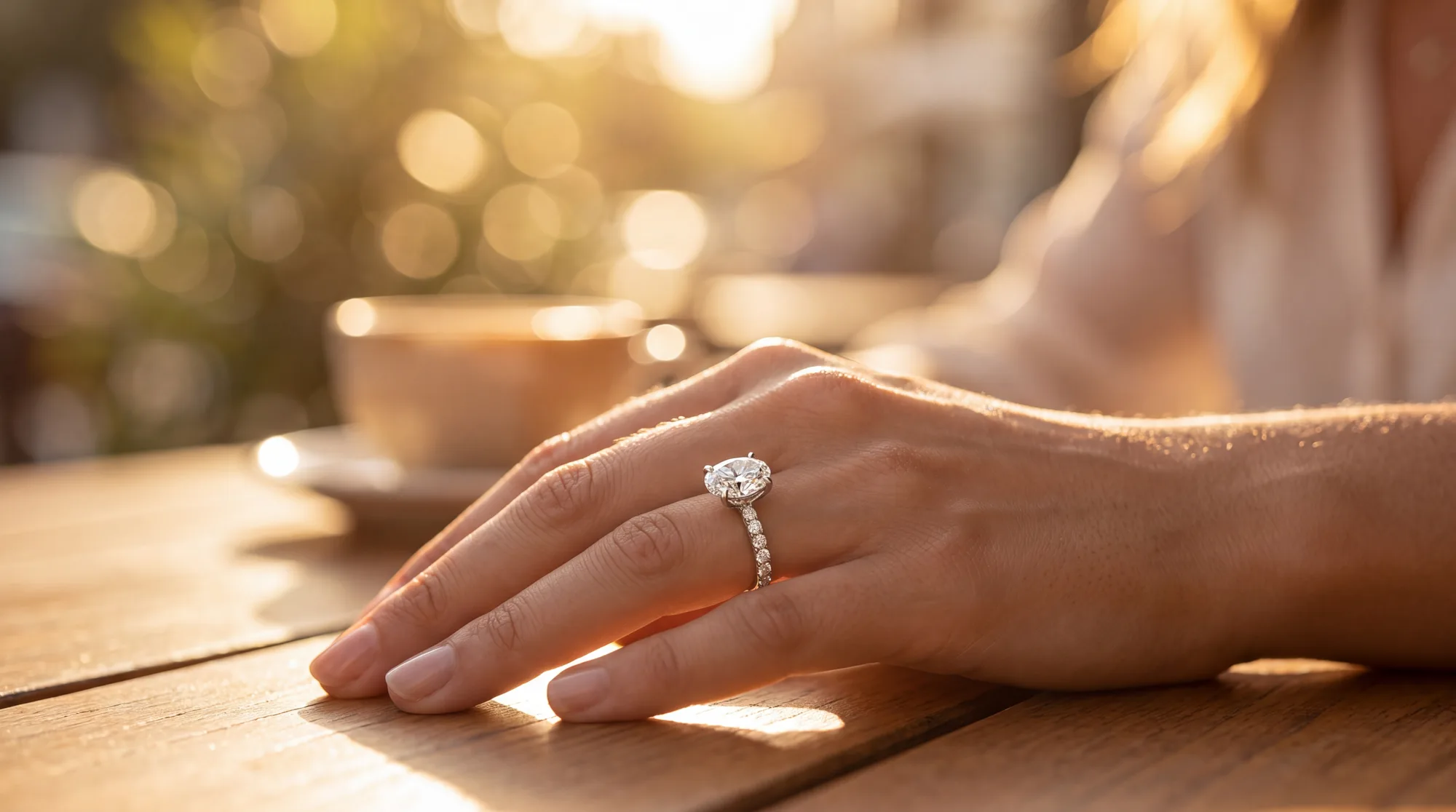
It also suits people who see jewelry as something to wear rather than something to hold. If you would be content never to sell the piece, resale matters much less. The price difference then stays in your pocket, or goes into the rest of the piece: a better setting, a heavier metal, a matching band.
A third group buys lab-grown because they prefer how it is made. A stone grown in a laboratory appeals to some buyers more than one taken from the ground. That is a fair reason on its own, and it needs no further argument.
Who should choose natural instead
Natural diamonds are the better answer for a buyer who values what a mined stone stands for. A natural diamond formed in the earth over an immense span of time, and it is finite in a way that a grown stone is not. For some people that is the whole point of the purchase, and no lab-grown stone offers it, however identical it looks.
Natural also makes more sense when the stone is meant to be an heirloom, passed down through a family. A natural diamond has a longer secondhand history and a market that knows it well. That says nothing about future prices, which nobody can promise.
It does mean a natural stone starts from a firmer position than a lab-grown one if it is ever sold. If either description fits you, our natural diamond collection is the place to start. If you are set on a mined stone, you can also start with natural loose diamonds and choose the setting after.
What is identical in both stones
A lab-grown diamond is diamond. It is crystalline carbon with the same crystal structure as a mined stone, and it has the same hardness, the same optical behavior, and the same fire and brilliance once cut. It is not a simulant like cubic zirconia or moissanite, which are different materials that only imitate the look.
The difference is origin. One formed in the earth. The other was grown in a laboratory.
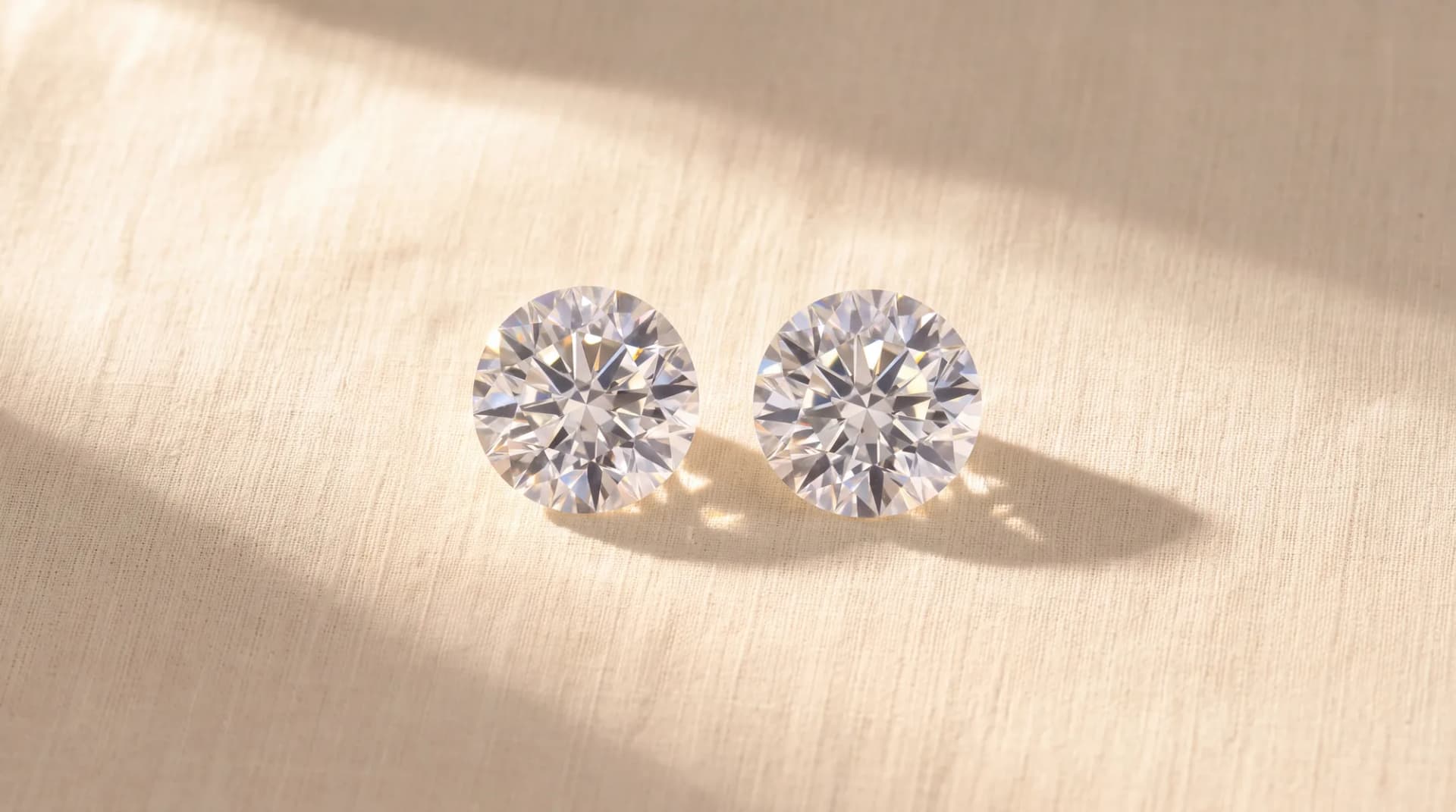
Because the material is the same, so is the physics. A lab-grown diamond conducts heat the way natural diamond does, which is why it passes a standard diamond tester. It scratches what a natural diamond scratches and resists what a natural diamond resists.
Set in a ring or a bracelet, it wears the same way. Our guide to how testers treat lab-grown stones goes through the details.
Both are also graded on the same four Cs: cut, color, clarity and carat weight. You cannot separate them by eye. Only specialized laboratory equipment can, and a grading report from an independent laboratory states which kind the stone is.
Price at the same size and grade
At the same size and grade, a lab-grown diamond costs noticeably less than a natural one. That gap is the main reason people consider lab-grown at all, and it is large enough to change what a budget buys. This guide does not quote a number, because prices move and any figure printed here would date quickly. The lab-grown and natural pages each show current pieces, so you can compare by size and grade yourself.
Two things are worth understanding about the gap. First, it is not a quality discount. The stone is not lesser, the cut is not poorer, and the grading uses the same scale.
Second, lab-grown production can be scaled in a way that mining cannot, which is part of why the gap exists. It is also a reason the gap is not something to treat as fixed.
What happens at resale
Resale is where the two stones differ most, and it is the weak point of lab-grown. When a diamond is sold back to a jeweler or on the secondhand market, the buyer pays well under the original retail price for either kind. Natural diamonds have a long-established secondhand market. Lab-grown diamonds have a younger and thinner one, and buyers generally pay less for them relative to what the stone cost new.
Part of the reason is supply. A new lab-grown stone can be produced on demand, so a buyer has little reason to pay much for a used one. That is what can be observed today.
What it means for the coming years, nobody can say, and this guide will not forecast a price for either stone. If resale is central to your decision, our guide to whether lab-grown diamonds hold their value takes it further.
The practical takeaway is simple. Buy a lab-grown diamond because you want to wear it. Do not buy it as a store of value. A natural diamond is not guaranteed to hold its value either, but the market gives it firmer footing.
A larger lab-grown stone or a smaller natural one
At the same budget, the choice is often between two real options. One is a larger lab-grown stone. The other is a smaller natural stone. Neither is the wrong answer, because they serve different priorities.
The larger lab-grown stone gives you more presence on the hand for the money, and often a cleaner grade. The smaller natural stone gives you a mined origin and a firmer resale position, at the cost of size. Think about which of those you will notice more over the long run.
If you look at the stone every day, size and grade are what you will see. If the piece will spend more time in a drawer than on a hand, origin may matter more.
Seeing both in person is the fastest way to learn which you prefer. Two stones that read as different on paper often read as the same on the hand, and that can settle the question quickly. You can compare sizes side by side by browsing loose lab grown diamonds by shape and carat, then choosing the setting around the one you pick.
How to decide
Work through these in order. Each one narrows the choice.
- Start with the purpose. If the piece is for wearing and enjoying, lab-grown suits it. If it is for keeping a long time or passing on, natural fits better.
- Next is the budget. Decide what you can spend before you decide on size, since the price gap between the two is what a larger stone depends on.
- Then resale. If getting money back later matters to you, weigh it heavily, because it is where lab-grown is weakest.
- Then origin. If a stone that formed in the earth matters to you personally, that settles it whatever the price.
- Last is the grade. Whichever kind you choose, cut decides how much a stone sparkles more than any other factor, so put money there first.
None of these questions has one correct answer for everyone. If the first two point to lab-grown and the next two point to natural, give resale and origin more weight than size. Size can be revisited with a different piece later. Resale and origin are settled the moment you buy, and they cannot be changed afterward.
Buying either kind with confidence
Whichever way you lean, buy against a grading report. The report is what tells you the cut, color, clarity and carat weight of the stone, and whether it is natural or lab-grown. Check that the description of a stone matches its report before you commit. Our diamond buying guide explains each of the four Cs, so your budget goes to the qualities you will see.
If you would like to start from the stone itself, browse loose diamonds, or go back to the lab-grown page to see finished jewelry. Either way, the decision is the same one this guide has described: what you want the stone to do for you, now and later.
Frequently Asked Questions
Related guides & collections
Talk it through
Book a Consultation at the Showroom
Choosing between a larger lab-grown stone and a smaller natural one is easier with someone walking you through it. Book a consultation at our Snellville showroom near Atlanta.
Prefer to talk? Call (704) 684-7530